
Best Renovations for Resale Value
Discover the best renovations for resale value with insights on ROI, recoupment, and which projects add the most value when selling your home.
The number that matters is recoupment, not the renovation budget
Sellers often ask which renovation delivers the “best return.” The useful question is narrower: how much of each renovation dollar is likely to show up in the eventual sale price, in this market, for this type of buyer?
That measurement is usually called return on investment, or ROI. In resale reporting, though, ROI can be an imprecise label. Some publications appear to use it to mean value added divided by project cost, while others use it to mean the percentage of costs recouped.
Those are not the same thing. A project costing $10,000 that increases a home’s supportable sale price by $10,000 has recouped 100% of its cost. It has not necessarily created $10,000 of profit for the seller.
The seller still pays costs connected with owning and selling the property. Those may include mortgage interest, property taxes, insurance, utilities, contractor overruns, and the transaction costs that apply to the eventual sale. The research brief contains no evidence that escrow, mortgage terms, inspections, or closing costs directly change a renovation’s ROI.
That absence matters. An appraisal does not reimburse a seller dollar-for-dollar for a new kitchen, and escrow does not decide whether a garage door was worth replacing. Those systems affect the transaction, but the renovation-return question is principally about buyer demand and comparable sales.
I am not a licensed real estate agent, lender, appraiser, contractor, or financial advisor. The right project depends on a seller’s rate, local inventory, buyer pool, property condition, and timeline. No general ROI table can substitute for local pricing evidence.
How recoupment is supposed to work
The basic calculation is straightforward:
Recoupment percentage = estimated increase in sale value ÷ renovation cost × 100
If a seller spends $5,000 and the market supports a $4,000 higher sale price because of that work, the project has an 80% recoupment rate. The apparent shortfall is $1,000 before considering the other costs of selling.
If the same $5,000 project supports $6,000 more in sale price, the recoupment rate is 120%. That does not mean every seller pockets an extra $1,000. It means the value estimate exceeds the stated project budget.
The difficult part is not the arithmetic. It is determining the “increase in sale value.” That figure is an estimate of what buyers will pay compared with a reasonably maintained version of the same home, not a receipt handed to the seller at closing.
A buyer may see a new garage door as evidence that the property has been cared for. Another buyer may simply expect a functional garage door and decline to pay extra for it. In a market with several comparable updated listings, the project may help a home compete without creating a measurable price premium.
That is why ROI figures should be read as market signals rather than guarantees. They can identify categories that frequently matter to buyers, but they cannot establish the value of a specific contractor bid or the sale price of a specific house.
Why garage-door ROI figures conflict
Garage-door replacement is a good illustration of the problem. It consistently appears among high-return exterior upgrades, but the estimates in the research brief differ too widely to present one number as settled fact.
BuildCalc Pro reports a garage-door project cost of about $4,300 and value added of $8,350, described as roughly a 194% ROI. [1] Hammerio instead places garage-door ROI around 93% to 102%, with costs near $4,500. [2]
MediaHacker reports a still higher result: a $4,317 garage-door cost and $15,081 in added value, described as a 268% ROI. [19] The cost assumptions are similar, but the claimed value gains are radically different.
There is also a mechanical warning in those figures. Dividing BuildCalc Pro’s stated $8,350 value-added estimate by its $4,300 cost produces about 194%, consistent with a value-added-to-cost measure. [1] The MediaHacker dollar figures do not neatly match its stated 268% label. [19]
That does not prove either report is wrong, but it does mean a seller should not build a listing plan around a headline percentage. Regional labor costs, project specifications, sales-price ranges, data periods, and definitions of ROI can all change the result.
The more durable conclusion is modest: a garage door is a highly visible exterior replacement that can be worthwhile when the existing door is damaged, dated, unreliable, or noticeably weaker than nearby competing homes. Its actual return needs local validation.
A local agent familiar with recent comparable sales can help identify whether updated garage doors appear standard in the neighborhood. A contractor can price the correct scope. Those are separate jobs, and neither should be replaced by a national ROI estimate.
The resale advantage of a minor kitchen update
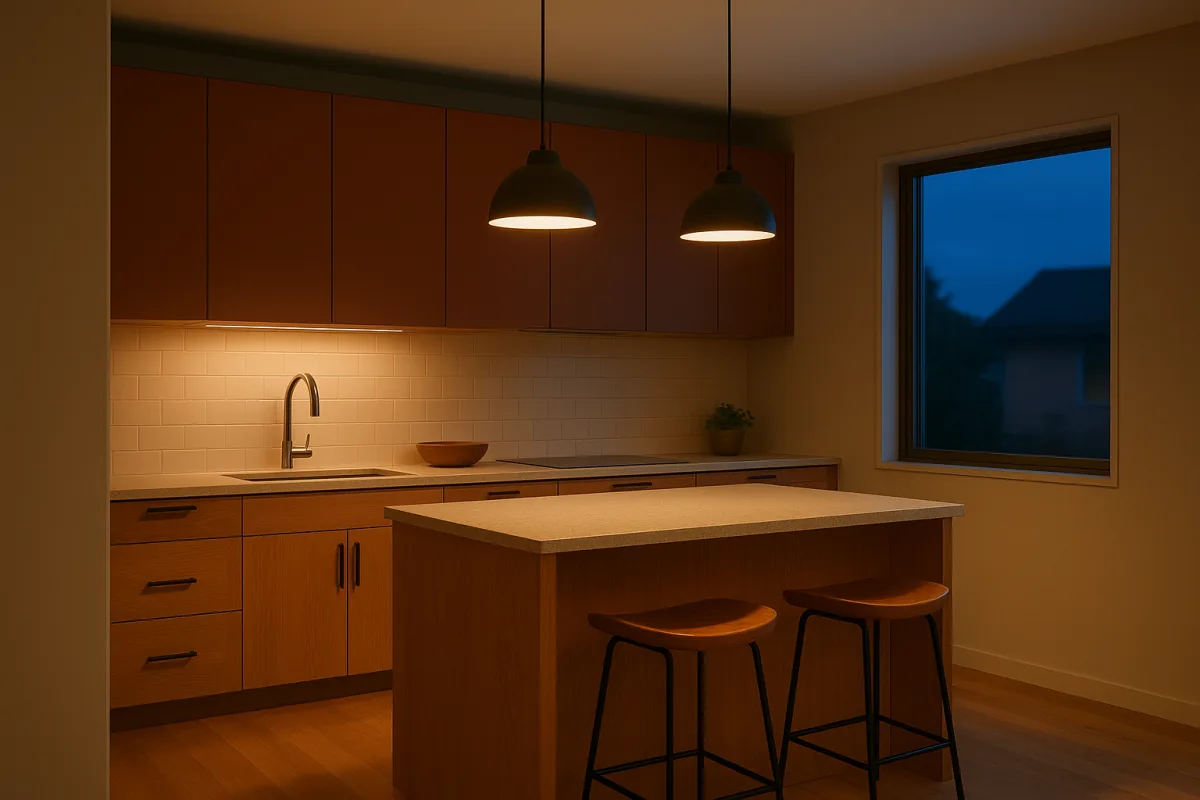
Kitchen work shows the difference between renovating for personal enjoyment and renovating for resale. A minor remodel can address visible wear and dated finishes without forcing the seller to pay for a complete redesign that buyers may not value equally.
Reported returns support that distinction, even though the percentages vary. Opendoor reports a 113% ROI for a minor kitchen remodel, while Hammerio reports 96%. [3][2] RenovateCost places the range lower, at about 70% to 80%. [4]
Home Stimulus similarly estimates minor kitchen returns of roughly 72% to 77%. [18] Those figures disagree on magnitude, but they point in the same direction: limited kitchen improvements generally fare better than major remodels.
HomeStats places the ROI for major kitchen remodels at approximately 55%. [5] That lower estimate is logical from a resale perspective. Major work carries more labor, material, design, and schedule risk, while buyers may not share the seller’s taste.
A seller who replaces clearly worn surfaces, resolves functional defects, and presents a clean, coherent kitchen is solving a marketability problem. A seller who installs an unusually expensive layout or appliance package may be purchasing features the next owner will not fully pay for.
This is the central resale discipline: compare the project to the home’s price range and nearby alternatives, not to the seller’s ideal version of the house. A luxury kitchen can be an over-improvement when surrounding homes offer competent but ordinary finishes.
The same reasoning applies to specialized rooms and swimming pools. The research brief identifies luxury renovations, pools, and unusually specific spaces as projects that can reduce ROI or deter buyers, especially when they exceed neighborhood standards or local preferences.
Cosmetic bathrooms follow the same rule
Bathrooms are another place where scope controls the resale case. A cosmetic refresh can improve the condition buyers see during showings without triggering the cost and complexity of a full gut renovation.
CostPrism estimates cosmetic bathroom refreshes at roughly 80% to 95% ROI. [6] Mid-range bathroom remodels are reported around 66.7% to 80%, while more extensive primary-bath projects are estimated around 56% to 65%. [6]
The pattern is more useful than any single number. Work that corrects visible age and ordinary wear may appeal broadly. Highly customized fixtures, layouts, and finishes add cost quickly and can narrow the group of buyers who find them valuable.
That does not mean every bathroom should receive a cosmetic update. A recently updated bathroom may need no work, while a leaking shower or failed ventilation system is a repair issue rather than a discretionary resale project. The condition of the existing room determines the sensible scope.
Marketability can matter even when ROI is lower
Energy-efficient and smart-home upgrades have a more complicated resale role. The research brief places direct ROI for windows and insulation around 50% to 70%, lower than the strongest exterior replacements or minor kitchen work.
Yet lower direct recoupment does not make these projects irrelevant. Energy Star appliances may command reported price premiums of 5% to 9%, and smart-home technology may produce premiums of 3% to 5%, though those outcomes depend on local buyer demographics. [17]
The brief also reports that energy-efficient and smart upgrades can contribute to faster sales, potentially up to 35% faster. That is a marketability claim, not a guaranteed price increase, and it may be meaningful only when buyers in that area prioritize operating costs or convenience. [17]
Solar requires particular caution. Its financial effect depends on whether the system is owned or leased and on local electricity costs. The brief does not support a universal solar ROI figure, so sellers should avoid assuming panels automatically increase net proceeds.
Timing is part of the cost
A renovation’s cost is not limited to the contractor invoice. Time can create carrying costs and listing delays, especially if the seller remains responsible for a mortgage payment, taxes, insurance, and utilities while work is underway.
The research brief’s timing guidance is practical: allow six to 12 months before listing for major renovations, two to three months for cosmetic updates, and complete final staging immediately before marketing begins.
That schedule is not a recommendation to undertake major work. It is a warning that extensive renovations can collide with a seller’s desired move date. A project that looks attractive on a spreadsheet can lose value if it delays a necessary sale.
Regional preferences also determine what “updated” means. Urban buyers are described as prioritizing functionality and modern amenities, suburban buyers as favoring updated kitchens and bathrooms, and rural buyers as placing more weight on practical, energy-efficient improvements.
For a seller focused on net proceeds, the best renovation is usually not the largest one. It is the project that removes an obvious objection, fits local expectations, has a controlled scope and budget, and is completed early enough that the seller is not forced to carry the home longer than planned.
Frequently Asked Questions
Which home renovations offer the best return on investment for resale?
Exterior projects such as garage door replacement, steel entry door replacement, and manufactured stone veneer consistently rank among the highest ROI renovations. Smaller, visible updates like minor kitchen remodels and cosmetic bathroom refreshes also tend to have better recoupment rates than full replacements or major remodels. Overly expensive or luxury renovations often fail to recoup their costs.
How much value do minor kitchen updates add when selling a home?
Minor kitchen remodels generally yield higher ROI than major kitchen remodels. Reported recoupment rates for minor kitchen updates range from about 70% to 113%, depending on the source. This suggests that smaller-scale kitchen improvements are more likely to increase sale value relative to their cost.
What exterior projects have the highest recoupment rates?
Garage door replacement, steel entry door replacement, and manufactured stone veneer are among the exterior projects with the highest recoupment rates. For example, steel entry door replacements have reported ROI around 188% to 216%, and manufactured stone veneer ranges from about 95% to 153%. However, these figures vary by region and methodology.
Why do ROI estimates for garage door replacements vary so much?
Estimates for garage door replacement ROI vary widely—from about 93% to 268%—due to differences in regional labor costs, project specifics, sales-price ranges, data periods, and how ROI is defined. This variability means sellers should not rely on a single headline number but instead consult local market data and experts.
How should sellers match renovations to local buyer expectations?
Sellers should align renovation projects with local buyer preferences and neighborhood standards. Renovations that exceed what is typical in the area can reduce net proceeds rather than increase them. Completing projects on a realistic timeline before listing also helps ensure the renovation supports the home’s market value.
How we researched this
This article was assembled from 22 cited references.
Nothing here is based on hands-on testing. Where a figure or finding appears, it belongs to the source cited beside it, and the writing says so rather than implying otherwise. Every source is listed below so you can check it.
Sources
- Home Renovations With the Highest ROI — 2026 Cost vs. Value Guide | BuildCalc Pro
- Home Renovation ROI 2026 — Resale Recoup % by Project Type (NAR Data)
- Which Home Improvements Increase Value Most? ROI Rankings for 2026 | Opendoor
- Home Renovation ROI Guide 2026 — Which Renovations Pay You Back?
- Kitchen and Bathroom Remodel ROI: 2026 Data | HomeStats
- Bathroom Remodel ROI: Best Upgrades That Add Value (2026 Data) | HanoDecor
- Which Home Renovations Have the Highest ROI in 2026?
- Best ROI Home Renovations: 70-90% Returns in 2026
- Block Renovation's 'How America Renovates 2026' Report Finds Functionality, Multigenerational Living, and AI Are Shaping Renovations Today
- 2026 Houzz Renovation Plans Report
- Best Home Renovations for Resale Value in 2026 | HonestCasa
- Renovation for Resale Guide 2026: What Pays | Home Renovation Calculator
- Average ROI Home Improvements 2026: What Renovations Pay Off - Real Estate Loans
- Real Estate Experts Reveal the 8 Upgrades That Will No Longer Add Value in 2026 | Nasdaq
- Home Renovation ROI Rankings 2026: Which Projects Actually Pay Off | HomeCostLab
- How to Increase Your Home Value in 2026 | Vision Construction — Your Site Title
- Smart Home Upgrades That Pay Off in Metro Atlanta 2026
- Home Renovations: What Adds the Most Value in 2026? - Home Stimulus
- 12 Home Renovations With Best Resale Value 2026
- Home renovation ideas: 15 upgrades worth the money in 2026 | Remodel AI
- 10 Renovations that Will Add Value When You Sell House | HOMEiA
- REMAX Survey Reveals Strong Demand: 88% of Prospective Buyers Plan to Purchase a Home in 2026 - REMAX News
Related Articles

Increase Home Value Before Selling
Learn how to increase home value before selling with smart repairs, exterior upgrades, and budgeting tips for the best return on investment.

Property Taxes: What They Are and How They Work
Learn what property taxes are, how they’re calculated, and how exemptions and local rates affect your annual bill.

How to Find a Home with Good Resale Value
Learn how to find a home with good resale value by evaluating location, schools, condition, and costs before buying.

Real Estate Market Trends
Learn how to understand real estate market trends, including months of supply and mortgage rate impacts, to make smarter buying or selling decisions.