
Choose the Right Home Inspector: Essential Buyer’s Checklist
Learn how to choose the right home inspector with tips on qualifications, costs, insurance, and what to ask before booking your inspection.

Choosing the Right Home Inspector: A Buyer’s Practical Checklist
Start before you choose an inspector: protect the inspection window
The time to research inspectors is before you are scrambling to book one inside a purchase-contract inspection contingency. A good inspector may have limited availability, while a rushed booking can leave you comparing price quotes without comparing scope.
Your contract controls the deadline, the right to request repairs or credits, and what happens if you decide the property’s condition is unacceptable. Those terms vary by market and agreement, so read the contingency language carefully and ask your real-estate or legal professional about its deadlines.
I am not a licensed agent, lender, inspector or legal adviser. I can explain the cost and process mechanics, but the right inspection strategy depends on your contract, local risks, the property’s age and your timeline.
Do not assume a lender appraisal replaces an inspection. They answer different questions. An appraisal addresses value for lending purposes, while an inspection is intended to identify visible condition issues and system concerns for the buyer.
First problem: figuring out what “qualified” means in your state
There is no single national licensing standard for home inspectors. A credential that is meaningful in one state may be only voluntary in another, which is why buyers should begin with their state’s actual requirements. [2]
California is the clearest example of the difference. The state does not require home inspectors to hold a state license as of 2026, according to LegalClarity, so certification and insurance become especially useful signals to verify rather than assumptions to make. [1]
Other states set much more defined entry requirements. New York requires either a 140-hour approved course plus 40 hours of supervised fieldwork, or 100 inspections, along with a qualifying exam such as the National Home Inspector Exam. [2]
Florida requires a 120-hour course and a board-approved examination. Virginia uses a point system combining education and experience with a board-approved exam, meaning buyers cannot simply compare a Florida resume with a Virginia one line for line. [2]
Montana’s rules, effective January 1, 2026, require 40 hours of instruction, national association membership and at least $125,000 in errors-and-omissions insurance. That insurance requirement is worth noting because it is not universal nationwide. [18]
Ask each candidate, in writing, which state credential they hold, whether it is current, and whether any discipline or complaint history is publicly searchable. Then check the answer through the relevant state licensing or regulatory system where one exists.
Next: look past a logo or a low quote
National affiliations can provide a useful benchmark, but they are not a substitute for checking scope, insurance and relevant experience. The American Society of Home Inspectors, or ASHI, and InterNACHI are recognized national organizations, not interchangeable state licenses. [2]
For example, ASHI’s Certified Home Inspector designation requires the National Home Inspector Exam and 250 paid inspections. InterNACHI’s Certified Professional Inspector program requires ongoing education, including 24 hours annually, alongside its certification requirements. [2]
Those standards can help you ask better questions. They cannot guarantee that one inspector will be more observant on a 1920s basement, a stucco exterior or a roof with difficult access than another qualified inspector.
Ask how many inspections the person personally completed in the past year, and how many involved homes similar to yours in age, construction type and location. The research brief supports focusing on regional climate and code factors because they change both inspection priorities and cost. [14]
Also ask for proof of general liability and errors-and-omissions insurance. The latter does not make an inspection error-free, but it is a concrete part of professional accountability, and Montana’s statutory requirement shows why buyers should not treat coverage as automatic. [18]
Avoid choosing solely on the cheapest quote. Realtor.com identifies price-only selection, relying only on an agent referral, skipping attendance and failing to verify insurance among common buyer mistakes. [13]
An agent recommendation can still be one name on your list. The practical safeguard is to interview at least enough candidates to compare their licensing status, sample reports, fees, availability, insurance and exclusions yourself.
Then define what you are actually buying
A standard inspection should examine major visible components including the foundation, roof, exterior, plumbing, electrical system, HVAC, interior conditions and insurability-related details such as roof age, electrical-panel brand and pipe material. [6][17]
That list is broad, but it is not the same as “everything is tested.” Specialized work may be separate, and buyers should not assume that radon, mold, sewer scopes or other add-ons are bundled into a standard inspection. [3][6]
Before you sign an agreement, request the inspector’s written scope of work and ask four direct questions: What is included? What is excluded? What requires an additional fee? What conditions would prompt a specialist recommendation?
This matters most when the property has a risk that a standard checklist may not answer. In high-radon regions such as Colorado, radon testing is commonly part of the local conversation, while climate and local construction practices can alter roof, moisture, drainage and heating-system priorities. [14]
A sewer scope may deserve a separate discussion when the home’s age, plumbing history or local conditions make the underground line a concern. The research does not establish a national rule for when to order one, so do not let a generic package decide it for you.
Similarly, mold-related evaluation and thermal imaging are not interchangeable services. Ask whether an inspector uses thermal imaging as part of the inspection, what the tool is intended to identify, and whether the quote includes it or treats it as an add-on.
Price the inspection as a bundle, not one number
Nationally, a standard home inspection commonly runs about $300 to $500, according to 2026 pricing guides from HouseProbe and Dwely.ai. That is a starting range, not a reliable local quote for every property. [3][4]
Size, type, condition and region can move the price. A small newer condominium, a large older single-family house and a rural property with multiple systems should not be expected to carry the same inspection fee or time commitment. [3][6]
Specialized inspections commonly add about $150 to $500, depending on the service and market. [3][4] If you are considering multiple add-ons, ask for an itemized estimate rather than comparing one inspector’s bundled total with another inspector’s base fee.
For example, a $425 general inspection with a $250 sewer scope and a $175 radon test is a $850 inspection plan, not a $425 inspection. The arithmetic is simple, but separating base and add-on pricing makes it easier to compare proposals fairly.
Ask whether the price includes the final report, photos, drone roof imagery, thermal imaging, travel, reinspection visits and any extra charge for age, square footage or detached structures. Do not assume that technology mentioned in a sales pitch is included in the quoted fee.
Technology adoption is expanding, including drone aerial work, thermal imaging, voice-to-report systems, AI-assisted reporting and smart-home evaluations. HousingWire and industry reporting describe these as growing 2026 trends, but adoption and cost effects are not consistently measured. [14][15][16][19]
That means a drone or thermal camera is a question to ask, not a feature to presume. The useful issue is whether the inspector can explain how the tool affects the inspection and what its findings will mean in the written report.
Check whether the appointment length matches the house
For an average single-family house, a typical inspection takes about two to four hours. Redfin and inspection-industry guidance note that size, age, condition, complexity and additional services can extend that range. [5][7]
A very short appointment is not automatically inadequate, and a long appointment is not automatically better. Still, you should ask the inspector to explain the expected duration for this particular home and what drives that estimate.
An older house with multiple additions, an aging roof, several HVAC systems, a crawlspace or detached buildings may need more inspection time than a straightforward newer home. Those are practical complexity factors, not reasons to assume a house is defective. [5][7]
Ask whether the person quoting the work will be the person on site, whether an assistant will attend, and whether the inspector limits the number of appointments scheduled that day. The goal is clarity about who is doing the work and how much time is reserved.
Read a sample report before you commit
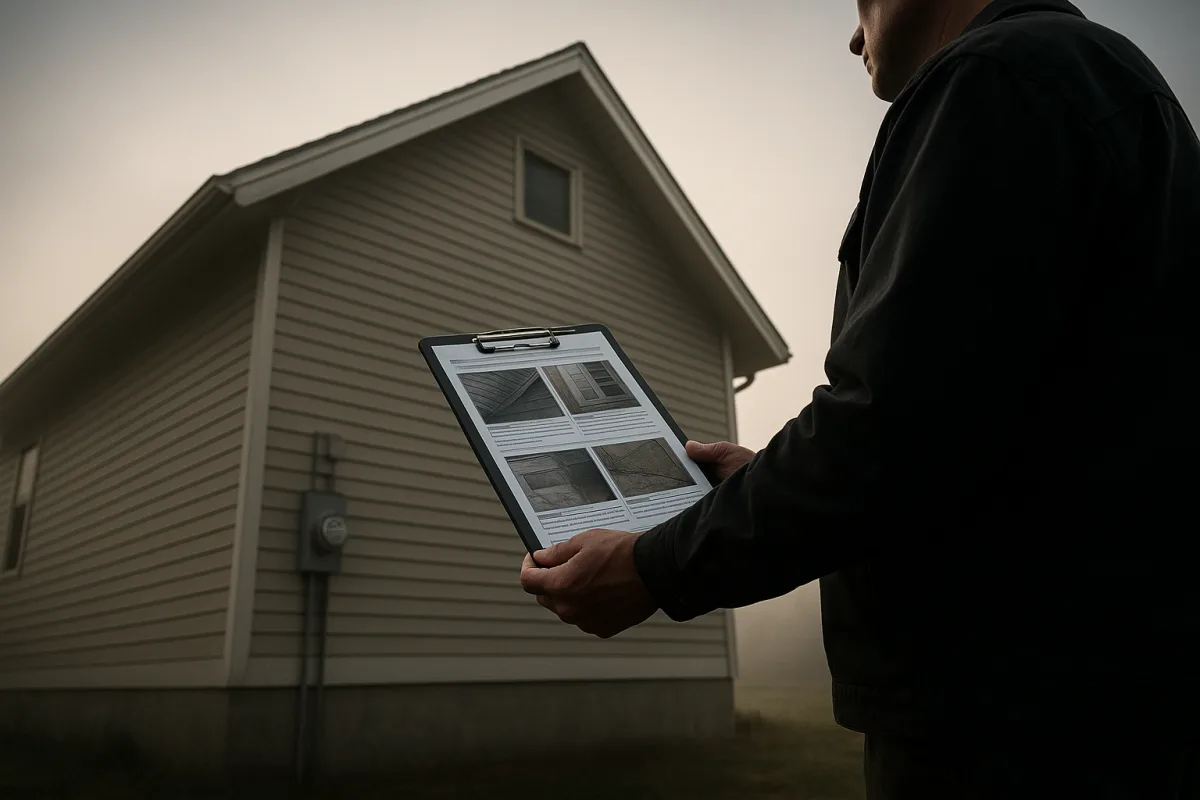
A sample report tells you more than a list of credentials can. Ask for a redacted report from a comparable property, then see whether it distinguishes safety concerns, major defects, routine maintenance and observations that need specialist review.
Look for clear photographs, locations of concerns, descriptions of what was observed and an explanation of why the item matters. The standard scope includes major systems and insurability factors, so a report should make those findings easy to locate. [6][17]
A useful report does not need to promise a perfect house or predict every future repair. What you need is a document detailed enough to support follow-up questions, specialist estimates and decisions under your inspection contingency.
Ask when the report will be delivered and in what format. Faster voice-to-report and AI-assisted tools may help streamline documentation, but the research does not establish that faster reporting produces better inspection outcomes. [16][19]
Attend, ask questions, and separate findings from repair bids
If possible, attend at least the final portion of the inspection. Zillow, The Week and Realtor.com all encourage buyer participation, while Realtor.com lists missing the appointment among common inspection mistakes. [11][12][13]
Use the appointment to ask the inspector to show you the major concerns, identify shutoffs and explain maintenance items. Do not try to turn the walk-through into a repair negotiation or expect an immediate contractor-grade price for every observation.
Afterward, sort the report into three groups: issues affecting safety or function, items needing further evaluation by a qualified specialist, and routine maintenance. That structure helps you avoid treating every notation as equally urgent.
If the report raises a concern outside the inspector’s scope, obtain the appropriate specialist evaluation before assuming a repair price. This is especially important where a general inspection identifies a possible issue but cannot establish its full cause or extent.
Your final inspection plan should reflect the house, your market and the time remaining under contract. The best inspector is not necessarily the least expensive, the fastest available or the one with the longest credential list, but the one whose qualifications, scope, communication and report fit the risks you need assessed.
Frequently Asked Questions
How do I choose the right home inspector for my property?
Start by researching inspectors well before your inspection contingency deadline to avoid limited availability and rushed decisions. Verify their state credentials, insurance, and recent experience, and confirm what the inspection scope includes and excludes. Attend the inspection if possible, and ask about add-ons like radon or mold testing separately.
What qualifications should a home inspector have in my state?
Qualifications vary widely by state. Some states like New York require a 140-hour approved course plus supervised fieldwork or passing a national exam, while others like Florida require a 120-hour course and board-approved exam. Montana requires instruction hours, association membership, and errors-and-omissions insurance. Check your state’s licensing board for current requirements and verify the inspector’s credentials in writing.
How much does a typical home inspection cost?
Nationally, a standard home inspection typically costs between $300 and $500. Additional specialized inspections such as radon, mold, or sewer testing can add $150 to $500 each. Costs may vary depending on the home’s size, age, complexity, and local market conditions.
Why is home inspector insurance important?
Insurance, especially errors-and-omissions coverage, protects buyers if the inspector misses significant defects or makes mistakes. Some states, like Montana, require inspectors to carry a minimum amount of insurance. Verifying that your inspector has current insurance helps ensure accountability and reduces your risk.
How we researched this
This article was assembled from 19 cited references.
Nothing here is based on hands-on testing. Where a figure or finding appears, it belongs to the source cited beside it, and the writing says so rather than implying otherwise. Every source is listed below so you can check it.
Sources
- Do You Need a License to Be a Home Inspector in California? - LegalClarity
- Home Inspector Qualifications: Licensing, Certification, and Training | Property Inspection Authority
- Home Inspection Cost: 2026 Pricing Guide & Cost Factors | HouseProbe
- How Much Does a Home Inspection Cost? (2026 Price Guide) | Learn | Dwely.ai
- How Long Does a Home Inspection Take? | Redfin
- General Home Inspection: 2026 Buyer's Scope and Pricing Guide - InspectandTest
- Why Inspection Duration Matters for Home Buyers
- Home Inspection Checklist 2026: 147 Items Buyers Should Verify | HomeScore
- The Complete Home Inspection Checklist for 2026 | HomeStats
- Home Inspection Checklist | HomeEstimates
- How to Pick a Home Inspector | Zillow
- 3 tips for buyers ahead of a home inspection
- 8 Home Inspection Mistakes Buyers Should Avoid at All Costs
- Home inspection trends reshaping the 2026 housing market
- Emerging Trends in Home Inspection Technology for 203(k) Consultants — Michigan Inspection Services
- How AI is Changing the Home Inspection Industry | Verispec
- What Home Inspectors Check in 2026
- Mont. Code Ann. § 37-55-103 – (Effective January 1, 2026) License to practice home inspections required -- qualifications | Midpage
- Voice-to-Report: The Future of Inspection Reporting in 2026
Related Articles
How to Find a Good Home Inspector: Tips and Licensing Info
Learn how to find a good home inspector by verifying licenses, comparing costs, and reviewing sample reports before hiring.
Choose the Right Home Insurance
Learn how to choose the right home insurance policy by understanding types, coverage limits, and replacement cost vs actual cash value.

Choose the Right Home Warranty: Coverage, Costs & Tips
Learn how to choose the right home warranty with tips on coverage, costs, exclusions, and when it’s worth buying for your home.

How to Choose the Right Neighborhood for Home Buying
Learn how to choose the right neighborhood by evaluating taxes, schools, safety, commute, and future development before buying a home.