
How to Find a Good Home Inspector: Tips and Licensing Info
Learn how to find a good home inspector by verifying licenses, comparing costs, and reviewing sample reports before hiring.
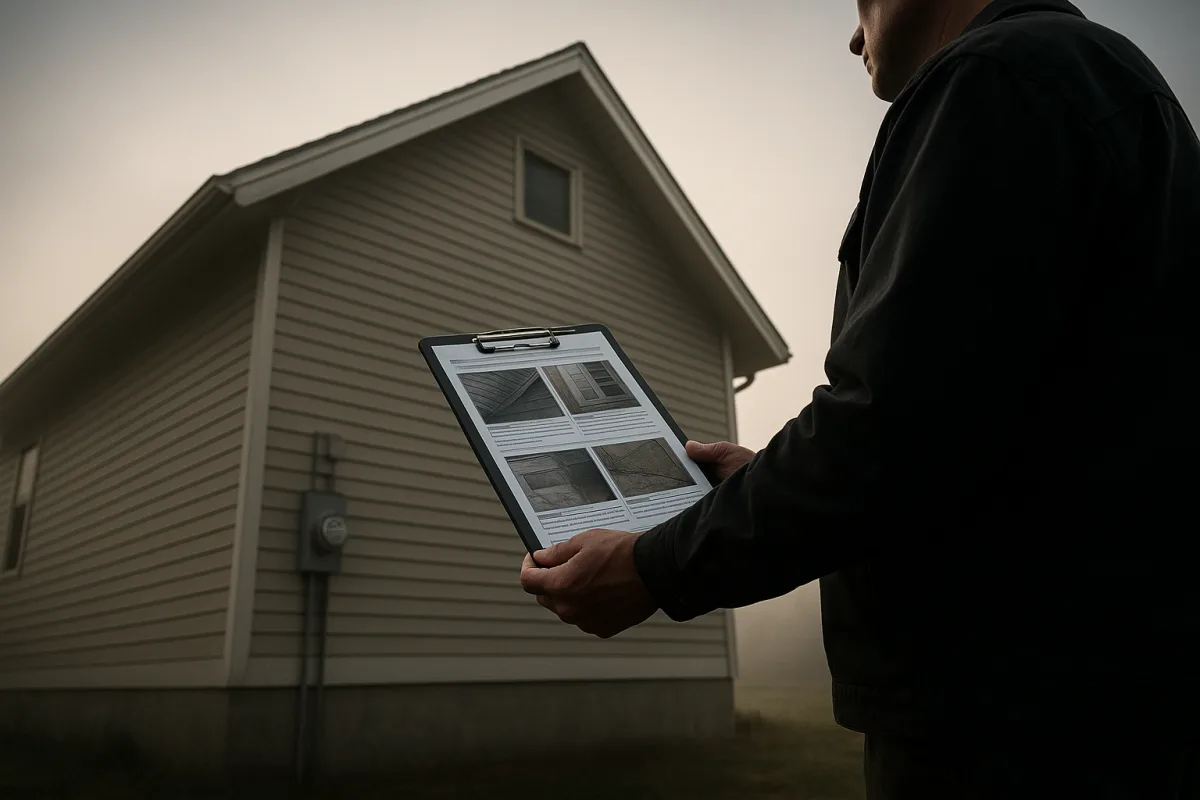
First, check the inspection deadline in your contract
The practical problem arrives quickly after an offer is accepted: you may have only a limited period to schedule, attend, review, and respond to an inspection. Do not begin by choosing the first available name.
Write down the inspection deadline, the date you need the report, and the property address. Those three details help you ask each inspector whether they can perform the work and deliver usable findings in time.
A standard inspection often takes two to four hours onsite, with the report delivered within 24 to 48 hours afterward. That means an inspector available tomorrow may still not fit a deadline if report delivery comes too late. [6]
If the contract includes an inspection contingency, read its actual wording rather than assuming every defect creates the same option. The contract controls the timing and process, while the inspection report supplies information for decisions within that process.
I am not a licensed real estate agent, lender, home inspector, or legal adviser. For questions about a contingency deadline or contract rights, use the professionals responsible for your transaction and local legal advice if needed.
Build a short list without relying on one referral
An agent referral can be a useful starting point, but it should not be the whole search. Buyer guidance commonly cautions against relying solely on one referral, particularly when you have not independently reviewed qualifications and reports. [15][16][18]
Ask for several names, then search independently through your state licensing agency, professional association directories, and local recommendations. The goal is not to find a universally “best” inspector, but one whose credentials and scope fit this house.
Do not treat a low price as proof of value. A smaller, newer home may reasonably cost less to inspect, while a large, old, or complex property can require more time and produce a higher quote. [3][4]
Also avoid choosing based on a polished website alone. Reliable service is easier to evaluate through a current license record, documented experience, insurance confirmation, a sample report, and direct answers about what the inspection includes.
Verify the state rules before comparing credentials
Home-inspector regulation is not uniform nationwide. State-by-state licensing directories disagree on the precise number of states that require a license, while roughly 14 states are commonly identified as having no inspector licensing requirement. [12][13]
That disagreement is a reason to verify your own state directly, not to rely on a national headline. Search the state agency that regulates professional licensing, then confirm the inspector’s status there using their legal name or license number.
In regulated states, qualifying requirements can include education, supervised field experience, and a board-approved examination, often the National Home Inspector Examination. Washington State’s licensing process, for example, has its own state-specific requirements. [1][2]
New York illustrates why “licensed” can involve more than passing a test. Its law includes education and experience pathways, including documented supervised inspections under particular routes to licensure. [21]
If your state does not license inspectors, certifications become a more useful screening signal, though they are not a substitute for reading the inspector’s report and service agreement. Look for credentials such as ASHI’s Certified Home Inspector designation or InterNACHI’s Certified Professional Inspector designation. [2][12]
Ask what the credential means today
A credential should be current, not merely something the inspector earned years ago. Continuing education is commonly required to maintain professional standing, although the number of hours varies by organization and state. [2][12]
For example, ASHI requires 20 continuing-education hours annually, while InterNACHI requires 24 hours annually. Florida license renewal has its own requirement, 14 hours every two years, which shows why national assumptions can mislead. [2][12]
Ask the inspector: “What license and certifications do you currently hold, and when were they last renewed?” Then verify the license yourself and ask whether any credential can be confirmed through the issuing organization.
Experience matters, but ask about relevant experience rather than just years in business. A person who inspects older homes with masonry chimneys, private wells, or septic systems may be a better fit for that property than a generalist whose usual work differs.
Confirm insurance before you sign the agreement
Ask whether the inspector carries errors and omissions insurance, often called E&O coverage, and general liability insurance. E&O insurance is strongly recommended in the industry, even though it is not mandated in every jurisdiction. [2][10]
Do not assume insurance guarantees that every problem will be covered later. Instead, view it as one part of a basic professional-screening process, alongside qualifications, inspection standards, scope, and the written agreement.
Ask for confirmation of coverage and whether it is current. If the inspector will not answer straightforward questions about insurance, that is useful information before you rely on that company during a time-sensitive transaction.
Compare the scope, not just the headline price
A general home inspection is a visual, noninvasive evaluation governed by an applicable standard of practice. Those standards generally describe what inspectors inspect and report, as well as what is outside the ordinary inspection scope. [14]
Ask for the service agreement before booking. It should identify the systems and accessible areas included, the exclusions, the fee, any add-on services, the expected report delivery date, and the limits of the inspection.
A standard inspection is not the same thing as a warranty, a guarantee that no defects exist, or a prediction of how long every component will last. Hidden conditions, inaccessible areas, and systems requiring specialized testing may remain outside its scope. [14]
This is where buyers can make an expensive assumption: believing “full inspection” means every issue has been tested. Read the exclusions, then decide whether the house’s age, location, and visible condition call for separate specialists.
Ask about specialty inspections early
Some risks require work beyond a general inspection. Depending on the property, buyers may need to consider radon, mold, termite or pest, sewer-scope, lead-paint, chimney, well-water, septic, pool and spa, or asbestos testing. [20]
The house should drive the question. An older property may justify discussion of lead paint or asbestos, while a home with a private well or septic system calls for a different conversation than a house on municipal utilities. [20]
Ask the general inspector whether they perform the specialty service, arrange it through another provider, or simply recommend additional evaluation. Then ask whether the specialty result will arrive before your inspection-related contract deadline.
The research does not support a universal price list for those specialty services. Get separate written quotes and confirm exactly what is sampled, scoped, inspected, or tested before comparing one provider’s number with another’s.
Request a sample report before booking
A sample report is one of the most revealing documents an inspector can provide. National homebuyer guidance consistently recommends asking for one, because it shows how the inspector communicates findings, not merely how they market services. [7][9][11]
Read the sample on a phone as well as a larger screen. Many buyers will review their actual report quickly between work, lender requests, contractor calls, and contract dates, so a usable format matters.
Look for photos that identify the issue, plain-language descriptions, location details, and an explanation of why the finding matters. A report that says “repair as needed” without identifying the condition or location gives you little to investigate.
Also check whether the report separates safety concerns, major repair items, maintenance observations, and recommended specialist evaluations. The inspector should describe conditions, while contractors and specialists may be needed to price repairs or determine the exact remedy.
Use a specific interview script
Call or email each finalist with the same questions so you can compare answers. Ask about state license status, certifications, years of experience, number of inspections performed, insurance, scope, fees, availability, report timing, and references. [7][8][9][11]
Ask how long they expect to spend at this particular house. A normal onsite range is two to four hours, but the appropriate duration can vary with the home’s size, age, condition, and systems. [6]
Ask whether you can attend, and whether the inspector will provide a walkthrough or verbal summary at the end. Buyer guidance encourages attendance because it gives you an opportunity to see findings and ask location-specific questions. [17]
Finally, ask when you will receive the final report, not merely when the inspection occurs. “Within 24 to 48 hours” is common, but your contract timeline may require a more precise commitment. [6]
Budget for the inspection as a separate transaction cost
For a typical base home inspection, a reasonable planning range is about $300 to $500. Property size, age, location, and additional services can move that number in either direction. [3]
Some pricing guides place small-home inspections around $200 to $300, while large homes can reach $900. Those figures are planning ranges, not a quote for your specific home. [4]
When comparing bids, ask whether the quoted price includes detached structures, crawlspaces, roofs, pools, additional units, travel, or report-delivery fees. Add-on services can make a low initial quote less comparable than it appears.
The research brief does not establish how inspection fees are handled through escrow, closing costs, or mortgage financing. Treat the inspection as a cost to clarify directly with your transaction team, rather than assuming it will be paid or reimbursed a particular way.
Attend the inspection, then use the report correctly
Bring the sample-report mindset to the actual appointment. Let the inspector work, but ask questions when invited, particularly about the location of important findings, immediate safety concerns, maintenance needs, and recommended specialist follow-up. [17]
Do not expect the inspection to produce contractor-level repair pricing. A home inspector can identify visible conditions and recommend further evaluation, while a roofer, plumber, electrician, engineer, pest professional, or environmental tester may need to define the repair.
When the report arrives, make a short list with three columns: immediate safety concerns, items requiring specialist quotes, and routine maintenance. That approach keeps a long report from becoming a single undifferentiated list of alarming observations.
New construction should not automatically be exempt from this process. Buyer guidance identifies skipping inspection on a newly built home as a common mistake, because new construction can still have incomplete, defective, or overlooked work. [15]
Keep the decision tied to your own property and timeline
A reliable inspector is not necessarily the cheapest, the fastest, or the one who produces the longest report. The better fit is the professional whose current credentials, insurance, scope, reporting quality, and availability match your house and deadline.
The right level of inspection also depends on the home’s age, local risks, visible condition, and the systems serving it. A sewer scope or well-water test may be important for one buyer and irrelevant for another. [20]
Use the report to gather facts, obtain specialist opinions where needed, and understand the property you are considering. Whether those findings affect a purchase decision, negotiation, or contract response depends on your market, rate, finances, priorities, and timeline.
Frequently Asked Questions
How do I verify a home inspector's license?
Start by checking your state’s professional licensing regulator website. Use the inspector’s legal name or license number to confirm their license status, exam or training history, and any disciplinary records. Since licensing requirements vary widely by state, always verify directly with your state agency rather than relying on national summaries.
What should I look for in a home inspection report?
A good report includes clear photos, detailed location information, explanations of defect severity, and enough context to guide next steps, such as which specialist to call. Ask to see a full sample report before hiring to ensure it meets these criteria.
How much does a home inspection typically cost?
Typical home inspection costs range from about $300 to $500, but prices depend on the home’s size, age, location, and any additional testing requested. Smaller or newer homes may cost less, while larger or older properties often require higher fees.
How long does a home inspection take?
Onsite inspections usually take between two and four hours. After the inspection, reports are commonly delivered within 24 to 48 hours, so plan your schedule accordingly to meet any contract deadlines.
What questions should I ask a potential home inspector?
Ask about their credentials, experience, what the inspection covers, insurance coverage, inspection duration, cost, report turnaround time, and request references. Also, request a sample inspection report to evaluate their reporting style and thoroughness.
How we researched this
This article was assembled from 21 cited references.
Nothing here is based on hands-on testing. Where a figure or finding appears, it belongs to the source cited beside it, and the writing says so rather than implying otherwise. Every source is listed below so you can check it.
Sources
- Get your license: Home inspectors | Washington State Department of Licensing
- Home Inspector Qualifications: Licensing, Certification, and Training | Property Inspection Authority
- Home Inspection Cost Guide ($300–$500) — ClearCost
- How Much Does a Home Inspection Cost? (2026 Price Guide) | Learn | Dwely.ai
- What Do Home Inspectors Look For in 2026? The Ultimate Seller's Guide | Opendoor
- How Long Do Home Inspections Take: A Plain-Language Guide - InspectandTest
- Questions to Ask a Home Inspector
- 10 Questions to Ask Your Home Inspector - Plano Home Inspection
- 16 Questions To Ask a Home Inspector and When To Ask Them
- How to Find a Home Inspector You Can Trust (5 Steps) | inspectorwatch.com
- 12 Questions to Ask Your Inspector | GRAR
- Home Inspector License Requirements by State | RapidEye
- Home Inspector Licensing Requirements by State | National Home Inspection Authority
- Home Inspection Standards of Practice: What They Cover - LegalClarity
- The 9 Biggest Home Inspection Mistakes Buyers Make (2026)
- How to Choose a Home Inspector
- The Home Inspection: Do’s and Don’ts for Home Buyers - NerdWallet
- How to Pick a Home Inspector | Zillow
- Home Inspection Checklist 2026: Chicago Buyer's Guide
- Specialty Testing MA | Ken Arnold Home Inspection
- New York Consolidated Laws, Real Property Law - RPP § 444-e | FindLaw
Related Articles

Choose the Right Home Inspector: Essential Buyer’s Checklist
Learn how to choose the right home inspector with tips on qualifications, costs, insurance, and what to ask before booking your inspection.
How to Find a Home with Good Resale Value
Learn how to find a home with good resale value by evaluating location, schools, condition, and costs before buying.
What Is a Title Search? Understanding the Process
Learn what a title search is, how it works, what it reveals, and why it's essential before buying a home.
How to Sell a House Fast: Proven Strategies for Quick Sales
Learn how to sell a house fast with pricing tips, pre-listing inspections, and marketing strategies to close quickly in any market.