
Benefits of Home Ownership: Equity, Costs, and Appreciation
Learn the benefits of home ownership including equity building, costs involved, and how appreciation impacts your investment over time.
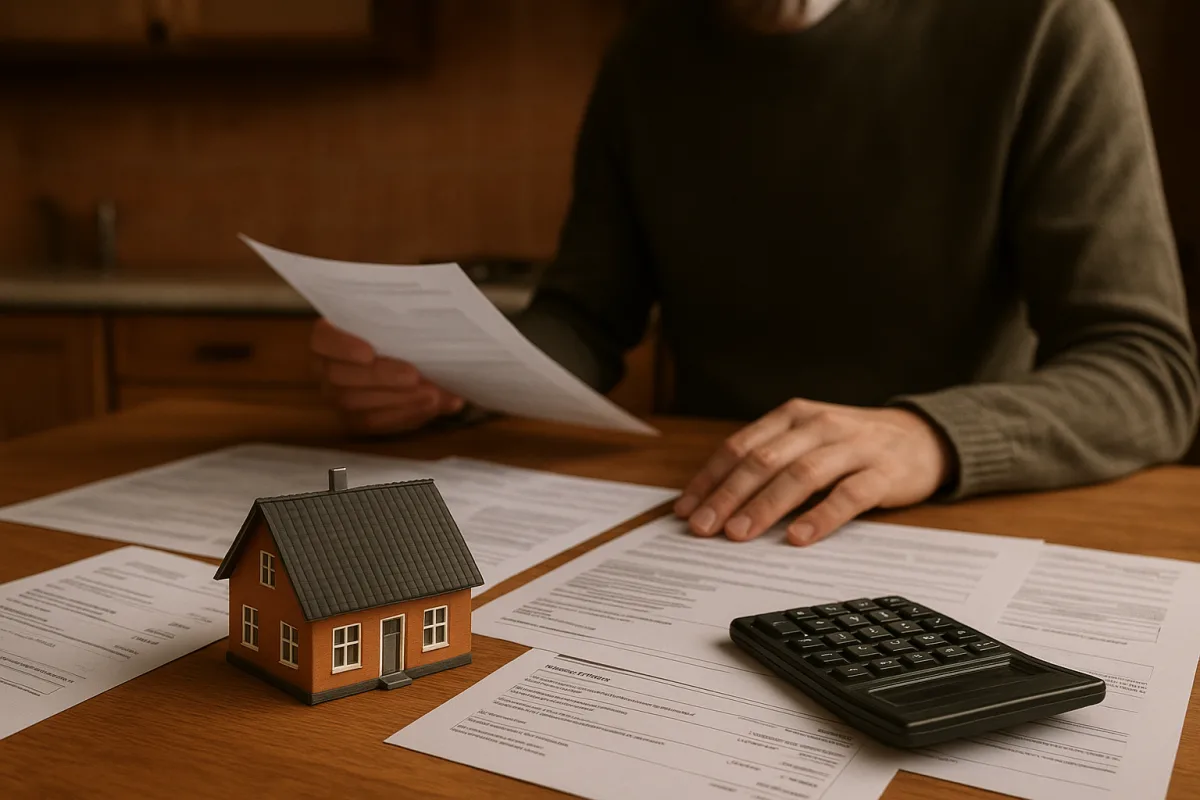
The benefit renters usually mean when they say “building equity”
For renters considering a purchase, equity is usually the most important claimed benefit of homeownership. It is also commonly described too loosely. Equity is not the same thing as the home’s price, your down payment, or the amount you could freely spend.
In basic terms, home equity equals the home’s current market value minus the balance still owed on any mortgage or other liens. If a home could sell for $400,000 and the remaining mortgage balance is $300,000, the owner has $100,000 in equity. [3]
That number can change in two ways. First, the owner pays down mortgage principal. Second, the property’s market value rises or falls. The first is governed by the loan’s payment schedule. The second depends on a local housing market no owner controls.
This is the useful distinction for a renter weighing a purchase. Buying can turn part of a monthly payment into an ownership stake, but it does not make the entire payment an investment, and it does not ensure the stake will grow quickly.
Start with the purchase: a down payment creates equity, but also uses cash
A down payment is the most immediate source of equity. Suppose a buyer purchases a $300,000 home with a 10% down payment, or $30,000. Before prices change and before the first mortgage payment, that buyer has $30,000 of equity.
The mortgage in that example starts at $270,000. If the home remains worth $300,000, subtracting the $270,000 loan balance produces the same $30,000 equity figure. The buyer owns 10% of the property’s value and the lender finances the other 90%.
A smaller down payment can make purchasing accessible sooner, but it means less initial equity. FHA financing can permit down payments as low as 3.5% for eligible borrowers, while required credit scores and other terms vary by loan profile. [14]
Putting down 3.5% on that $300,000 home would mean $10,500 of initial equity and a mortgage of $289,500, before closing costs. That lower upfront cash requirement does not eliminate the cost. It changes the financing structure and leaves less ownership cushion.
Closing costs matter here because they are cash expenses that do not automatically become equity. Typical closing costs run from 2% to 5% of the loan amount, or roughly $6,000 to $15,000 on a $300,000 home, according to homebuying process guides. [7][8][9]
Using the 10% down-payment example, a buyer might bring $36,000 to $45,000 to closing: $30,000 down plus the stated range of closing costs. Only the down payment directly creates equity in the property. The other costs pay for completing and financing the transaction.
Who pays particular charges can be negotiated in some transactions, and seller concessions may change the buyer’s cash requirement. The research brief does not provide a dependable nationwide figure for those concessions, so they should not be assumed when comparing renting and buying.
Why a mortgage payment builds equity slowly at first
The second equity engine is principal repayment. A typical fixed-rate mortgage uses amortization, meaning each required payment includes both interest and principal, but the mix changes over time.
Interest is charged on the unpaid loan balance. Because that balance is largest at the beginning of the loan, interest takes a larger share of early payments. As principal gradually falls, less interest accrues and more of each later payment can reduce the balance.
This is why “my rent pays my landlord’s mortgage, while my mortgage pays me” is incomplete. Part of a homeowner’s monthly principal-and-interest payment reduces the debt. Another part is the lender’s interest charge, which does not create equity.
The distinction is especially important with elevated rates. The research brief cites 30-year fixed mortgage rates averaging about 7% in 2026. At that rate, the early interest share is substantial, even though the payment is fixed on a conventional fixed-rate loan. [12]
Property taxes and homeowners insurance may also appear within one monthly payment through an escrow account. Those amounts are collected by the loan servicer and paid to taxing authorities and insurers. They are housing expenses, not mortgage principal or equity.
Private mortgage insurance, often called PMI, is another possible monthly expense for buyers using conventional loans with smaller down payments. It protects the lender against a specified type of loss, not the homeowner’s equity. It should not be counted as ownership value.
The important comparison is therefore not rent versus a mortgage payment alone. It is rent versus the full owner cost: principal, interest, property taxes, homeowners insurance, maintenance, and potentially mortgage insurance or association dues. Realtor.com’s 2026 cost overview emphasizes these broader ownership expenses. [11]
Appreciation can add equity, but it is the uncertain part
A home can gain equity without any mortgage payment if its market value rises. Return to the $300,000 purchase. If the home later has a market value of $330,000 and the mortgage balance remains $270,000, equity becomes $60,000.
In that example, $30,000 of equity came from the initial down payment and $30,000 came from price appreciation. If the owner had also paid down principal, that amount would be added to the equity calculation.
But appreciation is not a scheduled payment like principal. It is a market outcome. The 2026 research brief notes that Austin and Phoenix have flat or declining property values, while affordability and pricing conditions differ substantially in Midwest and Southern markets. [10]
If the same $300,000 home instead falls to a market value of $280,000 while the mortgage balance is still $270,000, the owner has only $10,000 in equity. A falling market can erase some or all of the original down payment on paper.
That does not necessarily create a loss immediately. A homeowner who does not sell has not yet turned the value change into a completed transaction. But a move, refinance, divorce, job change or other event may force the market value to matter sooner.
This is why equity is most useful when a buyer has time. A five-to-seven-year breakeven period is commonly cited for buying to become financially favorable compared with renting, though the actual result depends on the property, financing and local rent and price trends. [5]
Equity is not cash until a transaction makes it cash
Owners sometimes talk about equity as though it sits in a checking account. It does not. It is the residual value of an asset after debt, and accessing it normally requires selling, borrowing against the home, or refinancing.
At a sale, the property’s sale price first pays off the remaining mortgage balance and any other liens. The owner receives what remains after transaction expenses. The gross equity estimate can therefore be larger than the amount actually available to the seller.
A home loan or cash-out refinance can also turn some equity into borrowed money, but that creates or increases debt. It does not make the underlying housing cost disappear. Borrowing against a home changes the household’s balance sheet and repayment obligation.
For a renter, the practical lesson is that equity is valuable partly because it can eventually be converted into sale proceeds. Yet it should not be treated as emergency cash unless the owner has a realistic path, timing and borrowing terms for accessing it.
The ownership costs that can overwhelm early equity growth
Monthly ownership costs exceed average rent in all 100 of the largest U.S. metropolitan areas in 2026, according to Axios reporting on the rent-versus-own gap. Nationwide, homeowners pay about 37% more per month, the research brief reports. [1]
That gap does not mean ownership has no benefit. It means a household needs to separate monthly affordability from long-run equity. A larger payment may include some principal, but it also includes interest, taxes, insurance and upkeep that do not build ownership.
Maintenance is particularly easy to omit from a renter’s initial spreadsheet because landlords generally handle it. The research brief cites a planning guideline of 2% to 4% of the home’s value each year for maintenance, though actual spending is uneven. [11]
On a $300,000 home, that guideline equals $6,000 to $12,000 annually, or $500 to $1,000 per month if set aside steadily. A household may not spend that amount every month, but roofs, appliances, plumbing and exterior work do not arrive evenly.
Property tax is another local variable with real effect on the ownership calculation. The research brief cites statewide effective rates ranging from 0.27% in Hawaii to 1.92% in Illinois. The same-priced home can therefore carry very different annual tax bills. [11]
For buyers using financing, qualification can limit how much home they can safely pursue. The briefing cites average borrower credit scores of 742 and debt-to-income limits around 43%, while loan programs have different minimum standards. [12][14]
Those mechanics matter because stretching to buy can weaken the benefit of equity. A household that cannot cover repairs, taxes, insurance increases or temporary income disruption may have less flexibility to hold the property through an unfavorable local market.
The nonfinancial benefit is control, not a guaranteed return
Equity is the main financial benefit, but ownership can also provide stability and control. An owner can usually paint, renovate or change the property within legal, financing and association rules without asking a landlord’s permission.
Homeowner satisfaction data support that personal dimension, though surveys do not prove that ownership is the best fit for every household. The Boston Foundation reported that 88% of surveyed Massachusetts homeowners expressed satisfaction with homeownership. [13]
National survey findings also point to community connection, with 77% reporting positive neighbor relationships in the cited homeowner satisfaction research. [16] That benefit is real for people who value permanence and local involvement, but it is not a line item that offsets a payment.
Buying also takes time before the first ownership payment begins. The research brief estimates two to four weeks for preapproval, one to four months for home searching, 30 to 45 days for due diligence, and another 30 to 45 days to close. [7][8][9]
That timeline matters because a buyer’s expected stay begins long before a future sale. Someone expecting a job move or life change soon may have less time for principal paydown and appreciation to offset the upfront costs of getting ownership.
I am not a licensed real estate agent, lender or financial adviser. For a renter considering a purchase, the useful calculation is personal: use the actual loan estimate, local taxes, insurance quote, likely maintenance reserve and realistic time in the home.
Frequently Asked Questions
What are the financial benefits of home ownership?
The primary financial benefit of homeownership is building equity, which is the portion of the home's value you own after subtracting the mortgage balance. Additional benefits include tax advantages like mortgage interest deductions and capital gains exclusions on primary residences. However, owning a home generally costs more monthly than renting in major U.S. metros as of 2026.
How does home equity build over time?
Home equity grows through two main mechanisms: paying down the mortgage principal and increases in the property's market value. The principal portion of mortgage payments gradually reduces the loan balance, while appreciation in local home prices can increase the home's market value, thereby increasing equity.
Why does a mortgage payment build equity slowly?
Early mortgage payments are weighted heavily toward interest rather than principal, especially with typical 30-year fixed loans at about 7% interest. Because interest is charged on the remaining loan balance, which is highest at the start, only a small portion of early payments reduces principal and builds equity.
What costs should I expect beyond the mortgage payment?
Homeownership involves additional expenses such as property taxes, homeowners insurance, maintenance, and closing costs. These costs can make owning more expensive monthly than renting, and maintenance alone is often recommended to be budgeted at 2% to 4% of the home's value annually.
How does home appreciation affect my equity?
Changes in local housing market prices directly impact your home equity. If property values rise, your equity increases even if the mortgage balance remains the same. Conversely, if prices fall or stagnate, equity growth can stall or decline regardless of mortgage payments.
How we researched this
This article was assembled from 16 cited references.
Nothing here is based on hands-on testing. Where a figure or finding appears, it belongs to the source cited beside it, and the writing says so rather than implying otherwise. Every source is listed below so you can check it.
Sources
- Renting is cheaper than owning in every major U.S. metro
- Community participation and rural residents' sense of gain, happiness, and security: the mediating role of collective psychological ownership.
- What Home Equity Is and Why It's a Valuable Long-Term Investment
- Why Is Homeownership Important: Equity and Tax Benefits - LegalClarity
- Renting vs Buying in 2026: The Complete Financial Breakdown | Calculory AI
- Average Rent by City (2026): Monthly Costs in 100+ US Cities | Wealthvieu
- Your timeline for the homebuying process
- The Home Buying Checklist: 12 Steps From Financial Prep to Move-In (2026) | Opendoor
- The Home Buying Process Timeline Explained | Redfin
- Home Price Trends by Region in 2026: A Market-by-Market Map | HomeCostLab
- What Owning a Home Really Costs in 2026
- How will 7% mortgage rates change home ownership?
- New survey finds that, despite challenges, Mass. homeowners find financial and personal benefits from homeownership - TBF
- FHA Loan Requirements for 2026 - NerdWallet
- Affordability for Potential Homebuyers Stabilizes for the First Time in Three Years | Zillow Research
- Homeowner Satisfaction Survey - Foundation for Community Association Research
Related Articles

Real Estate Market Trends
Learn how to understand real estate market trends, including months of supply and mortgage rate impacts, to make smarter buying or selling decisions.
Improve Credit Score for Mortgage: Steps to Boost Your Score
Learn how to improve credit score for mortgage approval with proven steps, timelines, and tips to lower your mortgage rate.
Affordable Neighborhoods for First Time Home Buyers in 2026
Explore affordable neighborhoods for first time home buyers with insights on monthly costs, taxes, insurance, and financing in 2026.

Best Time to Buy a House in 2026
Discover the best time to buy a house in 2026 with insights on seasonal trends, mortgage rates, and market conditions to help you plan your purchase.