
What to Include in a Home Sale Listing: Key Details to Add
Learn what to include in a home sale listing to attract buyers with accurate details, features, disclosures, and pricing tips.
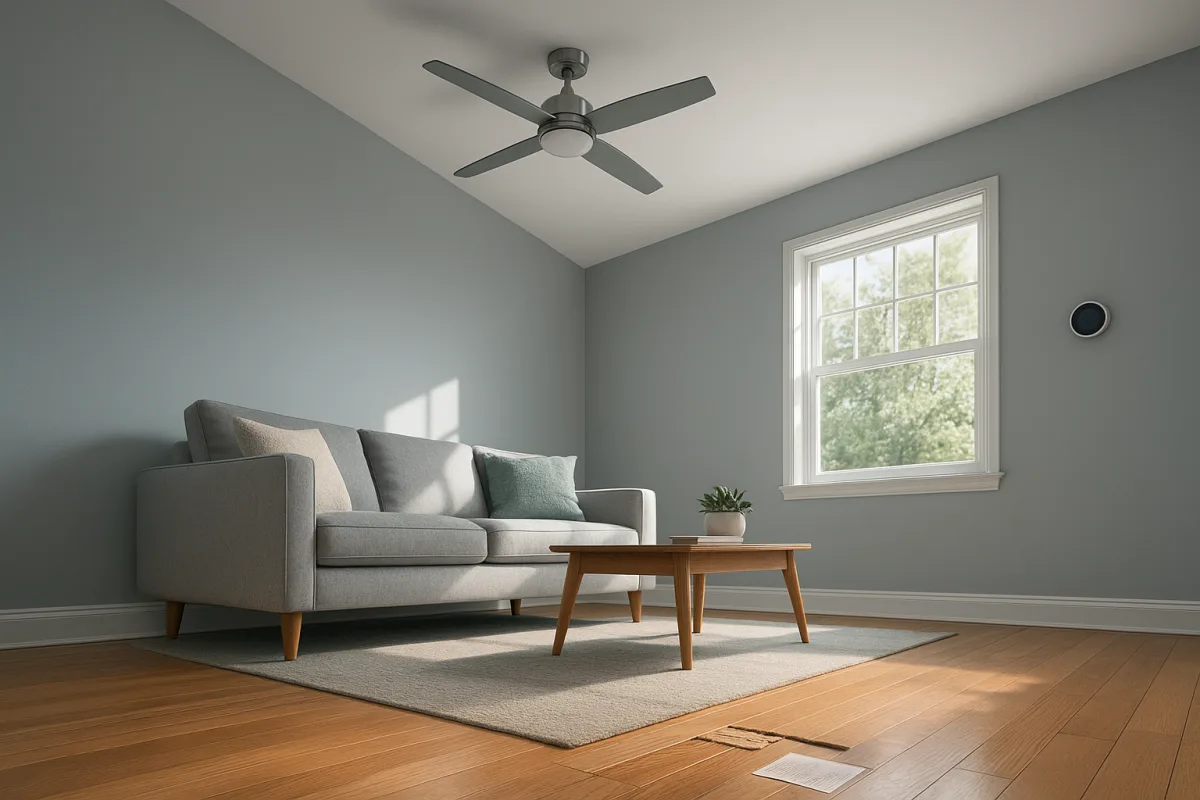
First, make the property ready for the claims you want to make
A listing cannot credibly promise “move-in ready” if buyers will immediately find peeling exterior paint, a leaking faucet, deferred roof maintenance, or an overgrown yard. Kiplinger and AvailableMax both identify condition, repairs, staging, and presentation as meaningful parts of a sale strategy. [4][5]
Start with a walk-through from the street, then work inward. Note visible maintenance items, including damaged trim, worn caulk, nonworking fixtures, stained ceilings, loose railings, pest evidence, and landscaping that obscures the entry or windows.
The goal is not to claim perfection. It is to decide what should be repaired before photography, what must be disclosed, and what needs a measured explanation in the listing materials. Known problems do not disappear because they are omitted from marketing copy. [17]
Curb appeal deserves a specific checklist because it is the first part of the property buyers see online and in person. Trim landscaping, remove dead plants, repair visibly peeling paint where practical, clean walkways, and make sure the front door and house numbers are easy to find. [18][19]
If the house has mature trees, natural flagstone paths, updated Energy Star-certified appliances, or Energy Star windows, list those features precisely. Kiplinger identifies energy efficiency and selected landscaping improvements as features that can add buyer appeal. [4]
Avoid unsupported shorthand such as “energy efficient” if you only know that one appliance was replaced. A stronger, more useful listing identifies the item, such as “Energy Star dishwasher installed in 2024,” if that date is documented.
Smart-home features also need an inventory, not a vague promise. Home Key Builders identifies app and voice integration, advanced security, smart lighting, automated window treatments, connected kitchen appliances, and AI-driven climate control as increasingly expected features in 2026. [3]
Tell buyers what stays with the house, what app or hub operates it, and whether the equipment is owned or subject to a subscription. The research brief does not establish how much these features increase sale price, so do not present them as a guaranteed return.
Then assemble the facts buyers, appraisers, and lenders will compare
Before writing a description, prepare a one-page property fact sheet. At minimum, include the full property address, asking price, number of bedrooms and bathrooms, square footage, lot size, year built, and major features or upgrades. [6][7]
Square footage needs particular care because it affects online search results, buyer comparisons, appraisal analysis, and value expectations. The research brief calls for ANSI Z765-2021 measurement, which counts finished, above-grade living areas rather than blending every finished space into one number. [12]
That distinction matters for basements, garages, enclosed patios, and other spaces buyers may value but that should not automatically be represented as above-grade living area. If a lower-level area is finished, describe it separately and state its use clearly.
Room dimensions can make the listing more practical, especially when rooms are unusually compact, unusually large, or shaped in a way that affects furniture placement. The International Residential Code baseline cited in the brief requires habitable rooms to be at least 70 square feet and at least seven feet in any horizontal dimension. [12]
Do not use national averages as though they establish what your house should be worth. The median new single-family home measured 2,142 square feet in 2025, but a buyer will compare your home with nearby alternatives, not with a national median. [12]
Lot size should cover the entire parcel, including the house footprint, driveway, yard, and outbuildings. It can be stated in square feet or acres, but use the public record, survey, or other reliable document rather than estimating from a map. [13]
Context helps buyers interpret that figure. The research brief puts the national median lot size around 10,871 square feet, while urban lots are often below 5,000 square feet, suburban lots commonly run 8,500 to 14,500 square feet, and rural lots can exceed 22,000 square feet. [13]
Local rules may affect what buyers can do with the lot or structure. For example, the brief notes a 7,500-square-foot minimum lot in a New Jersey low-density residential district, while Florida local requirements can address minimum room sizes. Verify the rules that apply to your property. [14]
Price before buyers decide the listing is not worth opening
Set the asking price after reviewing recent comparable sales and, where useful, obtaining an independent appraisal. Kiplinger warns that pricing above the market can deter buyers and lengthen market time, even if the seller later reduces the price. [4]
Comparable sales should resemble the property in location, condition, size, layout, lot characteristics, and amenities. A renovated home with a finished basement or extensive smart-home equipment may not compare cleanly with an older home nearby, even if both have the same bedroom count.
Do not assume that a buyer’s mortgage approval determines the home’s value. A lender’s appraisal is a separate value check tied to the buyer’s loan. If the appraisal comes in below the contract price, the buyer may need more cash, a lower price, or a different financing structure.
The research brief does not provide data supporting the inclusion of mortgage payment examples, escrow estimates, closing-cost figures, or appraisal-gap language in the listing itself. Leave those calculations out unless local professionals provide compliant, property-specific guidance.
Affordability conditions still affect how buyers respond to price. The Associated Press reported that the average 30-year fixed mortgage rate rose above 7 percent in late September 2026, which can materially change a buyer’s monthly principal-and-interest payment from one pricing band to another. [2]
For illustration only, not a rate quote, a higher purchase price has a larger payment effect when rates are elevated. That makes accurate pricing and visible condition more important, but the right price still depends on your local comparable sales, timeline, and buyer pool.
Spend on the listing assets buyers will actually use
Use 20 to 30 high-quality photos as a working target, not a legal requirement. DoorAppeal recommends coverage of the front exterior, backyard, main living spaces, kitchen details, primary and secondary bedrooms, bathrooms, fireplaces, finished basements, and notable outdoor features. [8]
The first photo should help a buyer identify the home and understand its exterior condition. Subsequent photos should answer the questions that create or break interest: Is the kitchen functional? Are bedrooms usable? Is there storage? What does the backyard offer?
Do not use photos to hide material layout limitations. A wide-angle image may show a room attractively, but buyers will still see the actual dimensions during a showing, inspection, or appraisal visit. Pair strong images with accurate room and square-footage information.
For homes under 3,500 square feet, a standard professional photography package commonly costs about $250 to $500, according to the research brief. Virtual tours, drone photography, and twilight images generally cost extra, so ask for an itemized quote before ordering them. [8]
Drone photos are most useful when they show something a ground-level image cannot, such as a large lot, a wooded setting, proximity to water, or an outbuilding. They are less useful as decorative filler on a property where location context creates more questions than answers.
Staging is a separate decision from photography. A consultation may cost $150 to $600, occupied full-home staging commonly ranges from $1,500 to $5,000, and vacant full-home staging can run $2,000 to $10,000 or more. [9][10]
If full staging exceeds your budget, use the consultation to prioritize. Removing excess furniture, personal collections, and visually dominant décor can make room dimensions easier to understand without paying for a fully furnished staging package.
Some providers price staging by room, at roughly $300 to $600 per month. Confirm the rental period, delivery, installation, pickup, damage terms, and whether photography is included, because the quoted monthly room rate may not represent the full cost. [9][10]
Write the description as a factual guided tour
Organize the written description in the order a buyer experiences the home: location and exterior, main living areas, kitchen, bedrooms and baths, finished lower level or flex space, outdoor areas, and systems or upgrades.
Use concrete nouns and verifiable details. “Four-bedroom home with ANSI-measured 2,180 square feet of above-grade finished living area, a 9,600-square-foot lot, Energy Star windows, and a fenced backyard” tells a buyer more than “must-see dream home.” [6][7][12]
Describe smart features with enough detail for buyers to understand their value. For example, identify whether the home has app-controlled lighting, a connected thermostat, security cameras, smart locks, automated shades, or smart appliances, and clarify which components convey. [3]
Avoid superlatives and claims you cannot support, including “best neighborhood,” “perfect for families,” or “guaranteed savings.” Fair housing compliance and local advertising rules matter, and broad lifestyle claims can create problems that a factual property description avoids. [7]
If an improvement has a documented date, permit, warranty, model number, or certification, keep those records available. The listing can mention the improvement, while a disclosure package or showing binder can provide the documentation a serious buyer will ask for.
Disclose before an inspection turns into a trust problem
Disclosures are not optional marketing extras. Federal lead-based paint disclosure requirements apply to homes built before 1978, including information about lead hazards and the buyer’s inspection opportunity. [6]
State and local requirements can go further. Sellers may need to disclose known material defects involving appliances, roof condition, pests, water intrusion, environmental hazards, and, depending on jurisdiction, certain stigmatizing events. [17]
Do not wait for an inspection report to reveal something you already know. A buyer who learns late about repeated water intrusion or a defective appliance may question every other representation in the listing, even where the issue is repairable.
Requirements vary substantially by state. The research brief notes Florida property-tax reassessment information and a Washington seller disclosure statement taking effect January 1, 2027, which illustrates why generic internet checklists are not enough. [6][17]
Review your state forms and local rules with a qualified local attorney, agent, or other appropriate professional. I am not a licensed real estate agent, lender, attorney, or financial advisor, and this is general educational information rather than advice for your transaction.
Keep the listing available, then adjust to the market you have
A well-prepared listing still loses opportunities if buyers cannot see the home. Several seller-mistake guides identify restricted showing availability as a practical problem, so offer reasonable access and keep the home photo-ready during the first days on market. [20][22]
That may mean arranging pet care, securing valuables and medication, and having a short reset routine for counters, beds, lights, and outdoor areas. Buyers often revisit the photos immediately after a showing, so the in-person condition should match them.
Timing should reflect local competition and your own deadline. Realtor.com identifies September 27 through October 3, 2026, as a favorable national buying week because of higher inventory, lower prices, and less competition, but that is buyer-focused national data, not a universal seller calendar. [15]
Fall can also bring 25 to 35 percent fewer listings than summer and 15 to 20 percent longer days on market, according to HomeWorth Radar. Less competition may help visibility, while longer marketing periods may require patience and disciplined pricing. [16]
Regional conditions differ. Axios reported expectations for 3 to 4 percent price growth in the Northeast and Midwest, while HousingWire projected slower growth in parts of the South and West as affordability pressures persist. [1]
Inventory growth had slowed to 10 percent year over year as of January 2026, down from 33 percent in mid-2025, according to the research brief. That changing supply picture is a reason to revisit comparable sales and competing listings rather than relying on last season’s strategy. [1]
The practical listing plan is therefore simple but not simplistic: repair what buyers will see, document what you claim, photograph the whole property, disclose known issues, price from current evidence, and keep access workable. The right mix depends on your rate environment, local market, property condition, and timeline.
Frequently Asked Questions
What key details should be included in a home sale listing?
A home sale listing should include the full address, asking price, ANSI-measured above-grade finished square footage, bedroom and bathroom count, lot size, year built, and any required disclosures. Including these verified basics helps build trust and meets legal expectations.
How do I accurately describe a home's features in a listing?
Describe features concretely and precisely rather than using vague terms. For example, specify “Energy Star dishwasher installed in 2024” instead of just “energy efficient.” For smart home features, list the specific equipment, the controlling app or hub, and whether the devices are owned or subscription-based.
What disclosures are required in a home sale listing?
Sellers must disclose known material defects such as issues with appliances, roof, pests, water intrusion, or environmental hazards. Lead-based paint disclosure is mandatory for homes built before 1978 and must include hazard information and an inspection period.
How should I present smart home and energy features in a listing?
Only include smart home and energy features if you can describe them accurately and concretely. List specific items like AI-driven climate control, advanced security, smart lighting, or Energy Star-certified appliances, and clarify what stays with the house and how the features are operated.
What property measurements and facts are important for listings?
Use ANSI Z765-2021 standards to report finished, above-grade living area square footage. Include bedroom and bathroom counts, lot size expressed in square feet or acres, and year built. Lot size should cover the entire parcel, including yard, driveway, and outbuildings.
How we researched this
This article was assembled from 23 cited references.
Nothing here is based on hands-on testing. Where a figure or finding appears, it belongs to the source cited beside it, and the writing says so rather than implying otherwise. Every source is listed below so you can check it.
Sources
- What 2026 could hold for the housing market
- Mortgage rates climb for 5th straight week, pushing average rate on a 30-year home loan above 7%
- SMART HOME FEATURES THAT ACTUALLY SELL HOUSES IN 2026 | Brand New Turn Key Rental Properties
- 13 Home Features That Add Value and Speed Up a Sale
- Why Your Home Isn’t Selling in 2026: 9 Real Reasons + Fixes
- Listing Sheet Template: Property Details and Disclosures - LegalClarity
- How to Write a Listing Description That Sells | Opendoor
- The 2026 Real Estate Listing Assets Playbook (For New Agents) – DoorAppeal
- Home Staging Cost in 2026: What Sellers Actually Pay
- Home Staging Cost: What You'll Pay and Whether It's Worth It | BlueprintKit
- How Much Does Home Staging Cost? [2025 Data]
- Home Size Statistics 2026 | 70+ Verified Figures | MeasureFloorPlan
- Average Yard Size in the US 2026 — By Region & Home Type
- Minimum Home Size Requirements | Levy County, FL
- The Best Time To Buy a Home - Realtor.com
- Housing Market Forecast Q4 2026: What to Expect This Fall | HomeWorth Radar
- Selling a Home? What You Must Tell Buyers About Its Defects
- The most common mistakes home sellers make (and how to avoid them)
- Common Home Selling Mistakes to Avoid | Homexa®
- Top 5 Mistakes Sellers Make When Selling a Home
- Common Mistakes Home Sellers Make While Selling Their Home
- Common Home Showing Mistakes Sellers Make - REMAX Blog
- It took longer than average to get an offer on my house - these are the 6 selling mistakes I made that I definitely won't be making again
Related Articles
How to Sell a House Fast: Proven Strategies for Quick Sales
Learn how to sell a house fast with pricing tips, pre-listing inspections, and marketing strategies to close quickly in any market.
How to Read a Real Estate Listing: A Buyer’s Guide
Learn how to read a real estate listing, interpret terms, prices, and abbreviations to make informed home buying decisions.
Increase Home Value Before Selling
Learn how to increase home value before selling with smart repairs, exterior upgrades, and budgeting tips for the best return on investment.
What Is a Title Search? Understanding the Process
Learn what a title search is, how it works, what it reveals, and why it's essential before buying a home.