
Choose the Right Real Estate Attorney for Your Home Purchase
Learn how to choose the right real estate attorney, including qualifications, fees, and key questions to ask before hiring for your home purchase.
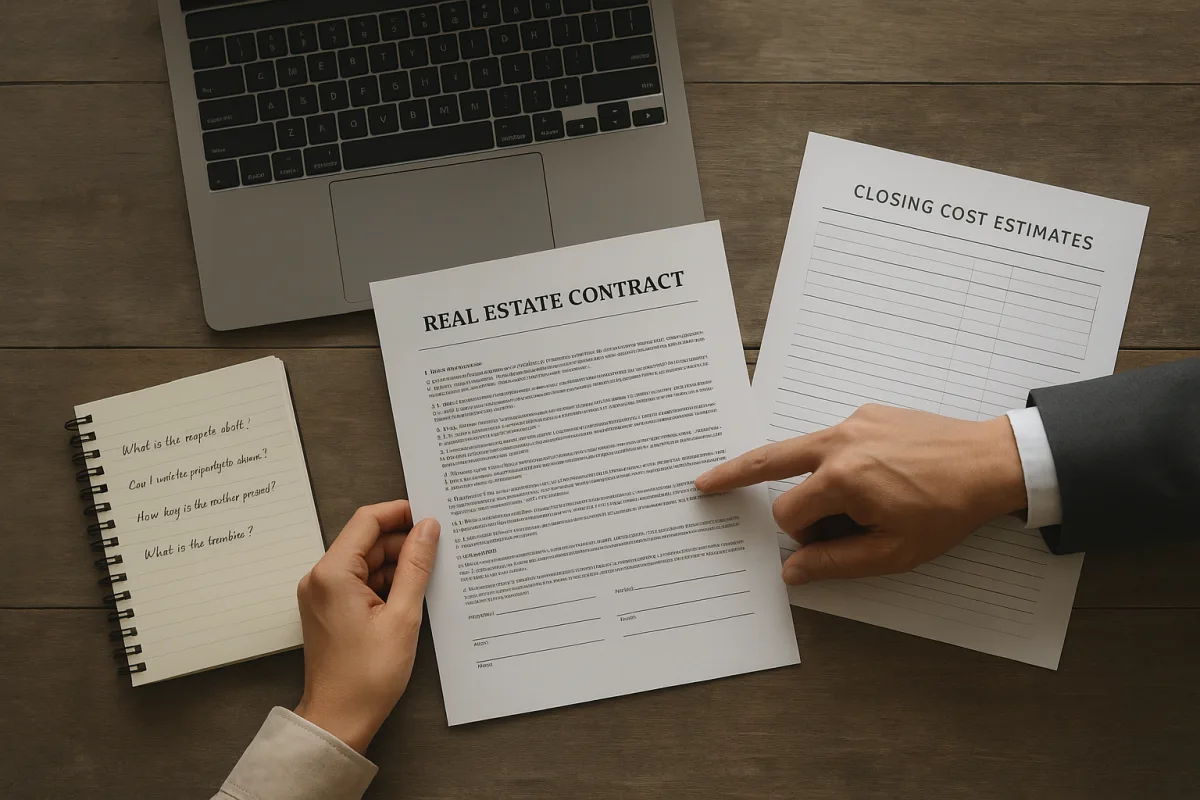
Start before the offer, with your state’s closing rules
The first question is not, “Do I need a real estate attorney?” It is, “What does my state require, and when does the attorney need to enter the deal?” Attorney involvement is mandatory in roughly a dozen states, including Connecticut, Delaware, Georgia, Massachusetts, New York, North Carolina, South Carolina, Rhode Island, and West Virginia. [1][3]
In states where attorney involvement is optional, buyers can still hire one for a standard purchase. The case becomes stronger when the property, financing, title history, seller relationship, or contract terms are unusual. An agent, lender, escrow officer, and title company each have transaction roles, but none is automatically your legal representative.
That distinction matters early. A purchase contract can set the deadline for deposits, inspections, financing approval, appraisal, and closing before a problem becomes visible. LegalClarity describes attorney review as typically occurring after contract signing and commonly lasting three to five business days. [1]
Ask your buyer’s agent, title company, or state bar referral service for names before you make an offer. Then verify independently that each candidate is licensed in your state and can handle a residential purchase in the county where the property sits.
I am not a licensed real estate agent, lender, or legal adviser. This guide explains the mechanics of choosing counsel and the transaction issues worth asking about. The right choice depends on your state, loan terms, property, local market, and closing timeline.
Choose the attorney based on your deal, not the firm’s general reputation
When you call, explain the transaction in concrete terms: purchase price, property type, city or county, whether you have a mortgage, target closing date, and anything already unusual. Examples include a condo, inherited property, estate sale, new construction, tenant occupancy, private road, shared well, or a seller who wants you to waive contingencies.
Then ask whether the attorney represents buyers in residential closings like yours. “Real estate law” can cover commercial leases, landlord-tenant disputes, litigation, zoning, and development. A lawyer may be excellent in one category without routinely reviewing the residential contracts, lender documents, title exceptions, and recording practices that shape a home purchase.
State specialist programs can offer one useful screening tool, although certification is not the only measure of competence. Florida’s board-certification requirements include at least five years of practice, substantial real estate-law involvement, and 45 hours of real-estate continuing education over three years. [6]
Arizona’s certified-specialist standard requires seven years of practice and substantial real estate-law work over five of the previous seven years. [7] Connecticut’s residential specialist program requires that residential real estate make up at least 25% of the lawyer’s practice. [8]
Ask directly: “Will you personally review the contract and attend or oversee closing?” Also ask who will answer routine questions, who handles title objections, and whether another lawyer takes over if a dispute arises. A low quoted fee can reflect a limited role, rather than a better value.
Finally, check the lawyer’s standing through the state bar and look for peer references where available. You are not looking for a promise that nothing will go wrong. You are looking for evidence that this lawyer handles the type of problem that could go wrong in your transaction.
Get the fee arrangement before attorney review starts
A buyer should ask for a written estimate that states both the base fee and the events that trigger additional charges. Forbes Advisor reports national flat fees for residential closings generally ranging from $500 to $1,500, with hourly rates around $150 to $400. [4]
Those national ranges are not a reliable budget for every market. CostofLaw reports average hourly figures near $412 in New York, $461 in California, and $332 in Florida, alongside typical flat-fee ranges of $1,800 to $2,500 in New York, $1,500 to $2,200 in California, and $1,000 to $1,600 in Florida. [5]
The important question is what the quote includes. A routine closing fee may cover contract review, basic title review, communications with the lender and title company, document preparation, and closing coordination. It may not cover negotiating contract revisions, clearing a lien, reviewing a condominium association dispute, or litigating a default.
Ask whether the fee is still owed if the deal fails during inspection, financing, appraisal, or title review. Ask whether the lawyer bills hourly after the attorney-review period, what the hourly rate is, and whether paralegal time, courier charges, wire fees, or recording-related costs are separate.
Legal fees are generally a buyer closing-cost line item when an attorney is involved, but the Closing Disclosure may not appear until shortly before closing. Keep the attorney’s engagement letter and fee quote in your closing-cost file, rather than assuming the initial estimate captures every possible issue.
Use the attorney-review window to fix the offer’s weak spots
Once your offer is accepted, the attorney’s first useful job is to read what you actually signed. The purchase agreement should accurately identify the property, price, earnest-money amount, deposit holder, deadlines, and closing date. [13][15]
This is where verbal assurances need to become contract language. A seller’s promise to repair a roof, leave appliances, remove a shed, credit you for a defect, or permit early access may be difficult to enforce if it never appears in a signed amendment. Homebuyer-focused legal guidance repeatedly identifies reliance on verbal promises as a costly mistake. [10][12]
Give the attorney every attachment, email, disclosure, inspection report, and side agreement you have received. Do not assume an addendum is minor because it is only one page. The addendum may alter attorney-review rights, dispute procedures, deposit rules, or the deadlines that protect your ability to walk away.
Ask the attorney to explain the default and remedies clause in plain English. If you miss a deposit deadline or terminate outside a valid contingency, can the seller retain earnest money, seek damages, or pursue another remedy? The answer depends on the contract and state law, not on a national rule. [13][15]
Match contingencies to the risks you can actually afford
The contract’s contingencies are the bridge between your offer and the property’s real condition. Attorneys commonly review financing, inspection, appraisal, title-insurance, and survey contingencies, along with who pays specific closing costs. [1][13]
For financing, ask what loan terms are protected. A contingency tied only to whether you obtain “a loan” may work differently from one that specifies loan type, amount, rate, or other terms. Your lender can explain underwriting and loan costs, while your attorney can explain what the contract requires if approval changes.
For inspection, ask about the deadline, the method of notice, and the permitted outcomes. Some contracts allow cancellation within the inspection period. Others establish a repair-negotiation process, a credit request, or a fixed right to terminate. A general inspection finding is not automatically a contractual right to a lower price.
For appraisal, focus on the dollars rather than the label. If the contract price is $500,000, your loan is based on 80% loan-to-value, and the appraisal is $480,000, the lender may base 80% financing on $480,000, or $384,000. If the price stays $500,000, you may need $116,000 in cash before other closing costs, rather than $100,000.
That $16,000 difference is one version of an appraisal gap, but the actual result depends on your loan program, lender rules, renegotiation, appraisal-contingency language, and any cash-gap promise you made. Have the attorney read the contingency alongside your lender’s loan estimate, rather than treating either document as a substitute for the other.
Do not skip the title and survey questions
A title search is intended to uncover ownership problems, recorded liens, judgments, easements, restrictions, and other exceptions that may affect your ownership or use. Attorneys can review title issues and work toward clearing defects before closing. [1][2][3]
Ask for the title commitment or preliminary title report as soon as it is available, then ask the attorney which exceptions require attention. “Clear title” is not a useful answer by itself. You need to know whether an existing mortgage, tax lien, access easement, restrictive covenant, or old judgment will remain after closing.
A survey answers a different question. It can identify boundary lines, encroachments, and visible improvements that do not match the recorded description. Buyer legal guidance specifically flags failure to verify boundaries with a survey as a common mistake. [10][11]
Whether a new survey is necessary depends on the property, local practice, lender and title requirements, and what prior survey materials exist. Ask the attorney what risk you would be accepting by relying on an older survey or declining one, particularly where fences, driveways, sheds, or shared access are involved.
Use counsel at closing to verify the money and documents
Before closing, compare the contract, lender figures, and Closing Disclosure. The attorney can review the deed, mortgage documents, closing paperwork, cost allocation, and the documents needed to transfer ownership. [1][2][3]
The Closing Disclosure should show your loan terms, cash to close, lender charges, prepaid items, escrow funding, title charges, taxes, insurance, and credits. An attorney is not replacing your lender’s explanation of the mortgage, but can help identify whether the legal documents and negotiated contract terms match the deal you expected.
Escrow can mean different things in the same purchase. Your earnest-money deposit may sit with an escrow holder before closing. After closing, your mortgage servicer may collect monthly amounts for property taxes and homeowners insurance in an escrow account. Ask which meaning applies whenever someone says money is “in escrow.”
At the finish line, confirm how funds will be disbursed, when the deed will be recorded, and what happens if a last-minute title or wire problem delays recording. Real estate attorneys may coordinate closing, fund disbursement, deed recording, and related filings, depending on state practice and engagement scope. [1][9]
Do not send wiring instructions based solely on an email, even if it appears to come from a familiar participant. Independently call a verified number for the title company, closing attorney, or settlement office and confirm instructions before sending funds.
Know when a routine closing has become a legal problem
Some issues belong in a normal closing file. Others can turn into negotiation or dispute work, often outside a flat-fee arrangement. Notify your attorney quickly if the seller refuses an agreed repair, cannot clear title, misses the closing date, changes possession terms, or disputes the return of earnest money.
Do the same if you discover undisclosed property conditions, a boundary conflict, or contract language that does not match what the parties later claim was agreed. Legal guidance on buyer disputes consistently emphasizes early documentation and prompt attention to title and contract defects. [10][11][12]
Keep a single record of signed agreements, amendments, disclosures, inspection requests, receipts, and deadline notices. The attorney can advise on the legal significance of those materials, but cannot reconstruct a promise that was never documented or rescue a contingency deadline that has already expired.
A capable attorney does not make a home purchase risk-free, and hiring one is not automatically necessary everywhere. The practical value is narrower and more concrete: someone whose job is to read the contract, title, deed, and closing terms for your legal exposure before money and ownership change hands.
Frequently Asked Questions
How do I choose the right real estate attorney for my home purchase?
Choose an attorney who regularly handles buyer-side residential transactions in the county where you are buying. Explain your transaction details clearly, including purchase price, property type, and any unusual circumstances, and confirm the attorney’s experience with similar deals. Verify their state credentials, disciplinary record, and whether they will personally review your contract and attend or oversee closing.
What qualifications should I look for in a real estate attorney?
Look for attorneys with relevant state bar certification or specialist designation in real estate law, such as Florida’s board-certification or Arizona’s certified-specialist programs. These typically require several years of practice focused substantially on real estate law, plus continuing education. Also consider peer references and a clean disciplinary record as indicators of competence.
When should I hire a real estate attorney during the home buying process?
Hire and interview attorneys before you make an offer, because attorney-review periods usually last only three to five business days after contract signing. Early involvement allows the attorney to review contingencies, title issues, and contract terms promptly to avoid missing critical deadlines.
How much does a real estate attorney typically charge for a home closing?
Nationally, flat fees for residential closings generally range from $500 to $1,500, with hourly rates around $150 to $400. However, fees vary by state and market; for example, New York flat fees can run $1,800 to $2,500. Always request a written fee quote that distinguishes routine closing services from additional work such as title defects or contract negotiations.
What questions should I ask a real estate attorney before hiring?
Ask if the attorney personally will review your contract and attend or oversee the closing. Inquire who will handle routine questions, title objections, and whether another lawyer will take over if a dispute arises. Also request a clear written scope of services and fee estimate, including what triggers extra charges beyond a routine closing.
How we researched this
This article was assembled from 15 cited references.
Nothing here is based on hands-on testing. Where a figure or finding appears, it belongs to the source cited beside it, and the writing says so rather than implying otherwise. Every source is listed below so you can check it.
Sources
- Real Estate Attorney Duties: From Contract to Closing - LegalClarity
- What does a real estate attorney do?
- What Does a Real Estate Attorney Do? (2026)
- What Does A Real Estate Attorney Do? – Forbes Advisor
- 2026 Real Estate Lawyer Fees | Residential & Commercial Rates
- Real Estate Law Certification – The Florida Bar
- Real Estate Attorney Certified Specialist Designation | State Bar of Arizona
- Residential Real Estate Specialist Certification Program | Connecticut Bar Association
- Real Estate Attorney's Role at Closing | Schneidman Law
- 5 Costly Mistakes Homebuyers Make Before Buying a House in Bucks County (That Can Cost You Thousands) | Bucks County Real Estate Lawyer Blog | July 6, 2026
- Common Mistakes Homebuyers Make When Reviewing Real Estate Contracts
- 6 Mistakes That Cause Real Estate Disputes – Ager Law Office
- Real Estate Contract Review Checklist | Scipio Law
- Real Estate Contract Review
- Home Sale Contracts - FindLaw
Related Articles

How to Choose a Real Estate Agent
Learn how to choose a real estate agent with expert tips on interviewing, verifying credentials, and comparing experience for buyers and sellers.

Choose the Right Home Inspector: Essential Buyer’s Checklist
Learn how to choose the right home inspector with tips on qualifications, costs, insurance, and what to ask before booking your inspection.

Prepare for a Home Showing During Winter: Essential Tips
Learn how to prepare for a home showing during winter with tips on snow removal, thermostat settings, and managing wet boots for a safe, inviting visit.
Real Estate Contingency: What It Means and How It Works
Learn what a real estate contingency is, common types, deadlines, and how it protects buyers in home purchase contracts.