
Prepare for a Home Showing During Winter: Essential Tips
Learn how to prepare for a home showing during winter with tips on snow removal, thermostat settings, and managing wet boots for a safe, inviting visit.
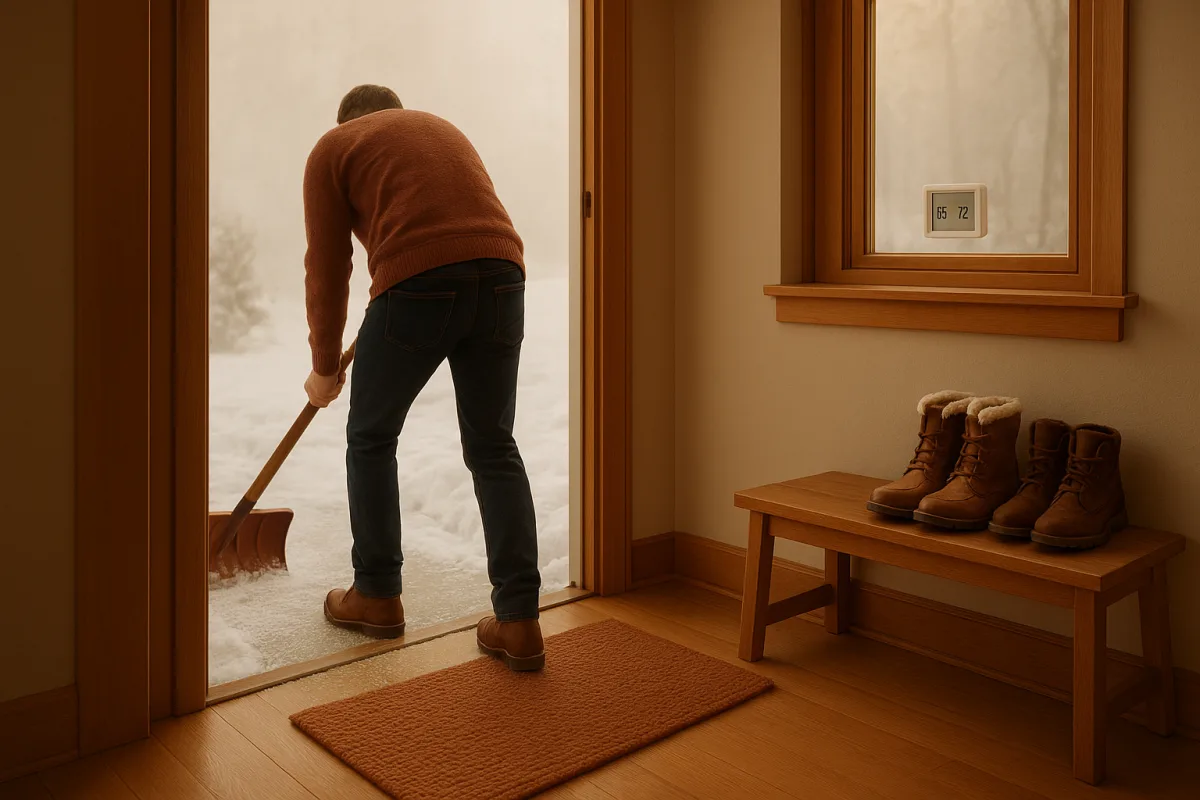
Start with the route a buyer will actually walk
A winter showing begins before a buyer reaches the front door. They will notice whether the street-facing view looks maintained, whether the driveway is usable and whether the path to the entrance feels safe.
Clear the full route, not only a narrow strip leading to the door. Edina Realty recommends removing snow and ice from driveways, sidewalks, steps and porches before showings, both for safety and for the basic impression that the property is cared for. [2]
That means treating each appointment as a fresh reset. A walkway cleared in the morning can collect drifting snow, slush or refrozen meltwater by afternoon, particularly after a thaw-and-freeze cycle.
In an active storm, do not assume one round of shoveling will hold. Winter-showing guidance from Key Cornerstone Realty and Homes & Gardens emphasizes clearing repeatedly during storms so snow is not packed down into a slick ice layer. [6][8]
Use traction material deliberately. Chris Buys Homes in Indianapolis recommends applying salt or ice melt 30 to 60 minutes before a showing, allowing it time to begin working before people compact snow under their boots. [9]
Sand can add traction where ice melt alone is insufficient, especially on steps, shaded walks and sloped drives. Edina Realty also recommends salt, ice melt or sand as part of preparing snowy approaches for buyers. [2]
Avoid leaving piles of snow where they narrow the driveway, block access to a gate or obscure the front walk. Apartment Therapy identifies neglected winter yard maintenance as a common seller error, and blocked access makes a property feel harder to use. [15]
Make the entrance work for wet boots
Once visitors get through the door, the winter problem changes from slip risk to water management. In snow-prone areas, buyers may arrive with wet boots, and a clean house can look messy quickly if there is no clear place to manage them.
Set out disposable shoe covers near the entry, or provide a boot tray and drying rack where guests can remove wet footwear without leaving puddles on flooring. Edina Realty specifically recommends shoe covers or boot-drying arrangements for winter showings. [2]
This is particularly useful for homes with light carpet, hardwood near the entrance or a long route from the front door to the main living areas. The goal is not elaborate staging. It is preventing slush, grit and wet footprints from becoming the first interior impression.
Keep the entry route free of bulky coats, spare boots and snow-removal tools. Buyers need enough room to enter, close the door and take in the space without navigating the seller’s winter gear.
For northern sellers, this setup should be part of the regular showing routine because snow management and floor protection are recurring issues. Wisconsin winter-showing guidance similarly focuses on keeping a house ready through snowstorms, rather than cleaning only once before listing. [13]
Set the thermostat for comfort, not an empty-house setting
A cold house can make buyers hurry through rooms, and it can draw attention to drafty windows or cold floors that might otherwise receive less notice. It can also create real building-maintenance concerns during winter weather.
A practical target for showings is 68°F to 72°F. Homes & Gardens reports that HVAC professionals commonly recommend this range to limit dampness, mold and condensation, while Tom’s Guide warns against letting indoor temperatures fall below 60°F because of condensation and frozen-pipe risks. [6][7]
There is some variation within that range. Other guidance commonly centers on 68°F to 70°F, so the sensible setting depends on the house, outdoor temperature, insulation and whether certain rooms run cooler than others. [6][7]
Do not compensate for a cold room by pushing the thermostat to an uncomfortable level right before an appointment. Instead, allow enough time for the home to reach a stable temperature, particularly if the property has multiple levels or uneven heating.
If the house is vacant, check it before the showing rather than assuming the programmed schedule is working. A thermostat setting is not the same as a verified indoor temperature, especially after a power interruption or abrupt cold snap.
This is also a maintenance issue, not merely a hospitality detail. Zillow’s inspection-preparation guidance emphasizes addressing home-maintenance concerns before inspection, and a winter showing is a useful time to notice drafts, condensation or heating problems that may resurface later. [5]
Turn on lights before buyers arrive
Winter daylight is limited, and a home that is merely clean can still look closed-in if rooms are underlit. Open blinds and curtains before the showing, but do not rely on daylight alone.
Use layered lighting, meaning ambient light for the room overall, task lighting where people read or work, and accent lighting to brighten darker areas. Hayden Homes and Homes & Gardens recommend layered lighting and dimmers to make winter interiors feel brighter and more balanced. [6][10]
Bulb color matters as much as brightness. Home Decor UK recommends warm white bulbs in the 2700K to 3000K range for living spaces, while task areas such as kitchens, workspaces and utility rooms can use cooler bulbs of 4000K or higher. [18]
That distinction helps avoid a common winter-showing problem: a living room lit like a workspace, or a kitchen that looks dim because every fixture uses a soft decorative bulb. Buyers should be able to see both atmosphere and function.
Use dimmers where installed, particularly in rooms with several light sources. Dimmers can help balance natural light with lamps and overhead fixtures, rather than forcing every room into the same harsh brightness. [10][18]
Reflective surfaces can also help distribute available light. American Home Furniture Store and Mattress Center recommends using reflective elements as part of winter-light decorating, though the practical step is simply to ensure mirrors and similar surfaces are clean and not blocked. [12]
Replace burned-out bulbs before the first appointment and check exterior lights as well. In winter, a late-afternoon showing can begin in daylight and end near dusk, so buyers may see the front approach under artificial light.
Schedule around your home’s winter sun
There is no universal best showing hour in winter. The right window depends on which direction the primary rooms face, cloud cover and whether nearby homes or trees block the low seasonal sun.
For east-facing homes or rooms, the stronger natural-light window is generally 8 a.m. to 10 a.m. West-facing spaces often show better from about 3 p.m. to 5 p.m., according to guidance on sunlight and home orientation from the REMAX Blog. [19]
South-facing homes tend to receive useful winter sunlight for more of the day. Midday light can be strong, although overcast conditions may soften it, so it is worth visiting the house at different hours before setting a showing schedule. [19]
Do not promise that a room will always be sunny at a particular time. Weather and neighboring obstructions matter, and the orientation guidance is a planning tool rather than a guarantee.
If a buyer requests a time outside the ideal light window, use the lighting plan instead of declining automatically. Fully opened window coverings, working fixtures and layered bulbs can prevent an early-evening appointment from feeling like a compromised viewing.
Fix visible winter maintenance issues before they become questions
Winter makes small exterior problems easier to notice. A loose handrail, icy step, clogged walkway drain or damaged exterior light can seem more consequential when buyers are navigating snow and darkness.
Inspect steps, railings, porches and the front door hardware while wearing the type of footwear a visitor might wear. The point is to identify practical access problems before a buyer, agent or inspector does.
Do not leave obvious maintenance issues for the inspection stage simply because the house is listed in winter. Zillow’s inspection guidance advises preparing the property and addressing repair needs ahead of inspection, when sellers have more control over timing and access. [5]
Also avoid making the house look shut down for the season. Winter seller-mistake guidance cited by Apartment Therapy includes neglecting curb appeal, while other seller guidance flags ignoring maintenance concerns as a preventable error. [15][17]
Keep the exterior simple and functional: a clear address number, operating porch light, accessible entry and maintained walking route. Those details are specific to how buyers experience a winter property, not cosmetic extras.
Adjust the routine to your climate
In northern or snow-heavy markets, the showing checklist should center on repeated snow removal, ice treatment and flooring protection. Edina Realty and Wisconsin-focused winter guidance both treat those steps as routine operational work, not one-time preparation. [2][13]
In southern or generally mild winter markets, the issue may be an unexpected freeze rather than months of snow cover. Baton Rouge-area guidance emphasizes preparedness for cold weather alongside general cleanliness and presentation. [14]
Both types of markets benefit from maximizing natural and artificial light. Even where snow is rare, winter days can be shorter and overcast, making lighting and window preparation relevant to every showing. [10][14]
Do not assume a winter buyer will overlook exterior presentation because the weather is poor. A safe, accessible approach is part of the property’s usability, and neglected winter curb appeal remains one of the recurring mistakes identified in seller guidance. [15]
Keep showings separate from pricing and transaction decisions
Winter preparation can make the house safer and easier to evaluate, but the research does not establish a specific sale-price increase or faster sale timeline from these steps. It also does not support a direct link between winter showing preparation and escrow, closing costs or mortgage terms.
Pricing is still a separate decision that depends on comparable sales, local inventory, property condition and your timeline. Seller guidance does identify overpricing as a common mistake, but a warm, well-lit showing does not justify a number the market will not support. [16][17]
It is usually best for sellers to leave during a showing. Several seller resources identify staying home as a mistake because buyers may move more quickly or speak less freely when the owner is present. [17]
I am not a licensed real estate agent, lender or financial advisor. This is a practical showing-preparation guide, not advice on whether to sell, accept an offer, change a listing price or make a mortgage decision.
Frequently Asked Questions
How do I prepare my home for a showing in winter?
Prepare your home by clearing all snow and ice from the driveway, walkways, steps, and porch before every showing. Apply salt or ice melt 30 to 60 minutes beforehand to prevent visitors from walking on compressed ice. Also, keep the entryway clear of bulky coats and snow-removal tools to allow buyers to enter comfortably.
What temperature should I set my thermostat for winter showings?
Set the thermostat between 68°F and 72°F during showings. This range helps keep the house comfortable for visitors and reduces risks of condensation, dampness, and frozen pipes. Avoid temperatures below 60°F as they can cause moisture problems and pipe damage.
How can I keep my driveway and walkway safe for winter home showings?
Clear snow and ice from the entire route leading to the home, not just a narrow path. Apply salt or ice melt 30 to 60 minutes before showings to allow it to work effectively, and use sand for added traction on steps, shaded areas, or slopes. Remove snow piles that block access or narrow the driveway.
What should I do about wet boots and snow inside during a winter showing?
Provide disposable shoe covers or set up a boot tray and drying rack near the entry to manage wet footwear. This prevents slush, grit, and wet footprints from damaging floors or creating a messy first impression. Keep the entryway organized and free of clutter to accommodate visitors easily.
How often should I clear snow and ice before winter home showings?
Clear snow and ice before every showing, and during active storms, shovel repeatedly to prevent snow from compacting into slick ice. Treat each appointment as a fresh reset since snow and ice can accumulate quickly throughout the day.
How we researched this
This article was assembled from 19 cited references.
Nothing here is based on hands-on testing. Where a figure or finding appears, it belongs to the source cited beside it, and the writing says so rather than implying otherwise. Every source is listed below so you can check it.
Sources
- D.C. neighbors are shovel shaming after winter snowstorm
- How winter sellers can prepare for snowy showings | Edina Realty
- Preparing Your Home for Showings: A Seller's Checklist (2026 Guide) - HAR.com
- 5 Simple Fixes to Save on Heat Bills This Winter
- How to Prepare for a Home Inspection | Zillow
- HVAC pros reveal the exact temperature your thermostat should be to stop damp, mold, and condensation this winter - and 5 signs it's time to flip the switch
- What temperature should you set your thermostat to in winter? Experts reveal the magic number
- How to Prepare Your Home for Winter Showings: A Complete Guide for St. Charles County Sellers | Carolyn Carpenter-Hawkins
- Make a Good Impression: 4 Tips for Selling Your Home in the Winter in IN - Chris Buys Homes in Indianapolis
- Winter Lighting Tips to Make Your Home Warm and Bright - Front Door Blog by Hayden Homes
- How to Stage Your Home for Winter | Lexington KY Home Selling Tips
- Decorating with Winter Light | American Home Furniture Store and Mattress Center | Albuquerque, NM. American Home Furniture Store Mattress Albuquerque NM
- How to Keep Your Home Show-Ready During Wisconsin Snowstorms
- Preparing Your Home for Winter: Buyer Expectations in the Baton Rouge Area | Southern Homes Team
- The 9 Mistakes Winter Home Sellers Make in Their Yards | Apartment Therapy
- Winter Home Showings in Minnesota (September 2026) Guide
- Common Mistakes Home Sellers Should Avoid | Blog | Britany Erickson
- Home Lighting Buying Guide: Layering & Fixtures – Home Decor UK
- Winter Home Buying Tips: Why Sunlight and Home Orientation Matter - REMAX Blog
Related Articles

Prepare Your Home for Showings: Essential Steps for Sellers
Learn how to prepare your home for showings with tips on repairs, staging, decluttering, and timing to attract buyers effectively.

How to Prepare for a Home Appraisal: Essential Tips
Learn how to prepare for a home appraisal with tips on repairs, pricing, and documentation to help maximize your home's value.

Real Estate Contingency: What It Means and How It Works
Learn what a real estate contingency is, common types, deadlines, and how it protects buyers in home purchase contracts.
How to Read a Real Estate Listing: A Buyer’s Guide
Learn how to read a real estate listing, interpret terms, prices, and abbreviations to make informed home buying decisions.