
Dispute Property Tax Assessment
Learn how to dispute a property tax assessment, meet deadlines, gather evidence, and save money on your property taxes.
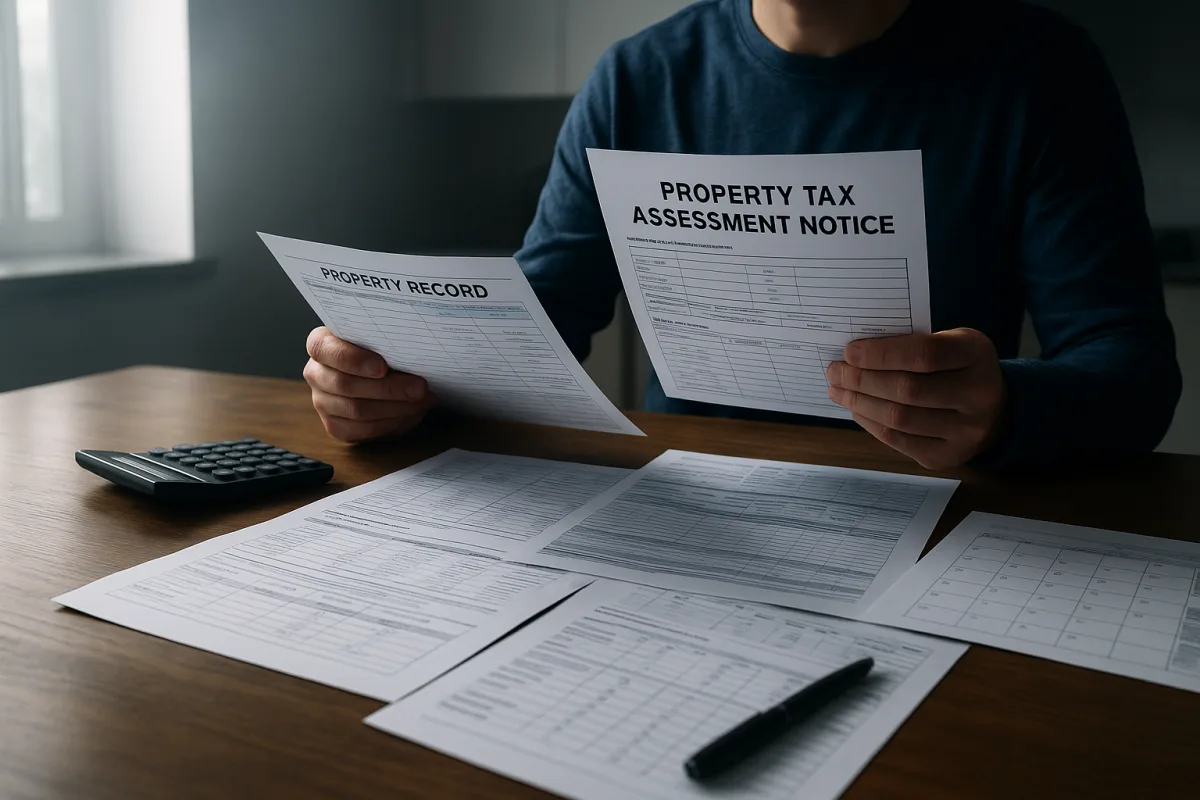
First problem: figuring out what you are actually disputing
A property-tax assessment is the government’s estimate of your property’s taxable value. It is not automatically the same as the price you could sell for today, your mortgage balance, or the amount on a real-estate website.
Start by separating the assessment from the tax bill. The assessed value is one input into the tax calculation. Your tax rate, exemptions, local levies, and assessment rules can also affect the amount due.
That distinction matters because the appeal grounds are usually narrow. You generally need to show that the assessor overstated market value, used incorrect property facts, assessed your home unequally against comparable properties, or made a procedural or classification error. [14][20]
Philadelphia’s 2026 reassessment illustrates why owners should review notices rather than assuming modest changes are immaterial. Axios reported an average assessed value of $277,100, up 4.6 percent, while some owners faced much larger increases. [4]
Do not base an appeal solely on the fact that taxes rose. A tax increase may reflect a changed tax rate or expiring exemption rather than an incorrect value. The paperwork should identify the assessment year, value, classification, and appeal route.
Second problem: finding the deadline before it expires
The deadline is the first hard stop. There is no national property-tax appeal calendar, and the correct date can depend on the state, county, township, property class, and the date printed on your notice. [7]
For 2026, California’s general filing window is listed as July 2 through September 15, but local county rules can differ. San Bernardino County, for example, lists a July 2 through November 30, 2026 assessment-appeal period. [7][3]
Texas owners generally must file by May 15 or within 30 days after the assessment notice, whichever is later. Florida owners generally have 25 days after the TRIM notice, typically sent in mid-August. [7]
New York’s schedule is especially local. Many towns use the fourth Tuesday in May, while New York City lists March 1 for most property classes and March 15 for Class 1 properties. [7][19][20]
Illinois deadlines can be about 30 days after the township assessment notice. The practical point is not to memorize these examples. It is to verify your exact deadline with the assessor, appeal board, or notice instructions immediately. [7]
Put the deadline, submission method, required forms, and proof-of-filing requirements on one page. If the rules require mailing, retain the postmark evidence. Fairfax County, Virginia, for example, identifies June 1, 2026 as a postmark deadline for certain appeals. [2]
Third problem: discovering whether the assessor’s records are wrong
Before paying for an appraisal or assembling sales data, obtain the property record card, sometimes called the assessment record or property profile. This is the factual description the assessor may have used to value your home. [1][14]
Check the living area, lot size, bedroom and bathroom count, garage, basement, year built, construction type, pool, additions, and condition rating. A listed finished basement or extra bathroom can matter if it does not exist.
Also check whether the house is classified correctly. A property categorized as a different use, condition, or class than it actually has may present an appeal issue separate from the market-value argument. [14][20]
Placer County, California directs owners to review assessment information and provides the Assessor’s Office at 530-889-4300 for questions. That is the kind of local contact worth using early, before a formal filing deadline passes. [1]
Ask whether the office offers an informal review or correction process. Informal reviews can take roughly two to four weeks, according to appeal guidance, so timing matters if the formal deadline is close. [14]
Do not assume an informal conversation preserves formal appeal rights. File the formal application by the deadline if local rules require it, even if an assessor staff member is reviewing a factual correction.
Fourth problem: proving the value is too high
The core valuation question is usually what your property was worth on the jurisdiction’s specified assessment date, not what it may be worth next spring. Find that valuation date in the notice or local appeal instructions.
Your strongest evidence is usually recent closed sales of comparable properties, not active listings and not asking prices. Comparable sales should generally be arm’s-length transactions, meaning normal market sales rather than family transfers, foreclosures, or unusual deals. [15]
Build a set of three to five sales near your property. The research guidance favors sales within the prior 6 to 12 months, homes roughly within 15 percent of your property’s size, and similar age, location, condition, and features. [15]
A 1,500-square-foot ranch with an original kitchen is not necessarily comparable to a 1,500-square-foot renovated ranch with a pool, finished basement, and superior school boundary. If you use a sale with meaningful differences, explain the difference rather than hoping the board overlooks it.
Make a one-page comparison grid. Include each address, sale date, sale price, living area, price per square foot, bed and bath count, lot, condition, distance from your home, and the source of the sale information. Add a small map. [15]
A recent purchase can also matter. If you bought the property near the assessment date in an open-market transaction, your Closing Disclosure may help document the actual purchase price and transaction date. It is evidence, not an automatic win. [17]
Online automated valuations are a weak substitute for closed-sale evidence. Appeal guidance warns that Zillow and Redfin-style estimates have meaningful error rates and are commonly rejected because they do not explain the underlying comparable-sales analysis. [13]
Fifth problem: showing the house has condition issues the assessment missed
Comparable sales do not always capture a leaking roof, failed septic system, foundation issue, water damage, obsolete electrical panel, or other costly condition problem. If defects affected market value on the assessment date, document them carefully. [2][16]
Take dated photographs that show the issue clearly, then pair them with contractor estimates describing the work and expected cost. A vague statement that the home “needs work” is much less useful than a repair scope and estimate. [16]
Fairfax County’s Department of Tax Administration identifies condition and property-information evidence as part of its assessment appeal process. Its procedures are a reminder that local offices may have their own evidence forms and filing rules. [2]
Do not use repair cost as though every $1 of estimated work lowers market value by $1. The stronger position is that the condition would have affected what a typical buyer paid, supported by photos, estimates, and comparable sales reflecting similar condition.
A professional appraisal may help when the valuation difference is substantial or the property is unusual. Reported appraisal costs range from about $300 to $1,300, so calculate whether that expense makes sense before ordering one. [9]
Sixth problem: deciding whether the potential savings justify the cost
Estimate the tax effect before spending money. The rough calculation is the proposed assessment reduction multiplied by the applicable effective tax rate, but exemptions, caps, and local rules can make the actual result different.
For example, a $40,000 assessment reduction at a 1.2 percent effective tax rate suggests about $480 in annual tax savings. That is an illustration only, not a prediction, because your local tax calculation may use a different rate or taxable-value rule.
One consumer-finance analysis put median annual savings from successful appeals at $539 and estimated that more than 40 percent of properties may be overassessed. Those figures are broad estimates, not a reason to assume any individual appeal will succeed. [8]
Filing may be free in some places, while other jurisdictions charge roughly $25 to $100. Reported professional charges include flat fees of about $295 to $595, hourly rates of $150 to $400, and contingency fees. [9]
Contingency arrangements can charge 25 to 50 percent of first-year savings in some markets, including examples reported for Georgia. Read the contract closely: ask whether the fee applies to a value reduction, tax savings, multiple years, or a refund. [10][11]
A DIY filing may be the economical choice when the property record contains an obvious error or nearby sales make the case straightforward. Hiring help may be more rational when the value difference is large, the home is unusual, or the local process is complicated.
I am not a licensed agent, lender, appraiser, attorney, or tax adviser. A local tax professional can explain jurisdiction-specific rules, but the cost should be weighed against the realistic savings and the strength of your evidence.
Seventh problem: submitting an appeal packet that a board can follow
Use the local form and filing method exactly as instructed. Include the stated assessment, the value you believe is correct, the appeal grounds, and all supporting documents required by the county or board. [3][14]
Organize the packet so a reviewer can verify your argument quickly. A practical order is a short cover letter, the assessment notice, property record-card corrections, comparable-sales grid, map, photographs, repair estimates, appraisal if any, and supporting transaction documents. [15][16][17]
Your cover letter should state the requested value and explain how the evidence supports it. For example: “The assessed value is $X. Recent comparable sales and documented condition issues support a value of $Y as of the assessment date.”
Avoid flooding the reviewer with dozens of weak listings. Three good sales that match the house and date are more useful than a large, unfiltered pile of automated estimates, active listings, and distant transactions. [13][15]
Keep copies of everything, including the completed form, attachments, confirmation number, and mailing receipt. If you file electronically, save the submission confirmation and a PDF of the final packet.
Eighth problem: handling the hearing and the wait
If the case reaches a hearing, focus on the specific appeal ground. Explain the property-record error, walk through each comparable sale, or show how the documented condition affected value. The hearing is not usually the place for a general complaint about local taxes.
Bring copies for the panel if local rules permit, and be ready to explain why your sales are more comparable than the assessor’s sales. Stick to verifiable facts: sale date, distance, size, condition, and market value on the correct date.
Formal hearings can take two to six months, while state tribunal or court appeals can take six to 18 months. San Diego County warns that its assessment appeals process may take up to two years in some cases. [6][14]
A denial does not necessarily end every option, but further appeal rights and deadlines are local. If taxes come due during the dispute, understand whether you must pay first to avoid penalties while preserving any refund rights. [6]
The right path depends on your assessment date, tax rate, local appeal rules, evidence, and timeline. The money-saving move is not automatically filing. It is filing a timely, well-supported case when the likely tax reduction exceeds the cost and effort of proving it.
Frequently Asked Questions
How do I dispute a property tax assessment?
To dispute a property tax assessment, start by reviewing your assessment notice and the property record card for errors such as incorrect square footage or bedroom counts. Gather evidence like three to five recent sales of similar nearby homes and any documentation of property defects. Then, file a formal appeal using your local assessor’s forms before the deadline and attend any required hearings to present your case.
What is the deadline to appeal a property tax assessment?
Deadlines vary widely by location and can depend on state, county, township, property class, and the date on your notice. For example, California’s general filing window in 2026 is July 2 through September 15, Texas requires filing by May 15 or within 30 days after the notice, and Florida’s deadline is 25 days after the TRIM notice. It is crucial to verify your exact deadline with your local assessor or appeal board immediately, as missing it forfeits your right to challenge that year’s assessment.
What evidence is needed to dispute a property tax assessment?
Effective evidence includes recent arm’s-length sales of genuinely similar homes within the last 6 to 12 months and roughly within 15 percent of your home’s size. Also review the assessor’s property record card for factual errors, and document any property defects with photos and contractor estimates. Professional appraisals and closing disclosures can also support your appeal, but online home value estimates are generally weak evidence.
How can I check if my property tax assessment is incorrect?
Obtain and carefully review your property record card or assessment record, which contains the factual details the assessor used, such as square footage, bedroom count, and condition ratings. Compare these details with your actual property and check for discrepancies. Additionally, compare your assessed value to recent sales of similar nearby homes to see if your assessment appears inflated or unequal.
Are online home value estimates valid for property tax appeals?
No, online estimates from sites like Zillow or Redfin are usually considered weak evidence and are often rejected in property tax appeals. These estimates can have a 6–7 percent error rate and do not reliably reflect assessed values or market conditions for appeal purposes. It is better to rely on official records, comparable sales, and professional appraisals.
How we researched this
This article was assembled from 20 cited references.
Nothing here is based on hands-on testing. Where a figure or finding appears, it belongs to the source cited beside it, and the writing says so rather than implying otherwise. Every source is listed below so you can check it.
Sources
- Property Tax Assessment Appeals | Placer County, CA
- Real Estate Assessment Appeals | Tax Administration
- Assessment Appeals – COB
- New Philly property assessments bring big tax hikes for some
- Assessment Appeals | Napa County, CA
- Understanding the appeal process
- Property Tax Appeal Deadlines by State (2026)
- Is it worth appealing your property tax assessment?
- Cost of Grieving Taxes in the U.S. 2026 – LatestCost – Real-Time Price Insights
- Georgia Property Tax Appeal Services: What They Cost and How to Choose in 2026
- Contingency Fee for Property Tax Appeal: Costs and Terms - LegalClarity
- Is Your Property Tax Bill Too High?
- 7 Property Tax Appeal Mistakes That Guarantee Denial
- How to Appeal Your Property Tax Assessment (2026) — Step-by-Step Guide | US Property Tax
- Finding and Documenting Comparable Sales for Property Tax Appeals | The Property Tax Desk
- What Evidence Wins a Property Tax Appeal? | TaxAppealGA
- Closing Disclosure as Property Tax Appeal Evidence (2026)
- Property Tax Assessment Appeals | Placer County, CA
- New York Consolidated Laws, Real Property Tax Law - RPT § 732 | FindLaw
- N.Y. Real Property Tax Law Section 706 – Grounds for review (2026)
Related Articles
What Is a Title Search? Understanding the Process
Learn what a title search is, how it works, what it reveals, and why it's essential before buying a home.
How to Read a Property Deed and Understand Its Sections
Learn how to read a property deed, understand ownership, legal descriptions, and key sections to know what you truly own.

What to Include in a Home Sale Listing: Key Details to Add
Learn what to include in a home sale listing to attract buyers with accurate details, features, disclosures, and pricing tips.
What to Expect During Closing Day: Key Steps Explained
Learn what to expect during closing day, including cash to close, final documents, and key steps to complete your home purchase.