
Documents Needed to Buy a House: Complete Checklist
Learn the essential documents needed to buy a house, including financial, identification, and mortgage paperwork to ensure a smooth home purchase.
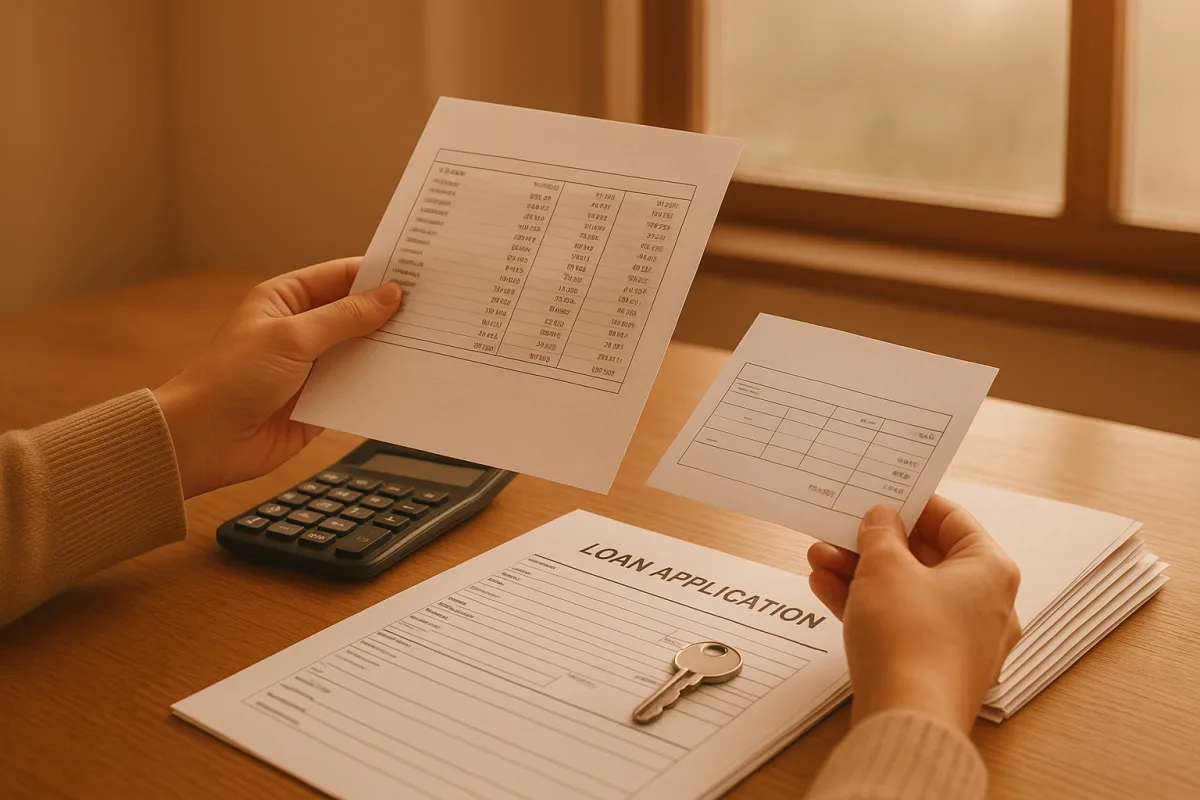
Buying a house requires more paperwork than most first-time buyers expect, but the paperwork has a fairly simple purpose: the lender, title or escrow company, insurer and seller each need evidence that the transaction can close as written.
The useful way to think about the document list is not as a pile of forms. It is a chain of proof. Your lender must verify who you are, how you earn money, where your down payment came from and what debts you already owe. The closing side must verify who owns the property, what claims or liens may affect it, and whether the money and signed documents arrive on time.
A missing page, an old bank statement or an unexplained deposit can interrupt that chain. That is why document preparation matters as much as collecting documents in the first place.
I am not a licensed real estate agent, lender or financial adviser. Requirements vary by loan type, lender, state and transaction, so use this as a working explanation and confirm your own list with the professionals handling your purchase.
The core document system: proving the money is real and available
For most first-time buyers, the central document question is not, “What forms do I sign?” It is, “Can I document every dollar involved in this purchase?”
That includes your income, savings, debts, gift funds if any, earnest-money payment, down payment and closing funds. A lender is not merely checking whether your bank balance looks large enough on one day. It is trying to establish a traceable record showing that the money belongs to you or comes from an acceptable, documented source.
Start with the financial file lenders commonly request:
- Recent pay stubs, generally covering the prior 30 days
- W-2 forms
- Federal tax returns, often covering the prior two years
- Two months of bank statements
- Retirement or investment-account statements, when those assets are relevant to qualifying or closing
- Statements for debts and liabilities
- Additional business records, such as profit-and-loss statements and tax returns, if you are self-employed [2][11]
The exact combination depends on how you earn income. A salaried employee with steady wages may have a cleaner file than a self-employed buyer whose income changes from year to year. Neither situation necessarily prevents a mortgage approval. The difference is that variable income usually requires more documentation to establish a stable qualifying income.
Your personal identification is part of the same verification process. Expect to provide a government-issued photo ID, such as a driver’s license or passport, plus your Social Security number. Buyers using an Individual Taxpayer Identification Number may instead be asked for ITIN documentation. A lender may also request proof of residency, such as a utility bill or lease, depending on the file and lending program. [10]
Identification is not a one-time task. It may be checked when you apply and again at closing. Bring the original, unexpired ID requested by the title or escrow company, even if you uploaded a scan weeks earlier.
Why bank statements cause so many delays
A bank statement is not just proof that you have savings. It is the lender’s audit trail.
Suppose you have $42,000 in a checking account and plan to use $35,000 for the down payment and closing costs. Your statement may show that balance, but the lender can still ask questions about a $9,000 deposit that appeared last week. The issue is not necessarily that the deposit is improper. The issue is that the lender cannot assume what it is.
It could be a documented bonus, the proceeds from selling a car, a transfer from another account you own, a family gift, cash income or a loan from someone else. Those sources have different treatment under mortgage rules. The lender needs records that connect the deposit to its source.
For a transfer between two of your own accounts, that often means providing statements from both accounts. For proceeds from a sale, it may mean a bill of sale and evidence of the money entering your account. For a gift, the lender may require a gift letter and records from the donor. The details are lender-specific, but the basic principle is consistent: avoid creating a mystery deposit while your loan is being reviewed.
Undocumented large deposits are a common reason for extra underwriting questions, along with incomplete documents, mismatches between the mortgage application and supporting records, and missing liability information. [8][9] A buyer who says they have $8,000 in credit-card debt but whose documents reveal another monthly obligation has not necessarily lost the loan. But the lender must recalculate the debt-to-income ratio, and that can alter the approval terms or cause a delay.
The practical lesson is to preserve paper trails. If possible, do not move money around casually between accounts while the lender is reviewing your file. If you must move it, save statements and transaction records before and after the transfer.
Also check the basics before uploading anything:
- Is every page present, including blank pages?
- Is the statement period long enough?
- Is the account holder’s name visible?
- Is the image readable?
- Does the balance and account information match what you reported on the application?
Poor scans and expired documents are mundane problems, but they can stop a file from moving forward. [9]
Pre-approval is an early document test, not a final approval
Before house hunting seriously, many buyers seek mortgage pre-approval. This is the point at which the lender reviews your credit, income, assets and debts well enough to issue a letter stating that you appear qualified up to a stated amount, subject to conditions.
With documents submitted promptly, pre-approval can take roughly one to three business days. Pre-approval letters commonly remain usable for about 60 to 90 days, assuming your financial situation has not materially changed. [2][11]
“Assuming nothing changes” is the important part.
A pre-approval is not a promise that the loan will close regardless of what happens next. If you change jobs, reduce work hours, take on a new car loan, open a new credit card, make a major purchase on credit or receive unexplained deposits, the lender may need to reassess the file.
Credit shopping can be less damaging than first-time buyers fear, provided it is concentrated. Mortgage-related credit inquiries made within a typical 14-to-45-day rate-shopping window are generally treated as one inquiry for scoring purposes. [2] The precise treatment can vary by scoring model, but the larger point is that comparing mortgage offers is different from applying for unrelated credit over several months.
Once you have an accepted offer, the documentation becomes more time-sensitive. Sellers commonly want proof that you can make the required cash contribution, and proof of funds is often requested within 24 to 48 hours after acceptance. [1][11] That proof is usually a recent bank or investment statement, although the acceptable format depends on the contract and the people administering the transaction.
The documents shift from you to the house
After the offer is accepted, the file expands beyond your finances. Now the transaction needs documents about the property itself.
The signed purchase agreement is the master instruction sheet for the deal. It identifies the parties, price, deposits, deadlines, included items and contingencies. Your lender uses it to structure the loan file. The title or escrow company uses it to prepare closing documents and manage funds. It also determines how much cash you may need beyond the mortgage.
For example, a contract may state that you will make an earnest-money deposit shortly after signing. That is not the same as the down payment. Earnest money is typically a good-faith deposit held in escrow and generally credited toward your funds due at closing if the transaction proceeds. Whether you can recover it if the deal ends depends on the contract terms and the applicable contingency deadlines.
The inspection report is another important property document, but it is often misunderstood. An inspection is primarily your information tool, not a guarantee that the seller must repair every item found. A general home inspection averages $296 to $424 according to LegalClarity, while Dwely.ai puts the typical range at $300 to $600. [3][4] The variation reflects home size, location, property condition and the scope of inspection.
The report may lead you to request repairs, a credit, a price change or no change at all. The seller can agree, refuse or counter. Your options depend on the contract and whether you retained an inspection contingency.
Appraisals serve a different purpose. The appraiser develops an opinion of the property’s value for the lender, which is trying to ensure the collateral supports the loan amount. A typical appraisal runs about $300 to $600, according to Opendoor, while HomeAdvisor reports an average of $314 to $423. [5][6] You usually pay for it, but the report is prepared for the lender’s use.
If an appraisal comes in below the contract price, the lender typically bases its loan on the lower appraised value, not on what you agreed to pay. That can create an appraisal gap. The actual cost to you depends on your contract, loan structure, renegotiation result and available cash. It is not automatically the full difference between the offer and appraisal, but it can become an additional cash requirement if the seller will not reduce the price and you choose to proceed under the contract’s terms.
Disclosures are documents, but they are not uniform nationwide
First-time buyers should expect property disclosures, but should not assume every state requires the same level of seller disclosure.
California has detailed property-condition and natural-hazard disclosure requirements. Maryland sellers generally must provide disclosures or make an “as is” statement. In New York, a seller may provide a disclosure or pay the buyer $500 at closing. Alabama, Arkansas and West Virginia are among states commonly described as following a more buyer-beware approach with limited seller disclosure requirements. [14]
Federal lead-based-paint rules are more consistent. For homes built before 1978, buyers must receive a lead-based-paint disclosure, the EPA educational pamphlet, contract language addressing the issue and a 10-day opportunity to inspect for lead hazards. Violations can carry penalties exceeding $10,000 per violation. [14]
Flood disclosure rules also vary. The research brief notes that 41 states require some form of flood disclosure, while 10 rely on common-law approaches. That makes local review important, especially if a property has prior water issues, sits near a flood-prone area or may require flood insurance.
These documents do not replace due diligence. A disclosure tells you what a seller is required to say or chooses to report. An inspection, insurance review, title work and your own questions address different risks.
Closing is where the document trail becomes final
Near the end of the transaction, you will receive the Closing Disclosure. For most covered mortgage loans, it must be provided at least three business days before closing. [7] This is the document worth reading line by line.
Compare it with your earlier Loan Estimate and purchase agreement. Check the loan amount, interest rate, monthly principal and interest, mortgage insurance if applicable, lender fees, title charges, prepaid insurance and taxes, cash to close and seller credits. Ask about a number you do not understand before signing day, not while a roomful of people is waiting.
You will also need homeowners insurance before closing. The policy generally must identify the lender as loss payee or mortgagee, because the lender has a financial interest in the home until the loan is repaid. [7]
Finally, the title or escrow company will tell you how to deliver closing funds, often by certified check or wire transfer. Treat wiring instructions as a fraud-sensitive document. Confirm them by calling a known phone number for the title or escrow company, not by replying to an email that may have been compromised.
Digital systems can make this process more manageable. DocuSign provides electronic signatures and audit trails, while platforms such as Qualia, Dotloop, SkySlope and Floify are used for transaction management, compliance tracking, closing workflows and secure borrower document portals. [12][13] They reduce paper handling, but they do not eliminate the need to review every document or verify where money is being sent.
The best document strategy is simple: make one secure folder, save complete records, label files clearly and answer requests quickly. Your lender is not asking for the same bank statement twice to be difficult. It may need a newer version because the closing date moved, because the first statement period ended, or because a new transaction appeared.
For a first-time buyer, that is the real mechanics of the paperwork. Each document answers a specific question. When the answers match, the process tends to move. When they do not, the closing timeline is where the discrepancy becomes expensive.
Frequently Asked Questions
What documents do I need to provide to buy a house?
You need to provide documents that verify your identity, income, assets, debts, and the source of your down payment and closing funds. This typically includes recent pay stubs, W-2 forms, tax returns for the past two years, bank statements, statements for debts, and any relevant investment or retirement account statements. Identification such as a government-issued photo ID and Social Security number or ITIN is also required.
Which financial documents are required for mortgage approval?
Lenders generally require recent pay stubs (covering the last 30 days), W-2 forms, federal tax returns for the past two years, two months of bank statements, and statements for debts and liabilities. If self-employed, additional business records like profit-and-loss statements may be necessary. Investment and retirement account statements are requested if those assets are relevant to qualifying or closing.
What identification is needed when buying a home?
You must provide a government-issued photo ID such as a driver’s license or passport, along with your Social Security number or ITIN documentation. Identification is checked both at the mortgage application stage and again at closing, so bring original, unexpired IDs as requested by the lender and title or escrow company.
How do bank statements affect the home buying process?
Bank statements serve as an audit trail to verify the source and ownership of funds used for the purchase. Lenders scrutinize recent deposits to ensure they are documented and acceptable, requiring additional proof for large or unexplained deposits. Poor-quality scans, missing pages, or statements that do not match the application can delay approval.
What documents are needed for mortgage pre-approval?
Mortgage pre-approval requires submitting financial documents such as recent pay stubs, W-2s, tax returns, bank statements, and debt statements. Identification documents like a government-issued photo ID and Social Security number or ITIN are also necessary. Pre-approval typically takes one to three business days once all documents are submitted.
Sources
- Summary: The Buying Process | Pomegra Learn Library
- Getting Pre-Approved for a Mortgage: Steps, Documents, and Timeline -
- How Much Does a Home Inspection Cost? Averages and Add-Ons - LegalClarity
- How Much Does a Home Inspection Cost? (2026 Price Guide) | Learn | Dwely.ai
- Home Appraisal Cost: What to Expect in 2026 | Opendoor
- How Much Does a Home Appraisal Cost? [2025 Data]
- Home Buyer's Guide to Documents at Your Close of Escrow
- Mortgage application mistakes that cause delays
- Common Documentation Mistakes That Delay Home Loan Approval and How to Avoid Them
- ITIN Mortgage Documents Checklist (2026 Guide) | ITIN Lending
- Your Mortgage Pre-Approval Checklist: Every Document You’ll Need
- Electronic Signatures in Real Estate: Buying, Selling & Renting Digitally in 2026 | Signed Docs Republic
- Best Real Estate Title & Closing Software of 2026
- Seller’s Disclosure: What Home Sellers Must Reveal - NerdWallet
Related Articles
Home Buying Mistakes to Avoid
Learn home buying mistakes to avoid, including budgeting, inspections, and mortgage tips to make your purchase smoother and cost-effective.
Improve Credit Score for Mortgage: Steps to Boost Your Score
Learn how to improve credit score for mortgage approval with proven steps, timelines, and tips to lower your mortgage rate.

How to Create a Home Buying Budget: Step-by-Step Guide
Learn how to create a home buying budget including down payment, closing costs, monthly expenses, and credit tips for a smooth purchase.

Best Time to Buy a House in 2026
Discover the best time to buy a house in 2026 with insights on seasonal trends, mortgage rates, and market conditions to help you plan your purchase.