
Questions to Ask During a Home Tour for Buyers
Learn key questions to ask during a home tour to assess major systems, repairs, and potential costs before buying a house.
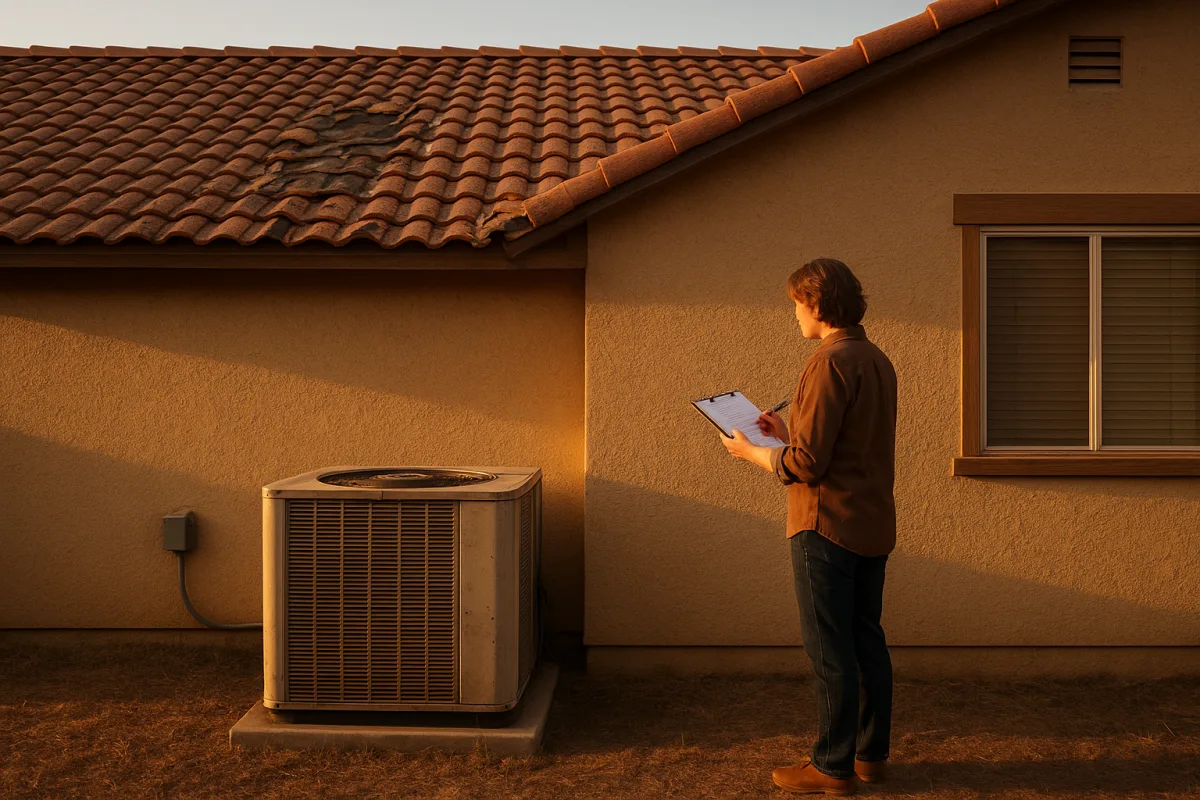
The useful question is not “What needs fixing?”
During a home tour, buyers often ask whether anything is wrong with the house. That is reasonable, but it is too broad to produce a useful answer. A better question is: what is the remaining life of the expensive systems?
That reframes the tour from a search for cosmetic flaws into an early budget exercise. You are not diagnosing the house in an hour. You are identifying which components need records, inspection attention, contractor pricing, or a larger repair reserve.
The systems to prioritize are the roof, heating and cooling equipment, plumbing, electrical service, and visible structural or drainage conditions. Realtor.com specifically recommends asking about the age and condition of major systems, as well as prior repairs disclosed by the seller. [2]
A seller or listing agent may know the installation year but not the condition, and the reverse can also be true. “Newer” is useful information, but it is not a warranty. A 10-year-old system with documented maintenance may be less concerning than a newer installation with no history.
I am not a licensed real estate agent, lender, inspector, or financial adviser. This is a framework for asking better questions and understanding the cost categories behind the answers, not a recommendation to buy, sell, refinance, waive contingencies, or set an offer price.
Start with the system clock
Every major home system has a different expected service life, maintenance pattern, and replacement cost. The tour’s job is to establish the starting facts: what it is, when it was installed, who serviced it, and whether any failures or repairs have occurred.
Ask this in a direct sequence: “How old is it? Who installed it? Are there service records? What repairs have been made? Is there a transferable warranty? Can it be operated during the tour or inspection?” A vague answer is still information.
For HVAC equipment, Opendoor identifies a typical lifespan of 15 to 20 years and recommends asking about age, maintenance records, and whether heating and cooling can be tested. [4] A system approaching that range is not necessarily failing, but it belongs in the buyer’s near-term planning.
Real Time Repairs estimates a capacitor repair at $150 to $400, an AC replacement at $3,500 to $7,500, and a furnace replacement at $2,500 to $6,000. [7] Those are average repair-guide ranges, not a quote for a particular home.
The key distinction is between a repair and a replacement. A seller may accurately say an air conditioner was “serviced,” but that could mean a relatively modest capacitor replacement rather than evidence that the unit has years of reliable life remaining.
Ask roof questions that produce dates and documents
Roofs are easy to see and hard to assess from the ground. During the tour, ask when the roof was installed, what material it is, whether there have been leaks, and whether the seller has invoices, warranty information, or insurance claims related to it.
Also ask whether any interior stains were investigated and repaired. Zillow flags water damage as something buyers should look for during a tour, because the visible mark may be minor while the source, such as a roof leak or plumbing failure, is not. [3]
For 2026, Lamapacos estimates minor roof repairs at $300 to $1,500. Its estimate for full asphalt-shingle replacement is $9,500 to $18,000, while metal-roof replacement is estimated at $15,000 to $35,000. [6]
Those figures should not be treated as an automatic credit or price adjustment. Roof size, pitch, layers of existing material, local labor rates, decking damage, and the selected material all affect the actual cost. The relevant point during a tour is exposure.
If a roof is nearing replacement age, the financial question is not whether it looks acceptable on a sunny afternoon. It is whether your expected ownership timeline and cash reserves can absorb an earlier-than-planned replacement without making the overall purchase less workable.
Plumbing and electrical need more than a quick glance
Plumbing questions should cover pipe material, installation date, prior leaks, water pressure, sewer or drain backups, and any replacement of supply lines. HomeEGuide highlights galvanized steel pipes in homes built before 1960 and polybutylene pipes used from the late 1970s into the mid-1990s. [15]
Those materials do not establish the condition of a particular house by themselves. They do tell you where to focus follow-up questions. If the answer is “some plumbing was updated,” ask exactly which sections, when, and whether permits or invoices are available.
Opendoor estimates water-heater replacement at $800 to $2,000 and major plumbing repairs at $500 to $5,000. [4] If the water heater has an installation label, photograph it for your notes, then verify its age and service history later.
For electrical service, ask where the panel is, what its amperage rating is, whether wiring has been updated, and whether past renovations were permitted. Opendoor describes 100 amps as a minimum service level and 200 amps as preferable. [4]
An electrical panel upgrade averages $1,500 to $4,000, according to Opendoor. Rewiring can cost $10,000 to $20,000, based on Realtor.com’s cost examples. [2][4] The wide gap explains why “the lights work” is not a complete assessment.
Ask to see the circuit-breaker panel and utility shut-off valves. Realtor.com includes the location of both among the practical questions buyers should ask, because they affect basic safety and emergency response after closing. [2]
Translate visible clues into inspection priorities
A tour should create a written list for the inspection period, not a conclusion that a home is sound or unsound. Note wall cracks, uneven floors, stains, musty odors, patched ceiling areas, slow drains, and doors that do not close cleanly.
Homes.com warns that buyers who ignore potential foundation or structural signs, including cracks and uneven floors, can face repairs running into tens of thousands of dollars. [20] That does not mean every crack is structural, only that it deserves a specific follow-up question.
Lamapacos puts foundation crack injection at $500 to $1,200. Its estimate for major foundation repairs is $2,500 to $15,000 or more. [6] The range reflects why the cause matters more than the appearance of a single crack.
A useful tour question is: “Has this area been evaluated or repaired, and can you provide the report or invoice?” Another is: “Has water entered this space, and what was done to address the source?” Ask about the cause, not just the patch.
Renovation history belongs in the same system record. Redfin cautions that unpermitted work can leave buyers facing costly corrections. [23] If a finished basement, added bathroom, panel upgrade, or structural alteration is visible, ask when it was completed and whether permits were obtained.
Climate changes what “condition” means
The same roof age or crawlspace appearance can carry different implications in different regions. In humid Southeast markets, Texas Signature Inspections and LunsPro emphasize mold, wood rot, crawlspace moisture, ventilation, and encapsulation as recurring inspection concerns. [9][10]
In arid Southwestern areas, Elevate Inspections points to foundation movement associated with clay-soil shrinkage and roof deterioration from intense sun exposure. [11] A buyer touring there should ask about soil movement, drainage repairs, roof maintenance, and prior foundation evaluations.
In the Pacific Northwest, Trusted Home Inspections and 100 Mile Home Inspections emphasize moisture management and drainage. [13][14] Look beyond the house itself: downspouts, grading, standing water, stained siding, and the condition of lower-level spaces can all guide inspection questions.
Coastal conditions introduce another version of the same system-life problem. SC Lowcountry Real Estate notes salt-air corrosion affecting roofing, while Elevate Inspections raises wildfire mitigation issues such as defensible space and Class A roofing in higher-risk regions. [11][12]
Axios reports that more than 80 percent of buyers consider climate risks, and it notes insurance challenges in high-risk areas, including State Farm’s decision to stop writing new California home policies. [1] During a tour, ask about prior flooding, wildfire exposure, storm damage, and insurance claims.
Do not ignore the land and the future around it
The house’s systems do not operate separately from the site. Lot drainage, topography, views, nearby roads, and adjacent construction can affect both daily living and the work a buyer may need to fund after closing.
Opendoor identifies square footage, lot size, bedroom and bathroom count, condition, and location features such as cul-de-sacs, corner lots, and views as factors that can influence value. [4] Functional layout matters too, although HAR says its value impact is not precisely quantified. [5]
During a tour, verify room dimensions and storage rather than relying solely on listing descriptions. Zillow specifically includes adequate storage and floor plan suitability among the items buyers should evaluate. [3] A technically larger home may still function poorly for a particular household.
For nearby development, ask what is planned on vacant parcels, whether zoning changes are pending, and whether special assessments are expected. The Sky Group recommends asking about zoning changes and planned development because they can affect both value and quality of life. [19]
In a new community, request a map of future phases and ask when roads, amenities, and nearby homes are expected to be completed. Bluehaven Homes advises buyers to understand build-out timing and how continuing construction may affect traffic, views, and value. [18]
Put the answers into a simple cost timeline
After the tour, sort each answer into three columns: documented and recently maintained, uncertain and needing inspection, or likely near-term expense. This is more useful than a vague list of “pros and cons” because it distinguishes lifestyle preferences from capital costs.
A house with an older roof, 18-year-old HVAC equipment, and an aging water heater is not automatically a bad property. It is a property where several replacement clocks may overlap, potentially creating a five-figure maintenance period shortly after purchase.
Cosmetic work belongs in a separate column. Opendoor estimates whole-home painting at $1,500 to $4,500 and fixture updates at $100 to $500. [4] Homeplexi estimates window-seal replacement at $150 to $300 per window and weatherstripping at $150 to $500. [8]
These costs can matter to a household budget, but they are not the same as a roof leak, obsolete electrical system, or drainage failure. Separating them prevents a fresh coat of paint from disguising a more consequential maintenance question.
The right interpretation depends on the home’s price, local labor costs, insurance availability, financing terms, inspection findings, and your timeline. A tour gives you the questions and the preliminary cost categories. The documents, inspection, and specialist opinions determine what those answers actually mean.
Frequently Asked Questions
What questions should I ask about major home systems during a tour?
Ask about the age of each major system (roof, HVAC, plumbing, electrical), who installed it, and whether there are service records or repair histories. Inquire if there are any transferable warranties and if the systems can be operated during the tour or inspection. This helps establish the remaining service life and potential near-term costs.
How do I assess the condition of a roof during a home tour?
Ask when the roof was installed, what material it is, and if there have been any leaks or repairs. Request invoices, warranty information, or insurance claims related to the roof. Also, check for interior stains that might indicate water damage, as visible marks can signal underlying issues.
What plumbing and electrical questions are important on a home tour?
For plumbing, ask about the pipe materials, installation dates, any prior leaks, water pressure, and sewer backups. Clarify which sections have been updated and whether permits or invoices exist. For electrical, inquire about the age and condition of the electrical panel and any upgrades or repairs, as these can affect safety and future costs.
How can I identify potential repair costs during a home tour?
Use the system’s age and condition as a guide to estimate repair or replacement costs. For example, asphalt roof replacement can range from $9,500 to $18,000, and HVAC replacements from $3,500 to $7,500. Knowing typical repair costs helps you budget for near-term expenses even if systems currently operate.
What visible signs should I note during a home tour for inspection?
Look for water stains inside the home that may indicate leaks from the roof or plumbing. Note any visible structural or drainage issues and signs of pests or mold, especially in humid climates. These observations can guide your follow-up questions and inspection priorities.
How we researched this
This article was assembled from 23 cited references.
Nothing here is based on hands-on testing. Where a figure or finding appears, it belongs to the source cited beside it, and the writing says so rather than implying otherwise. Every source is listed below so you can check it.
Sources
- Why real estate websites are adding climate change data to home listings
- Questions to Ask When Buying a Home
- What to Look for When Touring a House | Zillow
- Find My Home Value: A Practical Guide to Pricing Your Home Right | Opendoor
- What Really Matters In A Home Appraisal? - HAR.com
- The Homeowner’s 2026 Guide to Average Home Repair Costs | lamapacos.com
- How Much Do Home Repairs Cost in 2026? Complete Guide | Real Time Repairs
- The Real Cost of Common Home Repairs (2026 Guide) | Homeplexi Blog
- How Local Climate Affects the Home Inspection Process - Katy, TX Home Inspections
- Why Southeast Climate Demands Specialized Inspections | LunsPro
- Elevate Inspections — How Climate Change Is Impacting Home Inspections
- Home Inspection Red Flags in the SC Lowcountry | Hilton Head & Bluffton Buyers
- How Portland's Climate Affects What Home Inspectors Find - Trusted Home Inspections
- How Local Climate Conditions Shape the Home Inspection Process - 100 Mile Home Inspections - Snohomish County, Granite Falls, Lake Stevens, Arlington, Marysville, Everett, Lynwood
- Home Buying Inspection Checklist: Don't Skip These!
- 21 Questions to Ask During Home Inspection | Angi
- Questions to Ask a Home Builder Before You Sign a Contract | Blog | Perry Homes
- What to Ask About Future Phases in a New Home Community - BLUEHAVEN Homes
- Top Questions to Ask Before Buying a Home | Blog | The Sky Group
- What to Look for When Touring a House: A Buyer's Guide - Homes.com
- Top Things that Fail Home Inspections | Chase
- Common Mistakes that People Make When Selling Their Home
- 8 Home Buying Red Flags to Watch For | Redfin
Related Articles
Buying a Home with a Basement: What You Need to Know
Learn key tips for buying a home with a basement, including inspection, water issues, foundation concerns, and budgeting for repairs.
Negotiating Home Repair Requests During the Selling Process
Learn how to negotiate home repair requests effectively and control costs during the selling process with practical tips and repair budgeting advice.
Best Time to Buy a House in 2026
Discover the best time to buy a house in 2026 with insights on seasonal trends, mortgage rates, and market conditions to help you plan your purchase.

How to Negotiate Home Price: Effective Strategies Explained
Learn how to negotiate home price using market data, seller credits, and buyer limits to get the best deal on your home purchase.