
Buying a Home with a Basement: What You Need to Know
Learn key tips for buying a home with a basement, including inspection, water issues, foundation concerns, and budgeting for repairs.
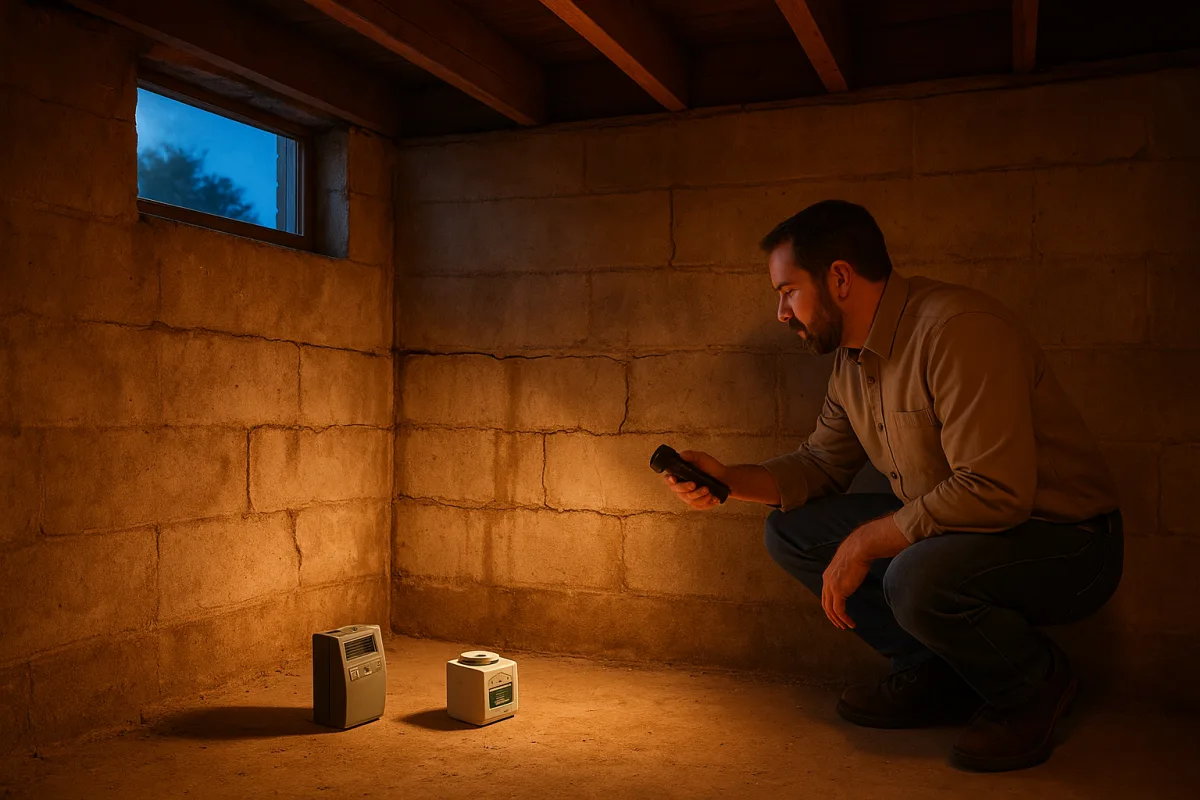
A basement is really a water-management system
When buying a home with a basement, the central question is not whether the room could become a gym, guest suite or storage area. It is whether the house reliably moves water away from its foundation.
That sounds narrow, but it reaches into inspection planning, repair negotiations, future renovation costs, insurance questions and, in some flood-prone locations, mortgage approval. The finished walls and vinyl flooring are the least informative parts of the system.
Water reaches a basement from several directions. Rain can run toward the house because of poor grading. Gutters can overflow or discharge beside the foundation. Groundwater can press against foundation walls, and plumbing leaks can add a separate problem.
The condition is local. Clay soil holds water and can increase pressure near the foundation, while silty soil presents its own moderate drainage risk. Low-lying terrain, urban flash flooding and aging drainage infrastructure can also matter more than the basement itself. [12]
That is why two otherwise similar homes can carry very different basement risk. The relevant facts are the site, drainage, prior water history, soil, foundation condition and flood exposure, not simply the presence of below-grade square footage.
I am not a licensed home inspector, lender, insurance agent, real-estate agent or financial advisor. This is a framework for reading inspection findings and estimates, not a substitute for professionals evaluating a particular property.
Start outside, because the exterior often determines the interior result
A buyer standing in a basement tends to look at walls. A useful inspection starts around the house, because roof runoff and ground slope determine how much water reaches those walls in the first place.
The grading should slope away from the foundation, rather than directing water toward it. Groundworks also recommends checking whether gutters and downspouts are functioning and whether downspouts carry water at least 5 to 10 feet away from the house. [4]
That distance is not cosmetic. A downspout that empties next to the wall can repeatedly saturate the soil alongside the foundation, where water has the shortest route to a crack, joint or poorly sealed penetration.
Look for clues that drainage work may be overdue: standing water near the house, eroded soil, short downspout extensions, damaged gutters, or paving that slopes toward the structure. These observations do not diagnose the problem, but they help explain interior evidence.
Ask the seller for records of water intrusion, repairs, drain installation, sump-pump replacement and insurance claims where disclosures and local rules permit. A dry showing after several rainless weeks is not proof that a basement stays dry during heavy weather.
Flood-zone research belongs in this same stage. TIME notes that flood risk is not limited to obvious waterfront property, and buyers should investigate official mapping and the property’s history rather than relying on a visual impression of the neighborhood. [13]
Read the basement walls as evidence, not decor
Inside, the most important inspection task is distinguishing ordinary age from signs that water pressure or structural movement may be ongoing. Fresh finishes can make that harder, which is why the details around them matter.
Angi identifies horizontal cracks and cracks wider than one-quarter inch as especially concerning. Bowed foundation walls also call for evaluation by a structural engineer, rather than a guess from a buyer or a general contractor. [1]
A vertical hairline crack is not automatically a failed foundation. But its direction, width, location, whether it is changing, and whether water appears nearby all affect what an inspector or engineer may conclude.
The inspection report can identify visible conditions, but it may not establish the cause or price the repair precisely. An engineer’s assessment can add cost and time, yet it may be necessary before a lender, buyer or seller can settle on repairs.
Moisture evidence is broader than an active puddle. Watch for white mineral deposits called efflorescence, water staining, damp surfaces, visible mold or mildew, peeling finishes and persistent musty odors. These indicators are widely cited basement warning signs. [1] [3]
Also notice what has been concealed or elevated. BTBHI flags freshly painted lower walls, newly installed drywall and belongings stored on pallets as possible signs of earlier water problems. None proves a defect, but each is a reason to ask follow-up questions. [5]
A hygrometer can help describe conditions during a visit, though one reading is only a snapshot. Guidance from The Basement Guide puts an ideal basement humidity range at 30% to 50%, with higher sustained humidity creating a friendlier environment for mold. [2]
The sump pump is one component, not the entire answer
A sump pump is designed to collect water arriving at a sump pit and pump it away from the house. It can be an important protective device, but it cannot compensate indefinitely for bad grading, failed gutters or major foundation-waterproofing defects.
Ask whether the pump operates, where it discharges, when it was installed and whether it has a battery backup. Groundworks specifically identifies a working pump, battery backup and interior perimeter drainage as core items to examine. [4]
The battery matters because storms can bring the exact combination a basement does not want: high water and a power outage. A backup does not eliminate risk, but a pump without power cannot perform its ordinary job.
Interior drain systems collect water at or below the slab edge and route it toward the sump. They are generally a way to manage water that has reached the foundation area, not evidence that the exterior drainage problem has disappeared.
Vapor barriers serve a different purpose. They can limit moisture movement from walls or floors into finished materials, but they do not repair structural cracks or stop bulk water entering through an overwhelmed drainage system. [3] [4]
The practical implication is simple: do not evaluate a basement by asking only, “Is there a sump pump?” Ask how water is supposed to travel from roof and grade to drains, then ask whether every link in that route appears functional.
Put inspection costs in the offer timeline
There is no well-documented national 2026 price for a basement-specific inspection. A reasonable planning estimate is an added $50 to $100 beyond the general inspection because the basement can require added moisture and structural attention. [6] [7]
For context, the cited national general-inspection estimates range from $325 to $685. That produces a rough combined planning range of $375 to $785 before any specialist testing, though local pricing and home size can change the number materially. [6] [7]
A radon test may add $100 to $200, and mold testing may add $200 to $600. Those are not universal requirements for every basement, but they can be rational contingencies when the location, odor, visible conditions or inspector’s findings support them. [6] [7]
The important mechanic is the inspection contingency. Its exact terms depend on the purchase contract, but it generally creates a time-limited period for inspections and requests, rather than forcing a buyer to accept unknown conditions after the deadline.
If an inspection identifies moisture or movement, obtain estimates that match the actual problem. A quote to paint and finish a wall is not comparable to an estimate for drainage, crack repair, structural reinforcement or exterior excavation.
Understand the repair numbers before assigning basement value
Waterproofing prices vary by access, foundation type, water source and local labor costs. Still, the difference between interior and exterior systems illustrates why a seemingly minor dampness issue deserves clear diagnosis before the purchase decision deadline.
Interior waterproofing is commonly estimated at $3,000 to $7,000. Exterior waterproofing, which can require excavation around the foundation, is estimated at $10,000 to $18,000. Interior work may take two to four days, but the correct scope matters more than speed. [14] [21]
For a wet or flooding basement requiring a full interior French-drain and sump-pump system, Effective Agents cites a broader $4,000 to $10,000 range. That range is not a guaranteed quote, but it is useful for understanding the potential scale. [11]
A repair estimate is not automatically a purchase-price adjustment. The eventual outcome depends on the inspection contingency, the seller’s willingness to repair or credit, the local market, lender requirements and whether the buyer can obtain a reliable scope before closing.
Avoid treating a “waterproofed” basement as a complete answer. Ask what was installed, when, by whom, whether permits or warranties exist, whether the system has been maintained, and whether the remedy addressed exterior water sources as well as interior collection.
Finished square footage comes after dryness and code
A full basement is often about 1,000 square feet, while partial basements commonly range from 500 to 1,000 square feet. That creates real utility, but below-grade area is not automatically equivalent to above-grade living area in market value. [1] [18]
For a finished room to function as living space, ceiling height is a practical and code issue. The 2021 International Residential Code generally calls for 7-foot minimum ceilings in habitable rooms, with limited projections such as beams and ducts permitted down to 6 feet 4 inches. [16]
Finished basement ceilings commonly fall in the 7-to-8-foot range. Below 7 feet, spaces may feel cramped even where parts of the room meet an applicable exception, and local code enforcement ultimately controls permit approval. [16] [17]
Finishing should follow, not precede, a reliable moisture solution. Estimated finishing costs run from $15 to $75 per square foot, making a 1,000-square-foot basement roughly $15,000 to $75,000 before any separate waterproofing or structural work. [19] [20]
Published estimates place the return on a finished basement around 65% to 80%, but returns are market-dependent and below-grade area is typically valued less per square foot than above-grade space. Do not assume a renovation budget will reappear dollar for dollar in resale value. [18] [19]
Mortgage, insurance and closing-cost questions need separate answers
A basement alone does not create a known nationwide surcharge for closing costs or homeowners insurance. The available average-cost figures are for homes generally and do not provide a basement-versus-no-basement breakdown. [8] [9]
That distinction matters. It would be misleading to tell a buyer that every basement raises premiums or settlement charges when the supporting data does not isolate that effect.
Flood exposure is different. Depo Homes reports 2026 requirements involving flood vents and wet-proofing systems in Special Flood Hazard Areas as conditions tied to mortgage approval. Lender practices and documentation requirements can vary, so confirm the property-specific requirement early. [10]
A lender may also react when an appraisal or inspection identifies material foundation instability, active moisture or flood-related concerns. The possible consequences are additional documentation, specialist inspections, repair conditions or a delayed closing, rather than one standard outcome for every loan. [10] [11]
The useful buying calculation is therefore not “How much is a basement worth?” It is: what does this basement’s drainage and foundation system require now, what evidence supports that answer, and how does that cost fit this buyer’s rate, cash reserves, contract timeline and local market.
Frequently Asked Questions
What should I inspect when buying a home with a basement?
Start by examining the exterior grading to ensure it slopes away from the foundation and check that gutters and downspouts direct water at least 5 to 10 feet away from the house. Inside the basement, look for foundation cracks, especially horizontal cracks or those wider than one-quarter inch, and signs of wall bowing. Also, inspect for moisture indicators such as water stains, efflorescence, mold, or musty odors. Request seller records of past water intrusion, repairs, and sump pump maintenance when possible.
How do I identify basement water problems before buying?
Look for standing water near the foundation, eroded soil, short downspout extensions, or damaged gutters outside the home. Inside, check for dampness, water stains, efflorescence, mold, or mildew on walls and floors. Because a dry basement during a showing does not guarantee dryness during heavy rain, review any history of water intrusion and consider flood-zone research to assess risk.
What are common basement foundation issues to watch for?
Horizontal foundation cracks, cracks wider than one-quarter inch, and bowed walls are key warning signs that may require a structural engineer’s evaluation. Vertical hairline cracks are less concerning but should be assessed for changes over time and proximity to moisture. These issues can indicate ongoing structural movement or water pressure problems.
How much does basement waterproofing cost when buying a home?
Interior basement waterproofing typically costs between $3,000 and $7,000, while exterior waterproofing work often ranges from $10,000 to $18,000. Full interior French drain and sump pump system repairs or installations can cost between $4,000 and $10,000. These costs should be considered before valuing or planning to finish a basement space.
Does having a basement affect closing costs or insurance?
Available national data do not separate homes with basements from those without regarding closing costs or homeowners insurance premiums. Therefore, it should not be assumed that a basement automatically increases these expenses. However, lenders may require additional inspections or repairs related to basement conditions, especially in flood-prone areas, which can affect loan approval timelines and costs.
How we researched this
This article was assembled from 22 cited references.
Nothing here is based on hands-on testing. Where a figure or finding appears, it belongs to the source cited beside it, and the writing says so rather than implying otherwise. Every source is listed below so you can check it.
Sources
- Need a Basement Inspection? Here’s What Pros Check For | Angi
- The Homebuyer's Basement Inspection Checklist: Don't Buy a Money Pit
- What to Check Before Finishing Your Basement - Jazz Construction Group
- Buying a Home with a Basement: 5 Things to Inspect Before You Buy - Groundworks
- Basement Home Inspection: What Inspectors Look For | BTBHI
- How Much Does a Home Inspection Cost in 2026? (Real Data)
- How Much Does Home Inspection Cost? (2026 Guide) | CostWhale
- Average Closing Costs: 2026 US Data by Buyer, Seller & Loan
- Average Cost of Homeowners Insurance (2026) | Insurify
- 2026 Flood Rules: Essential Vents and Wet-Proofing for Mortgage Approval | depohomes.com | Depo Homes - Home Improvement Guidance & Resources
- Selling a House With a Wet Basement: Disclose, Fix, or Price It
- What’s behind it, basements flood in some areas and not others — what it means for insurance and repairs
- How to Tell If Your Home Is in a Flood Zone
- Basement Flooding Prevention: A Homeowner's Guide
- 8 Surprising Things Your Home Insurance Won't Cover
- Height of basement ceiling: code minimums and exceptions
- Basement Finishing Criteria | Dunn Construction, LLC |
- Does a finished basement increase home value?
- Basement Finishing Cost: Per Square Foot and Per Room (2026)
- Basement Finishing Cost (2026 Guide) | CostToBuildHouse
- Basement Waterproofing Cost in 2026: Interior vs. Exterior Calculator
- How to Prevent Basement Flooding | BFR
Related Articles
Risks of Buying a Foreclosure: What Buyers Need to Know
Learn the risks of buying a foreclosure, including repair costs, title issues, and hidden expenses to avoid costly mistakes.
Questions to Ask During a Home Tour for Buyers
Learn key questions to ask during a home tour to assess major systems, repairs, and potential costs before buying a house.

Choose the Right Home Inspector: Essential Buyer’s Checklist
Learn how to choose the right home inspector with tips on qualifications, costs, insurance, and what to ask before booking your inspection.
Home Repairs Before Selling: Prioritize and Budget Smartly
Learn how to prioritize and budget home repairs before selling to attract buyers and avoid costly concessions.