
Prepare Your Home for Showings: Essential Steps for Sellers
Learn how to prepare your home for showings with tips on repairs, staging, decluttering, and timing to attract buyers effectively.
Begin before the listing goes live
The most common preparation problem is timing. A seller decides to list, then discovers that the dripping faucet, crowded closets and worn entryway all need attention before photographs and showings can begin.
PrimeStreet and Opendoor recommend beginning about 6 to 12 weeks before listing. Use that first window to assess the property, choose which defects need attention and schedule work that cannot be completed overnight. [2][4]
At roughly four to six weeks out, shift from planning to visible presentation. That is the practical window for decluttering, deep cleaning, staging and listing photos, according to the preparation timelines cited by Opendoor and Inna Gold in the research brief. [2]
The final two to four weeks are for repeatable details, not a renovation scramble. Fresh flowers, lighting checks and a showing routine belong here, once the house is already clean, repaired and photograph-ready. [5]
That sequence matters because a showing exposes small unfinished jobs. Buyers may not know the age of every system, but they can see chipped paint, broken tile, mildewed caulk and a window that does not look maintained. [2][7]
There is no reliable national average for “minor repairs.” Costs depend on the defect, contractor availability, local labor rates and whether a small problem reveals a larger one. Treat any repair budget as property-specific rather than assuming a universal allowance.
A pre-listing inspection is one way to identify issues before a buyer’s inspection does, although it is an added upfront expense and does not prevent a buyer from ordering their own inspection. Opendoor includes it among the options sellers can consider. [2]
Solve the problem buyers meet at the curb
The showing starts before anyone reaches the lockbox. A neglected lawn, overgrown shrubs, dirty walkway or tired front door tells a buyer that maintenance may be deferred elsewhere, whether or not that is true.
HAR.com’s seller checklist recommends mowing, trimming shrubs, cleaning the driveway and walkway, and freshening the front door. Make these jobs part of your recurring showing checklist, not a single project completed before photography. [1]
Walk from the street to the entry as a buyer would. Remove items that narrow the approach, clean visible dirt from hard surfaces and check whether the door, hardware and nearby trim look cared for in daylight.
Do not let exterior effort obscure a bigger issue inside. Curb appeal helps secure the first impression, but it cannot compensate for an interior that feels dark, crowded or unfinished. Neglecting curb appeal is one cited seller mistake, alongside poor lighting and delayed repairs. [13]
Fix the defects that create questions
You do not need to promise a flawless house. You do need to prevent obvious, inexpensive-looking defects from becoming a running list in a buyer’s mind as they move from room to room.
Start with active leaks, cracked windows, broken tiles and chipped paint. These are examples Kiplinger and Opendoor identify as problems worth addressing before marketing, because they are visible and can signal broader neglect. [2][7]
Then test the ordinary things a visitor may touch or notice: lights, doors, cabinet pulls, faucets and bathroom fixtures. The point is not cosmetic perfection. It is avoiding a showing where the buyer encounters multiple signs that routine maintenance has been postponed.
Keep invoices, warranties and records organized, but do not leave personal financial documents out for visitors. A neat property-information sheet can be useful, while private paperwork belongs in secure storage. HAR.com specifically advises removing documents, cash, jewelry and medication. [1]
Remove your life without making the home anonymous
A buyer needs enough visual space to understand storage, counter area and room size. Family photographs, crowded refrigerator doors, collections and overflowing shelves make that harder, even when the home itself has adequate square footage.
Remove personal photographs, clear counters and organize closets, as the Long Island Realtors guidance summarized in the research brief recommends. The practical test is simple: if an item prevents a buyer from seeing a surface, a closet or a room’s intended use, store it. [1]
Closets deserve particular attention because buyers open them. You do not need to empty every closet, but you should reduce packed shelves, contain loose items and make the available storage feel legible rather than overloaded.
This is also where sellers can correct overly personal décor. The RE/MAX blog identifies bold or highly personal design choices as a showing mistake, not because every buyer wants beige rooms, but because a strong visual statement can distract from the space itself. [13]
Clean for the close-up, then manage odors
A normal weekly clean is not the same as a showing clean. Buyers look closely at bathrooms, kitchens, windows, mirrors, floors and appliances because those areas help them judge upkeep.
HAR.com recommends vacuuming or sweeping floors, cleaning appliances, mirrors and windows, and sanitizing bathrooms. Build enough lead time to do this thoroughly once, then maintain it between appointments. [1]
Odors can undo work that buyers can see. Cooking residue, pet odors and strong fragrances are recurring showing problems cited in the research brief, and HAR.com recommends eliminating odors rather than trying to mask them with heavy air freshener. [1][8]
That means taking out trash, laundering pet bedding where relevant, cleaning litter areas and avoiding last-minute cooking that leaves a persistent smell. A neutral-smelling house is usually safer than one with a powerful fragrance intended to announce cleanliness.
Refreshments and property brochures are sometimes suggested for showings. Zillow is cited in the research brief for that practice, but the brief found no evidence measuring whether refreshments improve buyer response. Provide useful property information if available, but do not treat snacks as a sales strategy.
Make the rooms read clearly in photographs and in person
Staging is not simply decorating. Its job is to show room scale, circulation and function before a buyer has to work those things out mentally.
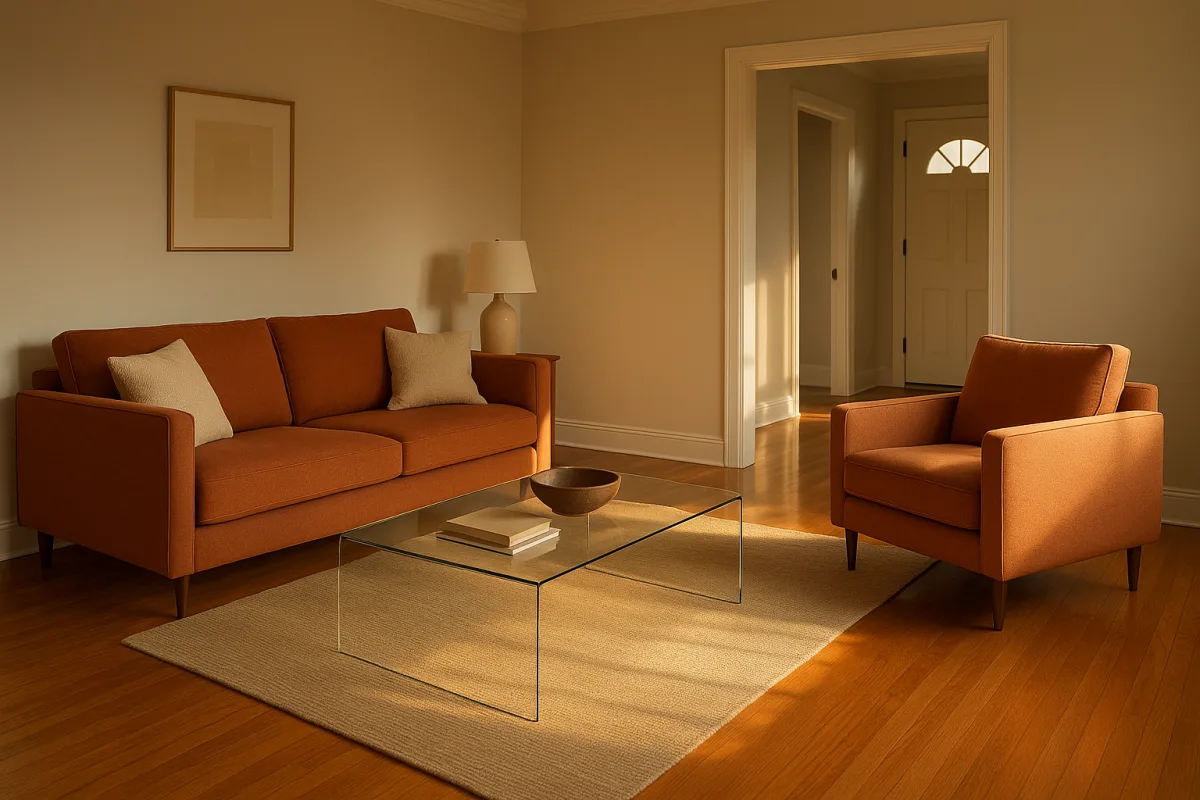
Start with the rooms that carry the most decision-making weight: the living room, kitchen, primary bedroom and dining area if you have one. Alicia Rivett’s seller guidance recommends arranging furniture to highlight the home’s features and create a welcoming setting. [3]
Avoid oversized furniture that overwhelms the room. Ideal Home’s design guidance recommends choosing sofas proportionate to the space and pulling furniture inward rather than lining every piece against the walls. [14]
Clear pathways are measurable. Homes & Gardens recommends maintaining 36-inch walkways, which gives visitors room to move without turning sideways around furniture or bags. [11]
In a dining room, allow roughly 48 inches around the table for movement. If a chandelier hangs above it, the Dummies staging guide places it about 30 to 36 inches above the tabletop. [10]
Area rugs can help define a seating area, but they should not make the room appear shrunken. For a sofa-and-loveseat layout, Dummies suggests a typical 5-by-8-foot rug and leaving 20 to 36 inches between the rug and surrounding walls. [10]
Before renting furniture or moving heavy pieces, use masking tape to mark the proposed footprint on the floor. Woman & Home describes this as a way to see whether a layout preserves circulation and fits the room’s actual proportions. [12]
If you use artwork, hang it with a relationship to nearby furniture rather than floating it too high. Dummies recommends placing artwork about 4 to 6 inches above furniture surfaces. [10]
Decide what level of staging actually fits the house
Professional staging has a real cost, and the right approach depends on whether the home is occupied, vacant, already well furnished and competing in a market where presentation materially affects buyer attention.
Virto AI quotes occupied-home staging at $300 to $800 per room, or about $1,500 to $3,500 for a full three-bedroom home. This generally means working with the seller’s existing furniture, supplemented or rearranged as needed. [6]
For a vacant property, Virto AI quotes $500 to $1,500 per room, or $2,500 to $6,000 for a full three-bedroom home. The higher range reflects furnishing rooms that otherwise provide little help in showing scale or purpose. [6]
Virtual staging is quoted at $9 to $50 per image, with a full home commonly quoted at $50 to $250. It suits listing photographs, but it does not solve the in-person problem of buyers walking into empty or poorly arranged rooms. [6]
DIY staging is quoted at $100 to $400 per room, or $500 to $1,500 for a full home. It may suit an occupied seller who mainly needs editing, cleaning, lighting and a few purposeful changes rather than rental furniture. [6]
Those are quoted staging ranges, not guaranteed all-in prices. Ask what the proposal includes, such as consultation, furniture rental, delivery, installation, pickup and any extension fees. Repair work, cleaning and photography may be separate expenses.
Set the conditions on showing day
Light is one of the easiest conditions to control. Open curtains and blinds, turn on lights and replace weak bulbs, especially in darker rooms. HAR.com specifically recommends maximizing natural light and using stronger bulbs where a room needs help. [1]
A commonly suggested indoor showing range is 68 to 72 degrees Fahrenheit. It is a general-practice guideline rather than a formal standard, so adjust for local climate, season and the reasonable expectations of buyers touring homes in your market.
Before each appointment, do a short reset: clear kitchen and bathroom counters, empty trash, check floors and turn on lights. This reduces the risk that the house presents differently at a Tuesday afternoon showing than it did in polished listing photos.
Secure valuables every time, not only for an open house. Jewelry, cash, medication and personal documents should be removed or locked away, according to HAR.com’s showing checklist. [1]
Finally, leave. The Northern New Jersey Falco Group’s seller guide identifies a seller’s presence as a showing mistake because buyers may shorten the visit or avoid candid conversation. [9]
Preparation cannot compensate for an unrealistic asking price, which Kiplinger identifies as a buyer turnoff. But careful preparation can ensure buyers are evaluating the home’s location, layout and condition, rather than reacting to clutter, odors, blocked pathways or a repair list they can see from the doorway. [7]
I am not a licensed real estate agent, lender or financial adviser. Staging and repair choices should reflect your property’s condition, local buyer expectations, timeline and budget.
Frequently Asked Questions
How far in advance should I prepare my home for showings?
Begin preparing your home about 6 to 12 weeks before the first showing. This timeframe allows you to assess the property, complete necessary repairs, and avoid rushing cleaning, decluttering, and photography in the final week. The last 2 to 4 weeks should focus on repeatable details like fresh flowers and lighting checks.
What repairs should I complete before home showings?
Address visible defects such as dripping faucets, chipped paint, broken tiles, and mildewed caulk before showings. A pre-listing inspection can help identify issues early, but costs and repairs vary by property. Focus on repairs that affect buyers’ first impressions and avoid last-minute renovation scrambles.
How can I improve curb appeal before showings?
Enhance curb appeal by mowing the lawn, trimming shrubs, cleaning the driveway and walkway, and freshening the front door. Walk the path from the street to the entry as a buyer would, removing obstacles and cleaning dirt from visible surfaces. Keep curb appeal maintenance ongoing rather than a one-time task.
What should I remove or declutter before a showing?
Remove personal photos, clear countertops, and organize closets to declutter your home. Clearing surfaces and depersonalizing spaces help buyers envision themselves living there. Decluttering should be done about 4 to 6 weeks before showings along with deep cleaning and staging.
How do I make my home inviting for buyers during showings?
Make your home inviting by ensuring clean surfaces, working fixtures, and controlling odors. Maximize natural light by opening blinds and turning on lights, maintain a comfortable temperature around 68°F to 72°F, and stage key living spaces to highlight their purpose and flow. Leave the home during showings to give buyers space to explore freely.
How we researched this
This article was assembled from 14 cited references.
Nothing here is based on hands-on testing. Where a figure or finding appears, it belongs to the source cited beside it, and the writing says so rather than implying otherwise. Every source is listed below so you can check it.
Sources
- Preparing Your Home for Showings: A Seller's Checklist (2026 Guide) - HAR.com
- 15 Essential Steps to Prepare Your House for Sale in 2026 | Opendoor
- How to Prepare Your Los Angeles Home to Sell (2026) | 10 Seller Tips | Alicia Rivett
- How to Prepare to Sell Your Home: A Complete Seller's Guide | PrimeStreet
- Home Staging Guide Austin TX (2026) | Neuhaus Realty Group
- How Much Does Home Staging Cost in 2026? (With Free Calculator) | Virto AI
- 20 Things Home Buyers Will Hate About Your House
- What are the 25 Home Showing Mistakes That Can Cost Sellers an Offer?
- Showing Prep Guide for Home Sellers | Northern NJ | Falco Group
- Getting Sizes and Placement Right when Staging Your Home | dummies
- The Library: How to Get Your Living Room Layout Right - Interior Designers' Golden Rules for Planning the Perfect Space
- Kelly Hoppen's genius tape trick makes furniture placement and proportions so simple - ensuring a perfect layout in any room
- Common Home Showing Mistakes Sellers Make - REMAX Blog
- 4 living room layout mistakes that are making your space look messier than it actually is, according to design experts
Related Articles
Prepare for a Home Showing During Winter: Essential Tips
Learn how to prepare for a home showing during winter with tips on snow removal, thermostat settings, and managing wet boots for a safe, inviting visit.

How to Prepare for a Home Appraisal: Essential Tips
Learn how to prepare for a home appraisal with tips on repairs, pricing, and documentation to help maximize your home's value.
Winter Home Selling Tips: How to Prepare and Price Your Home
Discover winter home selling tips including preparation, pricing, and maintenance to help you sell your home effectively during cold months.
Buying a Home with a Basement: What You Need to Know
Learn key tips for buying a home with a basement, including inspection, water issues, foundation concerns, and budgeting for repairs.