
Calculate Home Affordability: Full Cost Breakdown for Buyers
Learn how to calculate home affordability by including down payment, closing costs, inspections, PMI, and monthly expenses for a realistic budget.
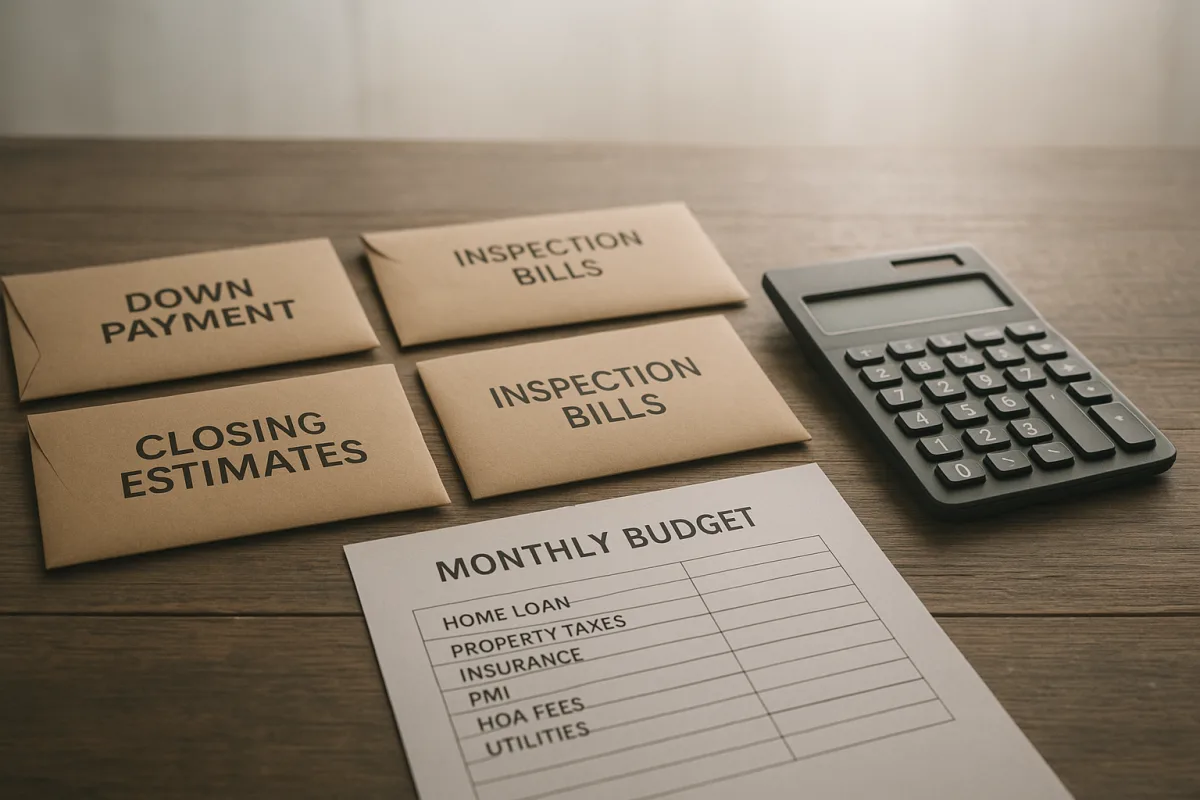
How to Calculate Your Budget for Buying a Home as a First-Time Buyer
Start with the cash you need before closing
The first number most buyers ask is, “How much do I need for a down payment?” That matters, but it is only one part of the cash calculation. A workable budget separates your down payment from transaction costs and post-closing reserves.
First-time buyers put down a median 10% in 2025, compared with 19% for all buyers, according to NerdWallet. That is useful context, not a required target. Your actual minimum depends on loan type, credit profile, loan amount and lender rules. [8]
On a $400,000 purchase, a 10% down payment is $40,000. That leaves a $360,000 mortgage before any financed fees. It does not mean you need only $40,000 in the bank to complete the purchase.
Next, add buyer closing costs. Wells Fargo and Home Buying Brief place national buyer closing costs at roughly 2% to 5% of the purchase price, or about $8,000 to $20,000 on a $400,000 home. [10][11]
That range is wide because closing costs are a collection of charges, not one fee. They can include loan origination charges, appraisal and title work, government recording or transfer charges, prepaid interest, initial property-tax funding and homeowners insurance. [10]
For a $400,000 example, the first draft of the cash budget might look like this: $40,000 down, plus $8,000 to $20,000 in closing costs. That puts the closing-day cash estimate between $48,000 and $60,000 before inspection, moving or reserve money.
Do not assume a seller credit eliminates every cost. A negotiated credit may reduce certain allowable closing charges, but the amount, eligible charges and offer strategy depend on the loan and the local deal. Get the estimate in writing from your lender.
Add the costs you pay while deciding whether to proceed
Before you own the property, you may spend money on due diligence. These costs deserve their own line in the budget because they are not the down payment and may be paid before closing.
Real Cost IQ puts a typical home inspection at $296 to $424 and an appraisal at $300 to $450. Together, that is roughly $596 to $874 for the two items, before any specialized inspections or follow-up evaluations. [3]
An inspection and an appraisal do different jobs. The inspection is your opportunity to understand the home’s condition and likely repair needs. The appraisal supports the lender’s assessment of value for the loan, rather than serving as a complete condition report.
Skipping an inspection to make an offer look easier can create a false saving. Rocket Mortgage specifically identifies skipping inspections to speed up a purchase as a first-time-buyer mistake. [15]
Your offer terms also matter to the budget. An appraisal gap is, in plain terms, the difference between the contract price and appraised value. The research brief does not provide a national 2026 average for appraisal gaps, so there is no reliable percentage to add automatically.
Instead, ask your lender how a lower appraisal would affect the specific loan amount and ask your agent or attorney, where applicable, to explain the contingency language before you waive or limit protections. The cash exposure is deal-specific.
Turn the loan amount into a realistic monthly payment
Once you have estimated the cash needed to close, move to the monthly test. This is where many first-time budgets fail, because an online payment quote often shows principal and interest but omits expenses that still arrive every month.
Start with the loan amount, not the listing price. A $400,000 purchase with 10% down produces a $360,000 starting loan balance. At a 7.4% 30-year fixed rate, the principal-and-interest payment is about $2,494 per month.
That $2,494 is an illustration, not a quote. It assumes a fixed 7.4% rate, a 30-year repayment term and no financed closing costs. The Associated Press reported mortgage rates around 7.4% alongside a $417,500 national median home price in September 2026. [2]
Then add property taxes and homeowners insurance. These are real monthly housing costs even though they are not part of paying down the mortgage balance. In many loans, the lender collects them through an escrow account. [6]
With mortgage escrow, the lender generally adds a monthly amount for property taxes and homeowners insurance to the mortgage payment, then uses the account to pay those bills when due. Escrow changes the monthly payment, but it does not make taxes or insurance disappear. [6]
Your tax bill may be based on local assessment rules rather than simply the purchase price. Local variation is substantial. Kiplinger lists effective property-tax rates as low as 0.27% in Hawaii and 0.38% in Alabama, with other low-rate states near 0.47% to 0.52%. [6]
Insurance can vary even more. Insurance.com puts the national average homeowners premium at about $2,872 annually for $300,000 of coverage with a $1,000 deductible, but reports state averages from $923 in Wisconsin to $6,408 in Florida. [13]
Translate annual figures into monthly budget lines. A $2,872 annual premium is about $239 per month. A $6,408 premium is about $534 per month. Your property’s location, coverage level, deductible and insurer can produce a very different result. [13]
Account for PMI before choosing a down payment
If your down payment is below 20%, budget for private mortgage insurance, commonly called PMI, on a conventional loan. Real Cost IQ estimates PMI at 0.5% to 1.5% of the loan amount per year. [3]
Using the $360,000 loan example, that range works out to about $1,800 to $5,400 annually, or approximately $150 to $450 per month. The actual quote will depend on the lender and borrower profile, so use this only as a planning range. [3]
This illustrates why comparing homes only by purchase price is incomplete. Two homes with identical prices can have different monthly costs if their tax assessments, insurance risks, HOA fees or required mortgage insurance differ.
PMI is not the same thing as homeowners insurance. Homeowners insurance protects against covered property losses under the policy. PMI protects the lender against certain losses if the borrower defaults, which is why it belongs in the loan-cost portion of your budget.
Build an ownership budget after the lender’s payment estimate
A lender’s maximum approval is not automatically your comfortable spending limit. Mortgage Solutions Financial identifies underestimating costs beyond the mortgage as a common budgeting error for first-time buyers. [16]
Add utilities next. Gerald’s 2026 home-buying cost guide estimates utilities can run $200 to $400 or more per month, though actual bills depend on climate, home size, energy source and local rates. [7]
If the home is part of a homeowners association, add the HOA fee as a separate recurring cost. The research brief does not provide a national HOA-fee average, so use the amount in the specific listing and ask what services it covers.
Maintenance is another line that does not appear in a mortgage quote. Kiplinger recommends budgeting 1% to 2% of the home’s value annually for maintenance and repairs. On a $400,000 home, that is $4,000 to $8,000 yearly, or about $333 to $667 monthly. [6]
That does not mean you will spend the same amount every month. It means ownership eventually produces uneven bills: a water heater, roof repair, appliance replacement or plumbing issue may require cash when the problem occurs, not when your budget is convenient.
Include moving and setup costs, too. Real Cost IQ gives a broad $1,000 to $5,000-plus range, which can cover movers, deposits, basic furnishings, locks, cleaning and other first-week expenses. Your number depends heavily on distance and how much you already own. [3]
Keep reserves separate from the down payment
The risky version of a home budget uses every available dollar for the down payment and closing. Greenbush Financial Group identifies draining savings for the purchase as a common error because ownership can create an urgent expense immediately after closing. [17]
Some lenders may require two to three months of mortgage payments in reserves, according to Real Cost IQ. That is a loan-qualification requirement in some cases, not necessarily a complete emergency-fund plan for your household. [3]
For the personal side of the budget, Kiplinger cites emergency savings of three to six months of essential expenses, while homeowner-focused guidance from Okoniq suggests six to 12 months plus ongoing repair savings. [12]
Those targets may not be achievable before a first purchase, and they are not rules that fit every income or household. The practical point is to list reserves separately and avoid calling money “available for down payment” if you need it for emergencies.
Use preapproval and competing estimates as budgeting tools
Get preapproved before treating a listing price as affordable. Rocket Mortgage lists house hunting before preapproval among first-time-buyer mistakes, because buyers can otherwise spend time looking at homes outside the financing range available to them. [15]
A preapproval should give you a loan amount, estimated rate, monthly payment and cash-to-close figure based on information available at that time. Read the estimate line by line, especially the rate, lender fees, prepaid items and cash required to close.
Shop more than one lender. House.ai includes failing to compare mortgage lenders and rates among common first-time-buyer mistakes. A small rate or fee difference can change both the monthly payment and upfront cash requirement. [18]
Ask each lender to model the same scenario: identical purchase price, down payment, loan term and estimated closing date. Otherwise, one quote may appear cheaper simply because it assumes a larger down payment, more discount points or lower estimated taxes.
Discount points deserve particular attention. A point is typically an upfront lender charge tied to the loan amount in exchange for a lower rate, but whether it helps depends on the quoted rate reduction, the point cost and how long you expect to keep the loan.
Recheck the budget against the market you are actually shopping
Market headlines can be useful, but they do not replace a property-level budget. Nationally, September 2026 existing-home sales rose 1.5% from August but remained 2.2% below the prior year, while the median price reached $417,500. [2]
Some local markets have seen price softness. Axios reported San Diego starter-home prices down 1.1% year over year in October 2026, yet affordability remained difficult amid mortgage rates around 7.3%. [2]
A lower purchase price does not necessarily produce a lower all-in cost if insurance, taxes, HOA dues or rates are higher. Likewise, Tampa Bay tax rates may hold steady or decline, but rising home values can still raise tax bills, according to Axios. [6]
There is also a proposed federal Homeownership Promise Act that could offer up to $50,000 in matching down-payment funds for qualifying first-time buyers. It is a proposal, not money to include in your budget unless and until eligibility and program availability are confirmed. [1]
I am not a licensed real estate agent, lender or financial adviser. The right budget depends on your quoted rate, debts, credit, local taxes, insurance market, property condition and timeline, so use these calculations to prepare informed questions for qualified local professionals.
Frequently Asked Questions
How do I calculate home affordability including all costs?
To calculate home affordability, start by estimating the total cash needed before closing, including your down payment, closing costs (2% to 5% of the purchase price), and additional funds for inspections, appraisals, moving, and repairs. Then, determine your realistic monthly housing payment by adding principal and interest to property taxes, homeowners insurance, PMI (if applicable), HOA dues, utilities, and maintenance costs. Comparing this full monthly payment to your budget and debts gives a clearer picture than looking at principal and interest alone.
What factors should I include when calculating home affordability?
Include your down payment, closing costs, inspection and appraisal fees, and reserves for moving and repairs in your upfront cash needs. For monthly affordability, add mortgage principal and interest, property taxes, homeowners insurance, private mortgage insurance (PMI) if your down payment is under 20%, homeowners association (HOA) fees, utilities, and ongoing maintenance expenses. These combined costs reflect the true financial commitment of homeownership.
How do closing costs and PMI affect home affordability?
Closing costs typically range from 2% to 5% of the purchase price and add to the upfront cash you need to buy a home, often amounting to thousands of dollars beyond the down payment. PMI is required if your down payment is less than 20% and can add 0.5% to 1.5% of the loan amount annually to your monthly housing costs, increasing the total monthly payment you must afford.
How to estimate monthly housing payments beyond principal and interest?
Start with your loan amount and calculate principal and interest based on your mortgage rate and term. Then add monthly amounts for property taxes and homeowners insurance, often paid through an escrow account. Include PMI if required, plus HOA dues, utilities, and budget for maintenance and repairs to estimate the full monthly housing payment.
What is the impact of mortgage rates on home affordability?
Mortgage rates significantly affect monthly payments because even modest changes in the loan size or rate can add substantial monthly costs. For example, a 7.4% rate on a $360,000 loan results in a principal-and-interest payment around $2,494 per month, illustrating how higher rates increase the monthly amount you must afford compared to lower-rate environments.
How we researched this
This article was assembled from 18 cited references.
Nothing here is based on hands-on testing. Where a figure or finding appears, it belongs to the source cited beside it, and the writing says so rather than implying otherwise. Every source is listed below so you can check it.
Sources
- Exclusive: New proposal would give up to $50,000 to first-time home buyers
- US home sales rose in September, but slowed from a year earlier as mortgage rates, prices rose
- First-Time Home Buyer Guide 2026: Every Step & Cost
- How Much Are Closing Costs? Average Costs and Fees in 2026 | LendingTree
- First-Time Homebuyer Closing Costs in 2026: Budget Guide | Investormint
- What to Know About Mortgage Escrow Accounts
- Home Buying Costs: The Ultimate 2026 Guide | Gerald Cash Advance & Buy Now Pay Later
- What’s the Average Down Payment on a House? - NerdWallet
- Average Down Payment For First-Time Homebuyers | Bankrate
- What are closing costs and how much are they? | Wells Fargo
- How Much Are Closing Costs for a Buyer? (2026)
- How Much Emergency Fund a Homeowner Needs | Okoniq Blog
- Average homeowners insurance rates by state in 2026
- Homeowners Insurance Cost by State (Official Averages)
- First-time home buyer mistakes to avoid | Rocket Mortgage
- Biggest Budgeting Mistakes First-Time Home Buyers Make | Mortgage Solutions Financial
- 8 Hidden Costs of Buying Your First Home in 2026 | Greenbush Financial Group
- First-Time Home Buyer Guide & Common Mistakes | House.ai
Related Articles

How to Create a Home Buying Budget: Step-by-Step Guide
Learn how to create a home buying budget including down payment, closing costs, monthly expenses, and credit tips for a smooth purchase.
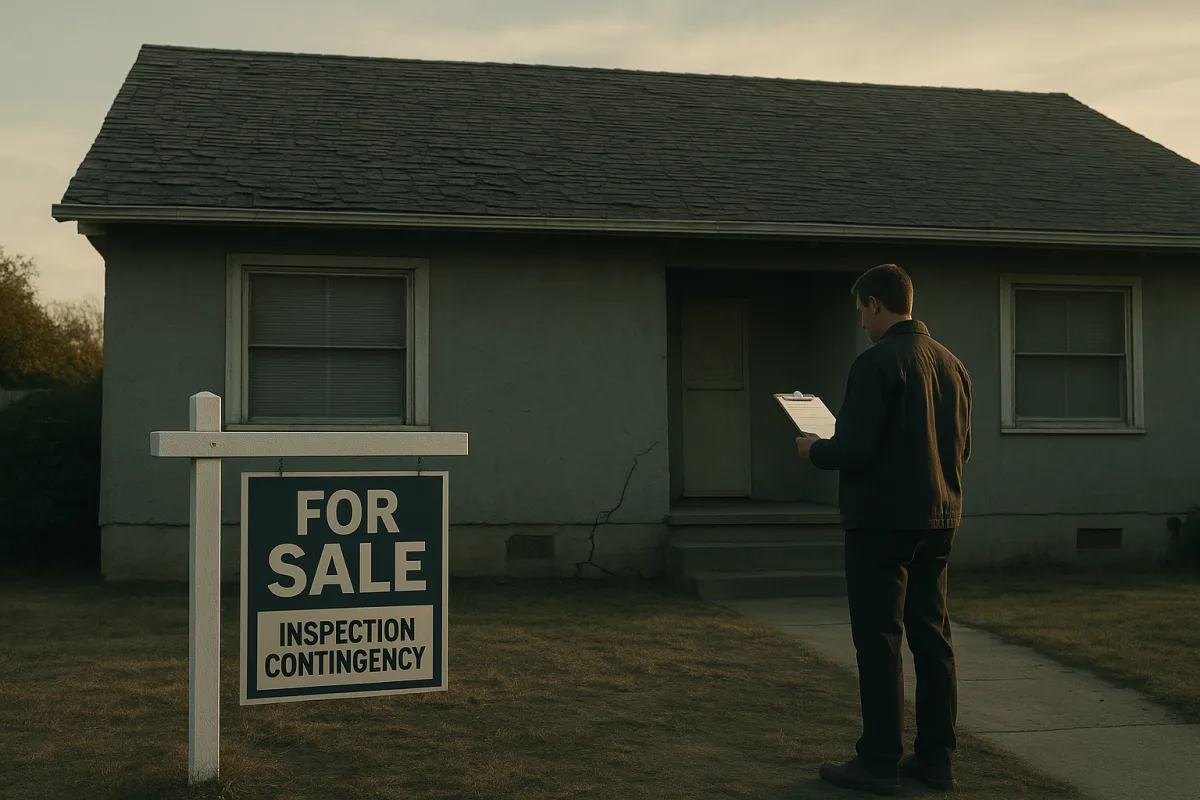
Inspection Contingency in Competitive Home Buying
Learn how inspection contingencies affect your offer and financial risk when buying a home in a competitive market.
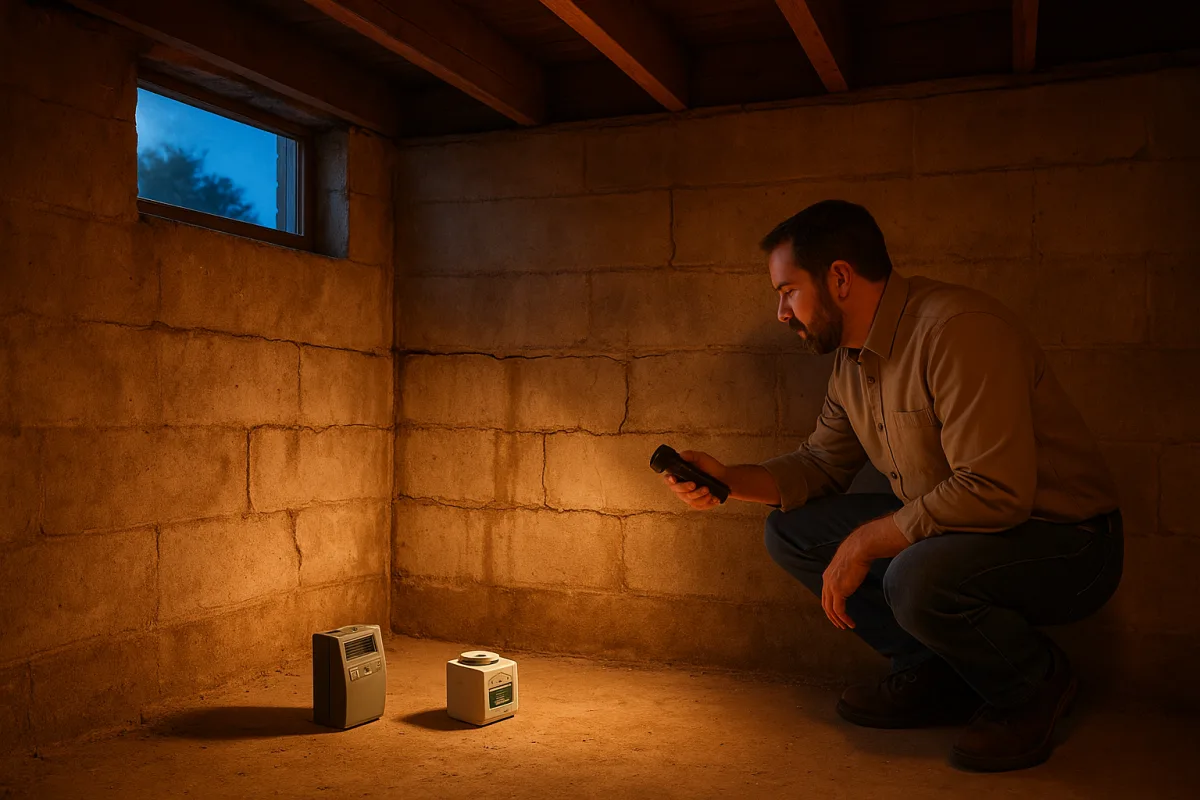
Buying a Home with a Basement: What You Need to Know
Learn key tips for buying a home with a basement, including inspection, water issues, foundation concerns, and budgeting for repairs.
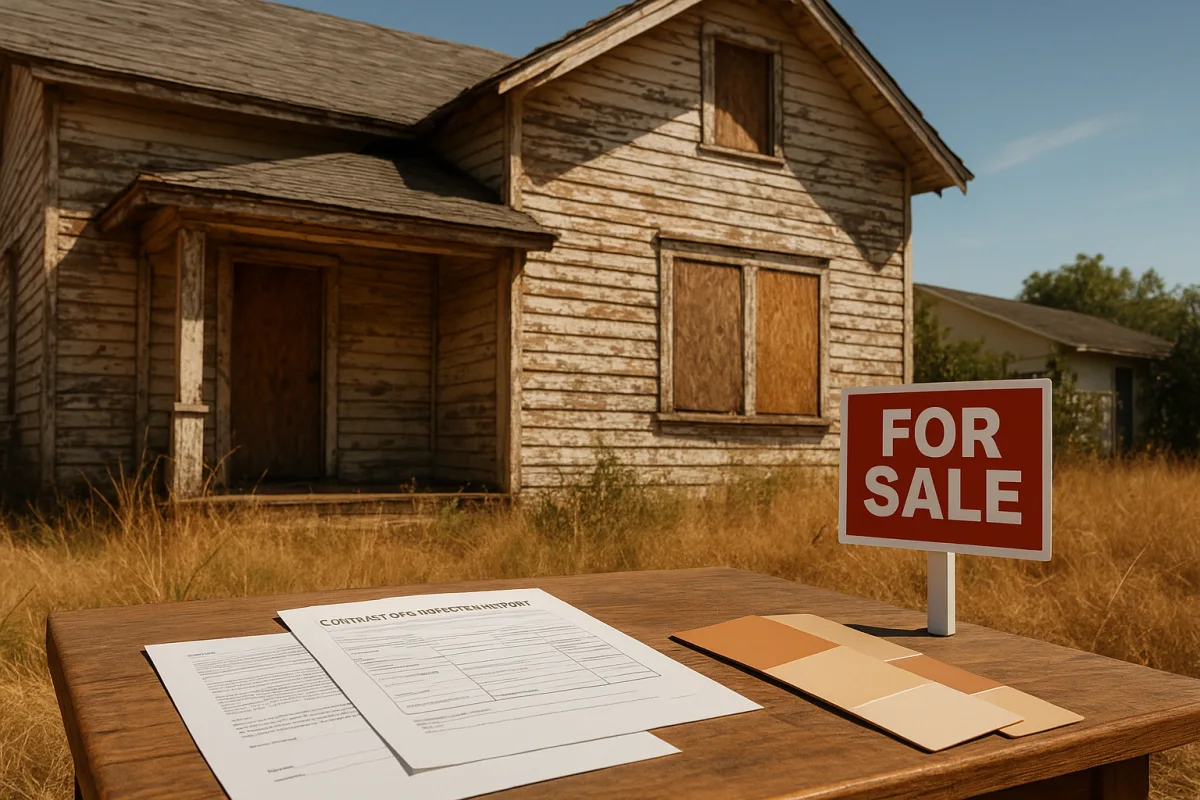
Risks of Buying a Foreclosure: What Buyers Need to Know
Learn the risks of buying a foreclosure, including repair costs, title issues, and hidden expenses to avoid costly mistakes.