
How to Sell a House Fast: Proven Strategies for Quick Sales
Learn how to sell a house fast with pricing tips, pre-listing inspections, and marketing strategies to close quickly in any market.
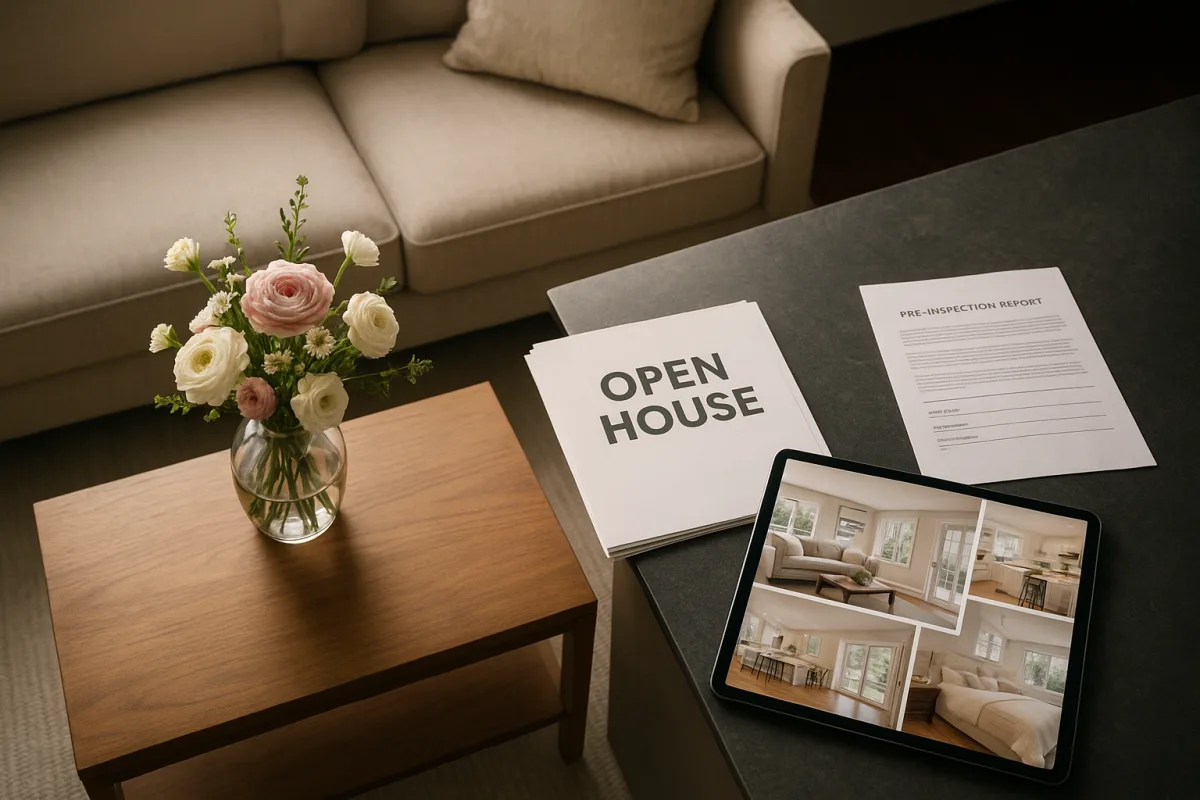
Start with the deadline, then work backward
“Sell fast” needs a date attached to it. Are you trying to accept an offer within two weeks, have a signed contract within 30 days, or hand over the keys by a particular moving date? Those are different targets.
The national timeline is not especially fast. Opendoor places the average time on market at roughly 55 to 70 days, while Zillow notes that homes in competitive markets can sell in as little as five days. [4][6] Your neighborhood’s inventory, price band and buyer demand matter more than either headline figure.
Seasonality can help, but it does not override local conditions. Homes listed from March through May have median days on market of roughly 40 to 48 days in Opendoor’s analysis, compared with 55 to 66 days in winter. [4]
That does not mean waiting is automatically the right move. The best listing window depends on your local supply, competing listings and the time you need to prepare the property. Effective marketing and pricing can still matter in a slower season. [5]
Regional conditions are diverging. A market with days on market below 25, such as parts of the Northeast and Midwest, calls for a different launch strategy than parts of the Sun Belt and West, where price reductions have been more common. [8]
Before you spend money, pull together a simple deadline plan: your desired list date, the latest acceptable contract date, the desired closing date and the date you must be out. Leave room for inspection negotiations, appraisal issues and lender underwriting.
I am not a licensed real estate agent, lender or financial adviser. This is a practical framework for comparing the tradeoffs in your market and timeline, not a recommendation to sell, delay selling or accept a particular offer.
Solve the pricing problem before the listing goes live
The quickest way to lose early buyer attention is to list above the range buyers consider credible. The first week matters because the newest listing gets the most scrutiny from active buyers and their agents.
Redfin reports that more than 35% of sellers reduced their prices before receiving an offer in early 2026. [2] A price reduction is not inherently a failure, but it can cost time that a deadline-driven seller does not have.
Start with recently sold comparable homes, then look separately at active and pending listings. Sold homes show where buyers actually agreed on value. Active listings show your competition. Pending properties can show where buyers are currently responding, although the contract price may not yet be public.
Do not treat an automated home-value estimate as a list-price answer. Use it as one data point, then adjust for factors buyers can see: condition, layout, lot, updates, parking, location and the number of close substitutes currently for sale.
A fast-sale price is not necessarily the lowest possible price. It is a price that produces enough buyer attention to create a credible offer quickly. That may mean pricing within the market-supported range instead of leaving a large cushion for negotiation.
If elevated mortgage rates are restraining buyers, the payment matters as much as the purchase price. The Week reported mortgage rates around 6%, a level that can narrow affordability and make buyers more sensitive to monthly payment changes. [10] A seller should not assume buyers will stretch simply because a home is well presented.
Find the deal-killers before buyers do
A pre-listing inspection can be useful when speed matters because it shifts discovery earlier. My Home Advisor puts typical seller inspection costs at $350 to $800, depending on region, and says repair renegotiations can range from about $800 to $15,000. [17]
The inspection does not obligate you to renovate the house. It gives you time to decide what to repair, what to price around and what to disclose. For a quick sale, that can be more valuable than waiting for the buyer’s inspection clock to begin.
Focus first on defects likely to stop or delay a transaction: active leaks, electrical or safety concerns, heating and cooling failures, drainage problems, roof issues and visible signs of water damage. Avoid assuming every cosmetic imperfection deserves a pre-listing dollar.
After the inspection, create a repair-and-disclosure file. Keep receipts, contractor invoices, warranties and before-and-after photos where relevant. A buyer may still request repairs, but organized documentation can make the discussion narrower and faster.
A pre-listing inspection is not a guarantee against a buyer’s inspection contingency. Buyers may order their own inspection and may reach different conclusions. The advantage is that you are less likely to be surprised by an issue that could have been identified before listing.
Make the listing easy to understand in seconds
Once the price is credible and material defects are addressed, presentation becomes the next constraint. Buyers cannot schedule a showing for a home they scroll past, and they cannot evaluate a cluttered or poorly photographed room accurately online.
Professional photographs are associated with homes selling about 32% faster, according to Opendoor. [4] That finding does not mean photos alone create demand, but it supports treating photography as a timing expense rather than an optional finishing touch.
Prepare rooms for the camera and for showings in the same way: clear counters, remove excess furniture, open window coverings, replace failed bulbs and secure personal items. The goal is not to create a showroom. It is to make room sizes, storage and condition legible.
Staging can be a selective tool, not an automatic requirement. Kiplinger reports that staging may increase sale price by 1% to 5%, but Homes.com cites the National Association of Realtors’ 2025 Profile, in which only 19% of agents observed a price increase from staging. [3][5]
That conflict matters. If a vacant living room, an awkward layout or dark photos are likely to confuse buyers, staging may make sense. If the home already photographs well and the market is moving quickly, the return is less certain.
Use the smallest staging scope that solves the visible problem. That might mean furnishing a vacant main room, improving the primary bedroom or removing oversized furniture, rather than staging every room. Ask for an itemized quote and compare it with your expected timeline benefit.
Do not restrict the people who can see it
A correctly priced house cannot move quickly if buyers cannot get inside. Homes.com identifies flexible showings and broad marketing as important ways to expand buyer reach. [5]
For the first days on market, make the property available across evenings and weekends where practical. Build a simple plan for pets, medication, valuables, mail and daily clutter so a short-notice showing does not become a cancellation.
Common showing mistakes include poor presentation and limited availability. [13][18] If you need occupied-home rules, make them workable rather than restrictive. For example, require reasonable notice if necessary, but avoid blocking the highest-demand viewing times without a strong reason.
Broad marketing should mean accurate distribution and clear property information, not unsupported claims. Confirm that the listing includes the correct square footage, room count, updates, utility details and disclosures. A buyer who finds conflicting information may move on rather than investigate.
Expect the offer to contain a price and a risk allocation
A fast offer is not automatically the best offer. Compare the whole contract: price, requested concessions, inspection contingency, appraisal contingency, financing terms, possession date and any request for seller-paid costs.
Inspection contingencies give buyers a period to investigate the home and seek repairs, credits or a price change. A seller who has already inspected and documented major items may have fewer surprise issues, but the buyer still has negotiating leverage if new concerns emerge.
An appraisal contingency matters when the buyer is using a mortgage. If the appraisal comes in below the contract price, the buyer may need more cash, a price reduction, a different financing structure or an agreement to cancel, depending on the contract terms.
An appraisal gap is the amount between the contract price and appraised value. On a $500,000 contract that appraises at $485,000, the gap is $15,000. Whether the buyer covers it depends on the written offer, not on the seller’s expectations.
Do not count an appraisal-gap promise as equivalent to cash until you understand its wording. It may be capped, conditional or limited to a specific amount. Ask the closing professional or real estate attorney involved in your transaction to explain the contract language applicable in your state.
Budget for concessions and the sale-side net before you counter
Seller concessions are increasingly part of the speed conversation. Redfin reported that 44.7% of buyers received concessions in August 2026, up from 42.6% a year earlier, reflecting more buyer leverage in many markets. [2]
Concessions can take several forms: a credit toward buyer closing costs, a repair credit, a rate buydown contribution where permitted, or another negotiated cost. They reduce your proceeds, so compare them against a price reduction rather than treating them as separate from price.
Concession amounts vary widely by market and property. Some sellers offer credits up to $40,000, while typical concessions are often described as 0% to 3% of the sale price. [7] On a $500,000 sale, 3% equals $15,000.
Your sale-side closing costs also need a line-by-line estimate. Kiplinger places typical seller costs, including commissions, at 8% to 10% of the sale price. [3] On a $500,000 sale, that is roughly $40,000 to $50,000 before mortgage payoff and any concessions.
Commission arrangements are negotiable, and changes following the 2024 industry settlement may affect who pays buyer-agent compensation and how it is structured. The practical point is to get the proposed compensation and every seller-paid charge in writing before comparing offers. [3]
Escrow is the neutral process that holds documents and funds until contractual conditions are met, although the exact roles and terminology vary by state. The research here does not show that escrow itself speeds sales in 2026, so do not confuse a smooth closing process with a marketing strategy.
Keep the transaction moving after you accept
Once under contract, speed depends on meeting deadlines and avoiding preventable document gaps. Respond promptly to inspection requests, appraisal scheduling questions, title inquiries and lender requests that come through the buyer’s side of the transaction.
Keep utilities on until closing unless the contract and local professionals say otherwise. An appraiser, inspector, final-walkthrough buyer or repair contractor may need access, lighting, water or climate control before the transaction can close.
If an issue arises, compare the cost of solving it now with the cost of delay. That is not always a reason to concede. It is a reason to quantify the choice using your deadline, carrying costs, contract terms and local buyer demand.
The right response depends on your rate environment, market and timeline. A seller with multiple interested buyers may handle a repair request differently from a seller whose listing has been active for 60 days, and neither approach is automatically correct.
Frequently Asked Questions
How can I price my house to sell fast?
To sell quickly, price your house for the first wave of buyers rather than expecting negotiation room. Over 35% of sellers reduced their asking price before receiving offers in early 2026, which can delay a sale. Use recently sold comparable homes as your primary guide, consider active and pending listings, and adjust for visible factors like condition and location. Pricing within the credible market range helps attract credible offers promptly.
What is a pre-listing home inspection and how does it help sell a house quickly?
A pre-listing home inspection is an inspection conducted by the seller before listing the property. It typically costs between $350 and $800 and helps identify material issues early, allowing the seller to disclose or repair them before buyers discover them. This can prevent costly renegotiations or repair requests that might delay or jeopardize a quick sale.
How long does it typically take to sell a house fast in competitive markets?
In competitive markets, homes can sell in as little as five days, though the national average time on market is about 55 to 70 days. Seasonal factors also influence timing; homes listed in spring (March through May) tend to sell faster, with median days on market around 40 to 48 days, compared to 55 to 66 days in winter. Local inventory and buyer demand have the greatest impact on how quickly a house sells.
What are the best strategies to prepare a house for a fast sale?
Effective strategies include pricing the home accurately to attract early buyers, investing in professional photography to speed sales by about 32%, and offering flexible showing windows with broad listing exposure. Additionally, building concessions and closing costs into your net sheet and addressing any repair issues upfront through a pre-listing inspection can help avoid delays during negotiations.
How do local market conditions affect selling a house quickly?
Local market conditions are crucial; homes in some regions like parts of the Northeast and Midwest can sell in under 25 days, while markets in the Sun Belt and West may require price reductions due to buyer leverage. Seasonal trends and local inventory levels also influence how fast a home sells, so tailoring your pricing and marketing strategy to your specific area is more effective than relying on national averages.
How we researched this
This article was assembled from 19 cited references.
Nothing here is based on hands-on testing. Where a figure or finding appears, it belongs to the source cited beside it, and the writing says so rather than implying otherwise. Every source is listed below so you can check it.
Sources
- Cheaper homes stand out in Puget Sound's slow market
- How to Sell a House in 2026 | Redfin
- How Much Does It Cost to Sell a House? Don't Overlook These Common Fees
- How Long Does It Take to Sell a House in 2026? Timeline by Stage | Opendoor
- Tips to sell your home faster - Homes.com News
- What's the Average Time to Sell a House? | Zillow
- Seller Concessions: Direct 2026 Answers for Home Sellers | Sellable
- U.S. Home Sellers Cut Prices at Record Rate as Buyer Leverage Expands - WORLD PROPERTY JOURNAL Global News Center
- Builder Incentives: What Argyle and Northlake Sellers Should Do
- What will next year's housing market look like?
- The Best Time To Buy a Home - Realtor.com
- NAR Forecast: Home Sales Expected to Jump 14% in 2026
- The Most Common Mistakes Home Sellers Are Making in 2026 (And How to Avoid Them) | ROUNTREE REALTY
- Mistakes Home Sellers Should Avoid to Sell Quickly in 2026 – North Penn Now
- How Much Does Home Staging Cost in 2026? Prices + Free ROI Calculator | NestiqAI
- Repairs sellers should not waste money on before listing
- Pre-Listing Home Inspection in 2026: The Seller's Secret Weapon to Avoid Repair Renegotiation | My Home Advisor
- Common Home Showing Mistakes Sellers Make - REMAX Blog
- It took longer than average to get an offer on my house - these are the 6 selling mistakes I made that I definitely won't be making again
Related Articles

Home Repairs Before Selling: Prioritize and Budget Smartly
Learn how to prioritize and budget home repairs before selling to attract buyers and avoid costly concessions.
Best Time to List Your Home: Seasonal and Regional Insights
Discover the best time to list your home, including seasonal trends and regional variations to maximize sale price and buyer interest.
Best Time to Sell a House: Late Summer Insights
Discover the best time to sell a house in 2026, focusing on late summer trends and market dynamics that impact your selling strategy.

Prepare for a Home Showing During Winter: Essential Tips
Learn how to prepare for a home showing during winter with tips on snow removal, thermostat settings, and managing wet boots for a safe, inviting visit.