
How to Prepare for a Mortgage Application: Steps & Checklist
Learn how to prepare for a mortgage application with a checklist of documents, credit tips, down payment, and debt-to-income guidance.
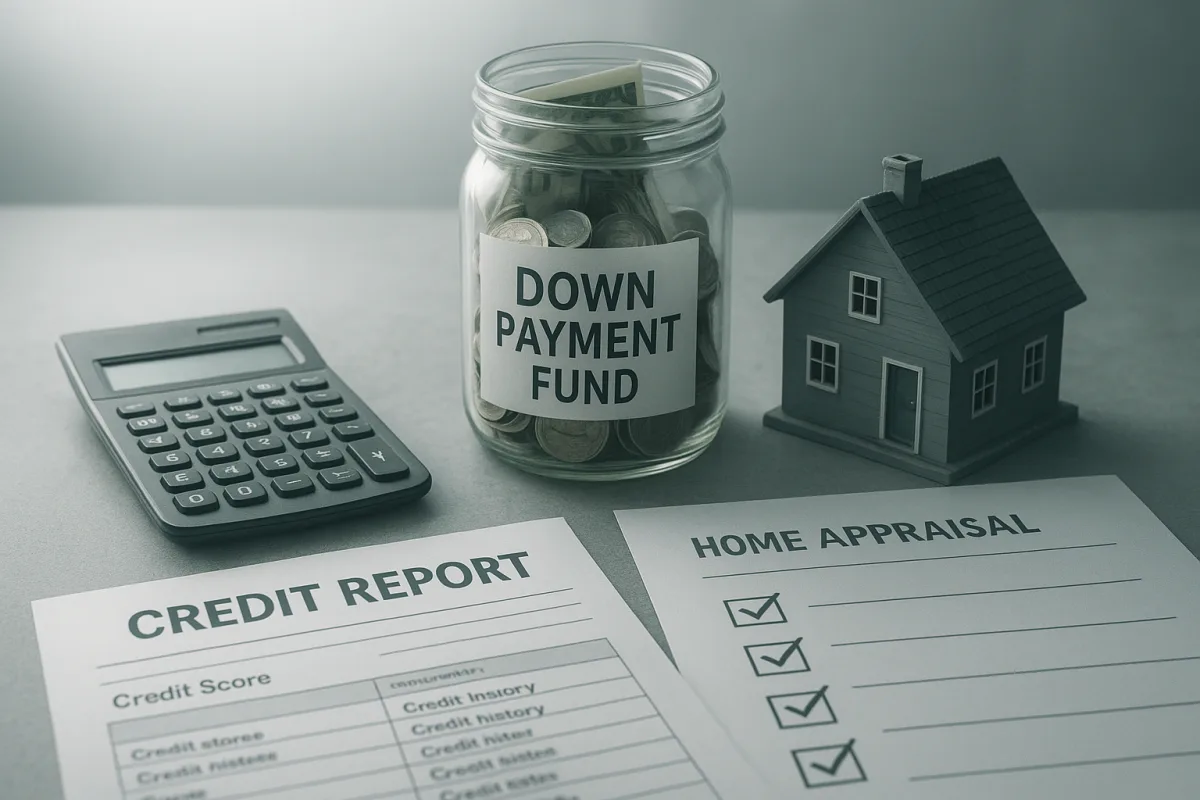
Build your lender document folder
Open a folder on your computer and a matching paper folder, then label sections for income, assets, debts, credit, and property records. Your lender will need evidence supporting the income, assets, debt obligations, and credit information used in the application. [2][4]
Federal ability-to-repay rules require lenders to make a reasonable, good-faith determination that you can repay the loan. That means the figures on your application need documentation, not just a verbal estimate. [2]
Ask the lender for its checklist before you begin collecting files. WSECU’s checklist is broad, but lenders can impose their own requirements based on the loan program, your income structure, or internal underwriting standards. [4]
Keep the files complete and readable. A missing page, an outdated record, or a document that creates a new unanswered question can turn a short underwriting request into several rounds of follow-up.
We would organize everything before shopping seriously, even if you have not selected a home. It gives you time to spot a missing record without a contract deadline hanging over the process.
Review your credit reports and scores
Check your credit reports at least three months before you apply. That window gives you time to identify inaccurate information, understand what lenders will see, and avoid discovering a problem after you have made an offer. [1]
Do not assume one universal credit-score cutoff applies to every mortgage. Fannie Mae and Freddie Mac removed the mandatory 620 minimum for automated underwriting in November 2025, but many conventional lenders still use a 620 floor. [5]
FHA financing can allow a score as low as 580 with 3.5% down, or 500 with 10% down. VA and USDA programs have no official minimum score, though lenders commonly look for about 620. [6][7][9]
Jumbo mortgages commonly require higher scores, often in the 700 to 740 range. The lender may also use a scoring model that differs from the score you see through a consumer credit service, including FICO or VantageScore 4.0. [6][8]
Ask each lender which score model it uses and what score, loan-to-value ratio, and debt-to-income ratio it expects for the program you want. A score that qualifies you for one lender’s conventional loan may not meet another lender’s overlay.
Calculate the cash you need to show and spend
Write down two separate numbers: cash needed for the down payment and cash needed for closing. Combining them can make a home seem affordable on paper while leaving too little money for the transaction’s upfront charges.
Nationally, the median down payment is 19%, while first-time buyers average 10% and repeat buyers average 23%. Your figure depends on the loan program, the price, and how much cash you intend to retain after closing. [10]
Regional differences are large. Median down payments reported for the Northeast were $57,600, or 17.3%, while the South’s median was $23,400, or 11.1%. [11]
Closing costs typically range from 2% to 6% of the purchase price nationally. State-level totals can run near 1% in Missouri and Indiana, while Delaware, New York, and Pennsylvania can exceed 5%. [12][17]
Budget separately for a home inspection and appraisal. Both are upfront transaction costs, but the available figures do not provide a dependable national average, so your lender and local providers need to supply the numbers for your area.
Match your down payment to the loan terms
A smaller down payment can preserve cash, but it can change the monthly payment and mortgage insurance cost. Private mortgage insurance commonly applies when you put down less than 20% on a conventional loan. [17]
PMI can add roughly 0.3% to 1.5% of the loan balance annually to your mortgage costs. The actual charge depends on factors including the loan structure and borrower profile, so ask for the estimated monthly PMI in writing. [17]
Put each option on the same worksheet: purchase price, down payment dollars, loan amount, estimated rate, principal and interest payment, PMI if any, taxes, insurance, closing costs, and remaining cash. This makes the tradeoff visible.
We would skip comparisons based only on the down payment percentage. A 10% down payment and a 20% down payment can produce very different cash needs, loan balances, and monthly obligations.
Check your debt-to-income ratio
List every recurring monthly debt payment and compare the total with your documented gross monthly income. Lenders use debt-to-income ratio, often called DTI, to assess how much of your income is already committed to debt.
High DTI accounted for 38.9% of reported mortgage denials in 2025, making it the largest cited denial category. Keeping DTI below 43% gives you a clearer starting point, though a lender’s limit can vary by program. [14]
Do not guess at the debts appearing on your credit report. Compare your own list with the report before applying, because an account you forgot to include can alter the ratio the lender calculates.
If the ratio is tight, ask the lender to show the calculation it is using. You need to know which monthly obligations count, what income it can document, and whether the program has a different threshold.
Choose a loan program before chasing a score target
Name the program you plan to ask about when you contact lenders: conventional, FHA, VA, USDA, or jumbo. The loan type affects the likely score range, down payment rules, mortgage insurance, and the lender’s documentation review. [5][6][7][9]
Conventional borrowers may encounter a lender-imposed 620 score floor even though automated underwriting no longer carries a mandatory 620 minimum. FHA’s published score-and-down-payment structure can be different, while jumbo lending generally demands stronger credit. [5][6]
Do not treat an online minimum as an approval promise. Lenders can add overlays, which are stricter standards than a program’s baseline rules, and may request additional information for an unusual property or risk factor.
Fannie Mae’s October 2026 guidance requires stable income to be documented. [18] Your application works best when the loan program, your documented income, available cash, and credit profile all point in the same direction.
Request preapproval with complete information
A preapproval lets a lender review your financial information before you are under contract. It is not the same as final approval, because the lender still needs to underwrite the file and evaluate the specific property.
Preapproval can take one to three days, while underwriting commonly takes 30 to 45 days. [13] Give the lender complete information at the beginning so that the preapproval reflects your actual finances.
Ask what the preapproval assumes about your down payment, loan program, estimated rate, monthly debts, and credit score. Save the response with your document folder, along with the date it was issued and its expiration terms.
We would request the lender’s list of outstanding items before treating a preapproval as ready for an offer. A letter is stronger preparation when you know exactly what still needs to be verified.
Prepare for the property review
Your financial file is only one part of approval. The lender also reviews the property because it serves as collateral for the mortgage, and collateral or appraisal issues accounted for 14.7% of reported denials in 2025. [14]
Keep room in your purchase timeline for the appraisal and for any lender questions that follow it. A property value issue can affect the approved loan amount even when your income, credit, and assets meet the lender’s standards.
Property requirements are generally governed by federal lending rules and program guidelines rather than a published state-by-state system for income verification. Still, a lender can apply additional scrutiny to distinctive property types or locations with added risk.
Ask early whether the lender sees any property-specific conditions that could affect the loan. You are looking for the lender’s requirements, not a prediction that every home in an area will receive the same treatment.
Answer underwriting requests quickly and completely
Treat every underwriting request as time-sensitive. A lender may ask for clarification even after preapproval because underwriting verifies the final application, the property, and the documentation in the file. [13]
Credit-history problems accounted for 14.1% of reported denials in 2025. [14] Responding promptly will not change a credit issue, but it prevents a routine documentation question from becoming a delay on top of it.
Read each request closely, then send the exact item requested in one complete response where possible. If you do not understand the request, ask the loan officer what document or explanation will satisfy it before sending unrelated records.
Keep copies of everything submitted and note the date. A simple log of requests, responses, and remaining items helps you see whether the file is moving toward approval or waiting on one unanswered question.
Set your application timeline around your market
Work backward from any contract deadline. Start with three months for credit review, at least two months to gather documents, one to three days for preapproval, and an underwriting period that can run 30 to 45 days. [1][13]
Mortgage conditions can affect how much time you want in reserve. In August 2026, the average 30-year fixed rate was about 6.78%, and purchase applications in September were down 8.3% from a year earlier. [3]
Axios identified late October and early November 2026 as a favorable window in the Richmond metro area, citing lower prices and more listings. [3] That was a local, time-specific finding, not a schedule that applies to every market.
The Mortgage Bankers Association forecast a 5% decline in 2027 mortgage originations as rates remained above 7%. [3] Build extra time into your own file anyway, because lender responsiveness, property conditions, and documentation needs can differ even in a slower market.
Frequently Asked Questions
How do I prepare my documents for a mortgage application?
Start by organizing your documents into categories such as income, assets, debts, credit, and property records. Ask your lender for a specific document checklist since requirements can vary by loan program and lender. Collect complete, readable, and up-to-date documents well before applying to avoid delays during underwriting.
What credit score do I need to apply for a mortgage?
There is no single credit score cutoff for all mortgages. Conventional lenders often require a minimum score around 620, but FHA loans can accept scores as low as 580 with 3.5% down or 500 with 10% down. VA and USDA loans have no official minimum, though lenders typically look for about 620. Jumbo loans usually require higher scores, often between 700 and 740.
How much cash do I need for a down payment and closing costs?
The national median down payment is about 19%, with first-time buyers averaging 10% and repeat buyers 23%. Closing costs generally range from 2% to 6% of the purchase price, varying by state. In addition to these, budget separately for inspection and appraisal fees, which are upfront expenses.
What is a good debt-to-income ratio for mortgage approval?
Keeping your debt-to-income ratio below 43% is advisable, as high debt-to-income ratios were the leading reason for mortgage denials in 2025. Lower ratios improve your chances of approval and may help you qualify for better loan terms.
How far in advance should I review my credit before applying for a mortgage?
You should review your credit reports at least three months before applying. This allows time to identify and correct any inaccuracies and to understand what lenders will see before you make an offer on a home.
How we researched this
This article was assembled from 18 cited references.
Nothing here is based on hands-on testing. Where a figure or finding appears, it belongs to the source cited beside it, and the writing says so rather than implying otherwise. Every source is listed below so you can check it.
Sources
- Preparing to shop for your mortgage | Consumer Financial Protection Bureau
- 15 U.S.C. § 1639c: Minimum standards for residential mortgage loans
- The best week of 2026 to buy a home in Richmond is almost here
- Mortgage Application Document Checklist
- 2026 Mortgage Credit Score Requirements and Changes
- Credit Score Needed for a Mortgage in 2026
- Minimum Credit Score for a Mortgage 2026: Requirements by Loan Type
- Which Credit Scores Do Mortgage Lenders Use?
- Credit Score Requirements By Loan Type | Lower Mortgage
- What’s the Average Down Payment on a House? - NerdWallet
- How Much Do Homebuyers Put Down by Region?
- First-Time Homebuyer Costs: The Details You Need to Know
- The mortgage process step by step: from pre-approval to closing day | MortgageInfo.us
- Why mortgage applications get denied (2025 data) | Mortgage by County
- Why Was My Mortgage Application Denied? 7 Common Reasons (and How to Fix Them) | LowestMortgage.com
- Common Reasons Mortgage Applications Get Denied | Bankrate
- Cost of Buying a Home 2026: Closing Costs, Down Payment & PMI
- B3-3.1-01, General Income Information (10/07/2026)
Related Articles
Improve Credit Score for Mortgage: Steps to Boost Your Score
Learn how to improve credit score for mortgage approval with proven steps, timelines, and tips to lower your mortgage rate.

Documents Needed to Buy a House: Complete Checklist
Learn the essential documents needed to buy a house, including financial, identification, and mortgage paperwork to ensure a smooth home purchase.
Common Closing Day Issues in Home Buying and How to Avoid Them
Learn about common closing day issues, including financing, appraisal, and title problems, and how to avoid delays in your home purchase.

How to Prepare for a Virtual Home Tour: A Seller’s Guide
Learn how to prepare for a virtual home tour with tips on staging, decluttering, repairs, and choosing the right tour format to attract buyers.