
Risks of Buying a Foreclosure: What Buyers Need to Know
Learn the risks of buying a foreclosure, including repair costs, title issues, and hidden expenses to avoid costly mistakes.
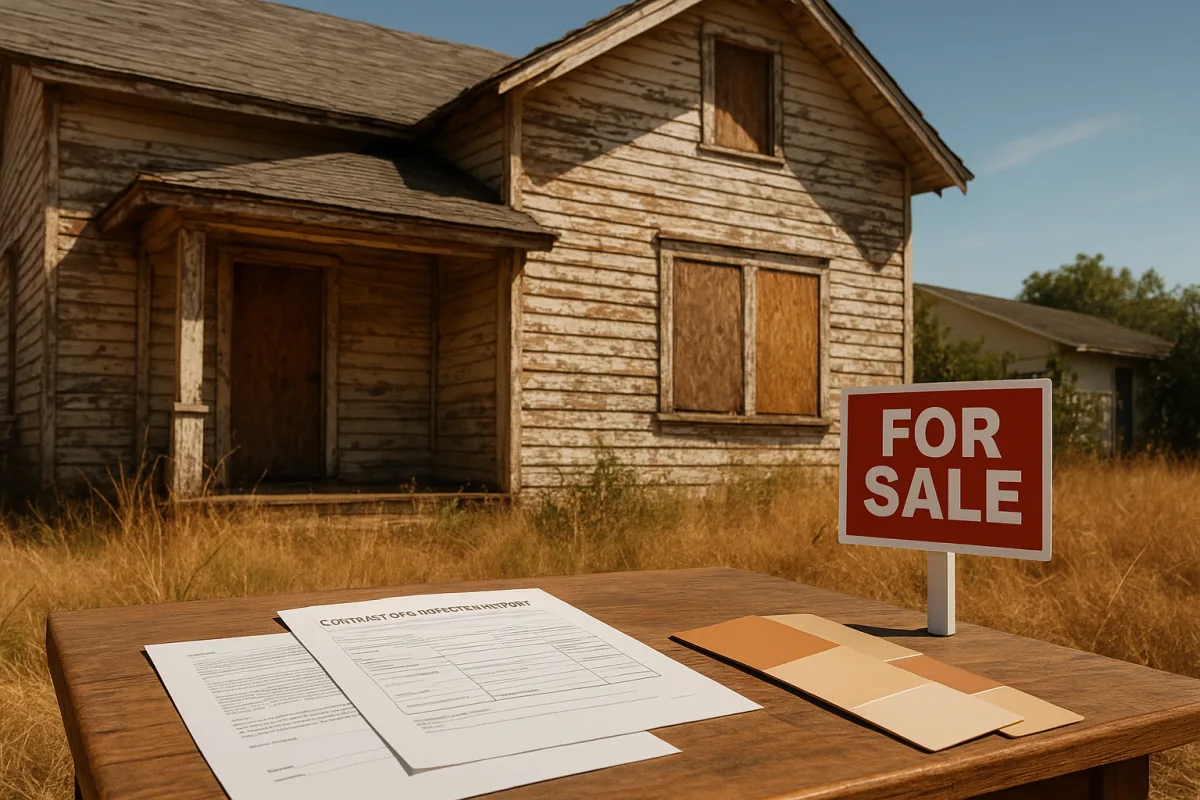
The central risk: confusing the purchase price with the cost of owning the house
The biggest risk in buying a foreclosure is not simply that the house may need repairs. It is treating a lower contract price as proof that the home costs less than a comparable non-foreclosed property.
The useful calculation is an all-in basis. That means purchase price, closing costs, repairs, title-related costs, financing requirements, property taxes, insurance, utilities and the cost of holding the home while work is completed.
That calculation sounds obvious, but foreclosure listings encourage the opposite instinct. A buyer sees a price below nearby listings, assumes the gap is savings, then discovers that the discounted price reflected condition, legal uncertainty, limited access or all three.
Foreclosures can offer a real opportunity for buyers who can identify and price those problems accurately. They can also transfer expensive uncertainty from a lender or former owner to the person who wins the bid.
I am not a licensed real estate agent, lender or financial adviser. This is not advice to buy, avoid or finance a foreclosure. The right answer depends on the home’s condition, your loan terms, local foreclosure rules, available cash and how much delay your timeline can absorb.
Why the advertised discount can be misleading
The discount figures attached to foreclosures vary enough that buyers should be cautious with any single percentage. LegalClarity describes foreclosure discounts of roughly 33% to 40% or more in some cases. [3]
But Effective Agents, citing Zillow data adjusted for location and home similarity, puts the median discount closer to 7.7%. [5] Those are not necessarily conflicting claims, because they may be measuring different sets of homes and different comparisons.
A severely damaged house in a distressed location can produce a large percentage gap against its prior value or a broad market average. That does not mean it is 30% cheaper than a nearby, habitable home with similar size and features.
The comparison that matters is the after-repair value against genuinely comparable properties. In plain terms: what would buyers pay for this house once it has a safe roof, working systems, clear title and normal market-ready condition?
A foreclosure’s price can be lower because the seller is a lender rather than an occupant, but the lender is not necessarily giving away value. The listing price may already account for deferred maintenance, uncertain access, missing disclosures or a restricted pool of financeable buyers.
A worked example of the all-in basis
Consider a hypothetical 2,000-square-foot house. Assume similar move-in-ready homes nearby sell for $400,000, and a foreclosure is listed at a 20% discount, or $320,000. This example is only arithmetic, not a market valuation.
At first glance, the buyer appears to have $80,000 of room. But that amount is not a renovation budget. It is the entire gap between the foreclosure’s purchase price and the assumed value of a repaired comparable home.
Now assume the property needs substantial work across its full 2,000 square feet. Coohom estimates foreclosure renovations at roughly $40 to $100 per square foot, compared with $20 to $75 for a standard remodel. [6]
At the low end of that foreclosure range, 2,000 square feet times $40 equals $80,000. The apparent $80,000 purchase discount has now been fully consumed before title complications, loan costs, insurance, taxes or temporary housing enter the calculation.
At $60 per square foot, the repair budget would be $120,000. At $100 per square foot, it would be $200,000. A buyer paying $320,000 could therefore have $440,000 to $520,000 committed before the ordinary costs of buying and holding the home.
That does not prove the purchase is bad. The property may need work in only part of the house, the buyer may perform some work efficiently, or comparable values may support the expense. The point is that the discount alone cannot answer the question.
The same arithmetic works for a smaller project. If a $300,000 foreclosure needs only $25,000 in verified repairs and comparable homes sell near $350,000, the margin may look very different. The inputs, not the label “foreclosure,” determine the result.
What makes foreclosure repairs more expensive
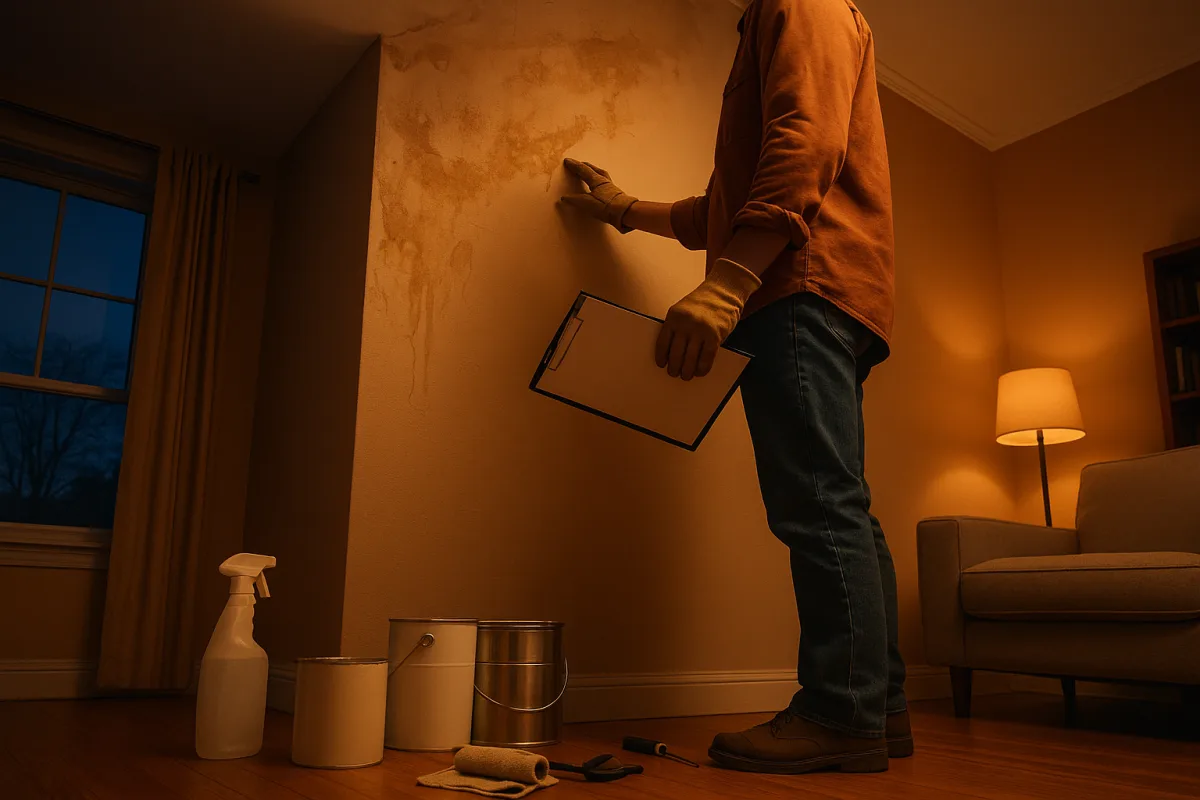
Foreclosure repairs can cost more because deferred maintenance tends to compound. A small roof leak can become damaged framing, insulation, drywall and flooring. An empty house with a plumbing failure may have water damage beyond the room where it began.
Major systems also matter more than cosmetic work. Buyers should distinguish between dated cabinets, which can be a preference, and a nonfunctioning HVAC system, damaged electrical service, unsafe stairs, foundation movement or an aging roof near failure.
Many foreclosed homes are sold as-is, without the seller warranties or repair negotiations that may be available in a conventional transaction. Zillow identifies skipping inspections and underestimating repairs among the common mistakes foreclosure buyers make. [8]
“As-is” does not mean a buyer should assume every defect is acceptable. It means the buyer needs a plan for what happens if inspection findings exceed the budget, and needs to understand whether the contract provides an inspection contingency or another exit route.
Inspection access varies by sale type. A bank-owned property may allow a conventional inspection before closing, while an auction buyer may have limited or no opportunity to inspect the interior. Homes.com notes that foreclosure purchases can involve different procedures depending on how the property is sold. [9]
That distinction is financial, not procedural trivia. If you cannot inspect the roof, mechanical systems, plumbing, electrical panel, crawlspace or interior walls, your repair estimate includes more uncertainty. A lower bid is one way buyers attempt to price that uncertainty.
Title problems can turn a house problem into a legal-cost problem
Physical repairs are visible eventually. Title issues are less visible, and they can be just as consequential. Foreclosed properties may carry questions involving liens, unpaid taxes, HOA claims, mechanic’s liens or defects in the chain of title. [3][9]
The foreclosure process may eliminate some claims while leaving others, but the answer depends on the lien type, sale process and state law. Buyers should not assume that a foreclosure deed automatically wipes every financial obligation connected to the property.
This is why title work belongs in the all-in calculation. A title search and title insurance are not merely closing paperwork. They are tools for identifying whether the seller can convey the interest the buyer believes they are purchasing.
A buyer should also confirm the property’s occupancy status before treating possession as automatic. If a former owner or tenant remains, the new owner may face delay, legal process and expenses before taking physical possession.
Federal tenant protections remain relevant after foreclosure. The Protecting Tenants at Foreclosure Act provides protections for certain bona fide tenants, including notice requirements and, in many circumstances, the ability to remain through the lease term. [1]
That protection is important policy, but it changes the buyer’s timeline. A property purchased with occupants may not be available for immediate renovation or move-in, even after the deed records.
Financing can expose the condition problem
A foreclosure buyer using cash and a buyer using a mortgage face different versions of the same risk. Cash may make bidding easier, but it does not make repairs, liens or occupancy issues disappear.
With financing, the lender’s appraisal can become a condition test as well as a value test. The appraiser is not conducting a full home inspection, but obvious defects can affect whether the property meets program requirements.
FHA and VA loans have minimum-property requirements, and a foreclosure in poor condition may fail to meet them without repairs. Rocket Mortgage notes that VA buyers may encounter property-condition hurdles when pursuing foreclosed homes. [10]
This creates a practical mismatch. The homes with the deepest apparent discounts may be the least likely to qualify for low-down-payment government-backed financing in their current condition. The buyer may need repairs completed before closing, another loan structure or more cash.
The research does not establish a reliable 2026 approval-denial rate for loans on foreclosed homes. It also does not provide a comprehensive average for how foreclosure closing costs differ from ordinary purchases. Those gaps are worth stating plainly.
Do not assume that “cash only” means the lender is being arbitrary. It can mean the property is not currently financeable under that seller’s or lender’s requirements. That changes the pool of possible buyers and can help explain the listing price.
Local foreclosure law affects the timeline you are pricing
Foreclosure is not one uniform transaction. States use different systems, including judicial foreclosure, where court involvement is generally part of the process, and non-judicial foreclosure, where the process can proceed outside a court case under state rules. [7]
Judicial states such as Florida and New York may involve more formal legal steps and longer timelines. Non-judicial processes can move faster, but the protections, notice rules and available challenges differ by state. [7]
For a buyer, that legal structure affects the risks behind the listing. It can influence title review, the likelihood of delays, redemption-related questions, sale procedures and the level of documentation needed before a property can close.
Do not use broad data about the length of a foreclosure to predict your closing date. Available figures often measure the entire process from default notice through foreclosure completion, not the separate period between a buyer’s accepted offer and closing.
A bank-owned home with clear title and inspection access may close on a fairly ordinary schedule. A property with unresolved liens, lender approval layers, auction rules or occupancy disputes may not. The research does not support one dependable foreclosure-closing average.
Build the number before you build a bid
A practical foreclosure worksheet begins with two columns. In the first, put the purchase price, expected closing costs and cash needed to meet the loan’s down-payment and reserve requirements. In the second, list risks that require verification.
Those items include a licensed inspector’s findings, contractor estimates for major systems, title and lien review, unpaid tax or HOA questions, insurance availability, occupancy status and a realistic timeline for repairs. The uncertain items need contingency money, not optimism.
Then compare the total to actual nearby sales of homes that match the property after repairs, not merely active listings. An active listing is an asking price. A comparable sale is evidence of what a buyer recently paid under local conditions.
The exercise will not produce a universal yes-or-no answer. It will show whether the discount is large enough for the condition, financing and legal risks you are actually taking on, rather than the risks you hoped were not there.
Frequently Asked Questions
What are the main risks of buying a foreclosure?
The primary risks include underestimating repair needs, encountering title problems such as unresolved liens or back taxes, and dealing with limited inspection access. Buyers may also face occupancy issues if previous owners have not vacated, and financing can be complicated if the property condition does not meet lender requirements.
How do repair costs affect the true cost of a foreclosed home?
Repair costs for foreclosed homes are typically higher than standard remodels, ranging from about $40 to $100 per square foot compared to $20 to $75 for typical renovations. Deferred maintenance often compounds damage, increasing expenses and potentially eliminating the apparent purchase discount.
What title problems can arise when buying a foreclosure?
Title issues may include unresolved liens such as IRS liens, mechanic’s liens, homeowners association liens, and unpaid property taxes. These can impose unexpected costs on the buyer and delay closing, making thorough title verification essential before purchase.
Why is the purchase price of a foreclosure misleading?
The advertised discount often reflects the home's condition, legal uncertainties, and limited financing options rather than a straightforward savings. Comparing the purchase price without accounting for repairs, title work, financing, and carrying costs can give a false impression of value.
How can I assess the total cost of owning a foreclosed home?
Calculate the all-in cost by adding the purchase price, closing costs, estimated repairs, title-related expenses, financing conditions, property taxes, insurance, utilities, and any carrying costs during renovation. This comprehensive approach helps avoid mistaking a lower purchase price for actual savings.
How we researched this
This article was assembled from 10 cited references.
Nothing here is based on hands-on testing. Where a figure or finding appears, it belongs to the source cited beside it, and the writing says so rather than implying otherwise. Every source is listed below so you can check it.
Sources
- Protecting Tenants at Foreclosure Act, Comptroller's Handbook
- How to Buy a Pre-Foreclosure: Step-by-Step Guide for 2026 | Opendoor
- Is It Good to Buy a House in Foreclosure? Pros and Cons - LegalClarity
- Foreclosed homes give buyers another path to savings | Florida Realtors
- Buying a Foreclosed Home: What You Need to Know | Effective Agents
- Foreclosed Home Renovation Cost vs Regular Remodel: Why 25% More?
- How Long Does Foreclosure Take in 2026? Find Out Here
- 5 Mistakes to Avoid When Buying a Foreclosure | Zillow
- How to buy a foreclosed home - Homes.com News
- Can you buy a foreclosure with a VA loan? | Rocket Mortgage
Related Articles
What Is a Title Search? Understanding the Process
Learn what a title search is, how it works, what it reveals, and why it's essential before buying a home.
How to Create a Home Buying Budget: Step-by-Step Guide
Learn how to create a home buying budget including down payment, closing costs, monthly expenses, and credit tips for a smooth purchase.
Home Buying Mistakes to Avoid
Learn home buying mistakes to avoid, including budgeting, inspections, and mortgage tips to make your purchase smoother and cost-effective.
Home Repairs Before Selling: Prioritize and Budget Smartly
Learn how to prioritize and budget home repairs before selling to attract buyers and avoid costly concessions.