
Home Maintenance Checklist: How to Create and Use One
Learn how to create a home maintenance checklist with schedules, tools, and tracking tips to keep your home in top shape year-round.
Start with a system you will actually use
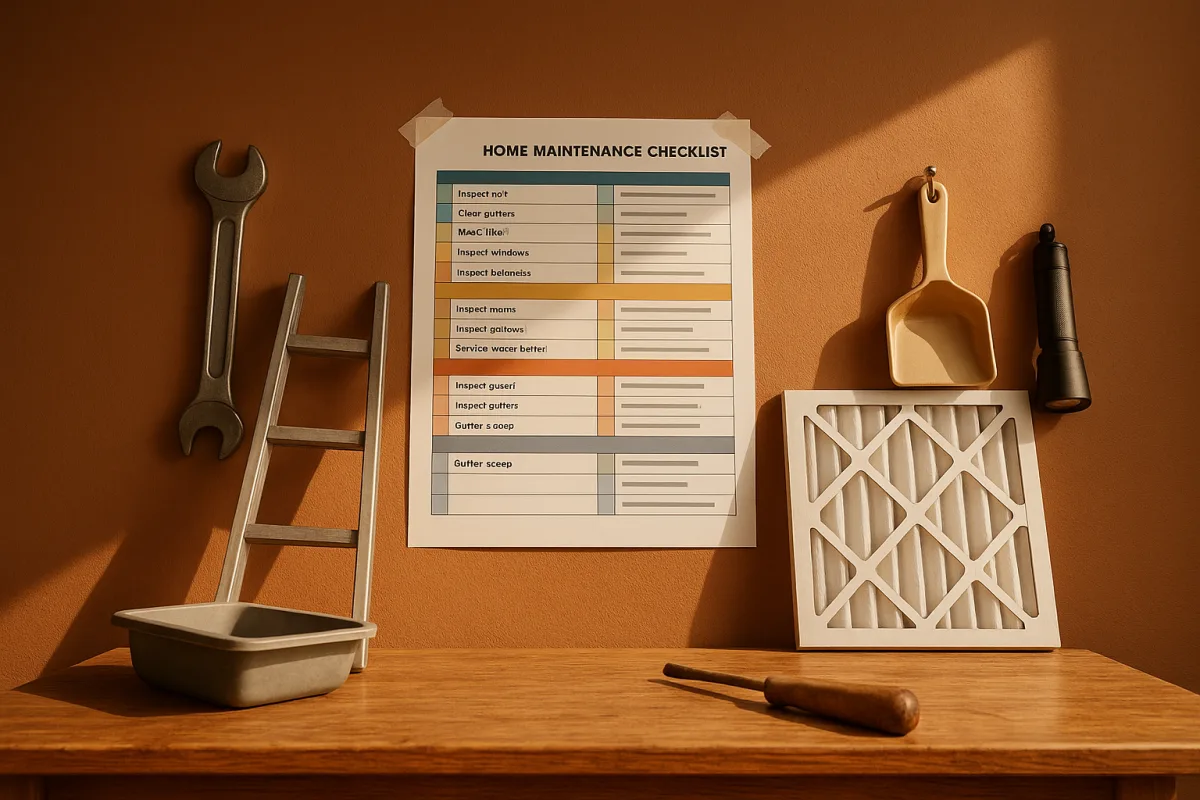
A home maintenance checklist fails when it is a long, undated list saved somewhere you never open. The practical version assigns each task a frequency, a month or season, and a reminder date. [3][4][18]
Start with four repeating categories: monthly, quarterly, seasonal, and annual. Then add a fifth category for longer-cycle work, such as driveway resealing, exterior trim painting, sewer-line inspection, and replacing smoke alarms at their stated service life. [1][5][9]
Use the calendar you already check. Create repeating reminders, then add a second reminder a week beforehand for jobs requiring supplies, a ladder, or an appointment with a service company. Digital systems are specifically useful because missed maintenance commonly begins with relying on memory. [11][17][18]
Create one home-maintenance folder, whether it is cloud storage, a physical binder, or both. For every completed task, record the date, what was done, who did it, cost, and the invoice, warranty, or before-and-after photos. [16][19][20]
This is not a substitute for an inspection report, an appraisal, homeowners insurance records, or loan-servicing documents. Routine maintenance belongs in its own system, although organized records can help you understand a property’s condition and show its upkeep history when needed. [16][20]
I am not a licensed home inspector, contractor, real estate agent, lender, or financial adviser. The right maintenance schedule depends on your home’s age, systems, climate, prior repairs, and the time you can devote to it.
Build a small kit before the first reminder arrives
A checklist is more likely to survive if ordinary tasks do not require an emergency trip to the hardware store. The commonly recommended baseline kit covers measuring, tightening, cutting, hanging, and minor adjustments rather than major repair work. [14][15]
Include a 16-ounce claw hammer, flathead and Phillips screwdriver set, adjustable wrench, needle-nose and slip-joint pliers, 25-foot tape measure, utility knife with replaceable blades, and 24-inch level. [14][15]
Add three-inch and six-inch putty knives, a cordless drill-driver, and a sturdy step ladder. These tools suit small tasks such as tightening hardware, checking accessible components, applying minor patching material, and reaching detectors or vents safely. [14][15]
Keep task-specific supplies separate from the tool kit. That might mean HVAC filters in the correct sizes, replacement detector batteries if applicable, mild cleaners appropriate to your surfaces, and labels identifying shutoff valves and filter dimensions.
Avoid treating a basic toolkit as permission to take on every job. Professional service remains appropriate for HVAC diagnostics, roof work, chimney inspection, electrical concerns, sewer issues, and repairs beyond your safe access or skill level. [1][4][9]
Handle the monthly problems before they become calls for service
The first monthly pass should be a safety and water check. Test smoke and carbon-monoxide detectors, inspect the fire extinguisher, and look under sinks, around toilets, near appliances, and at visible supply lines for moisture or drips. [1][3][5]
Do not merely note a small leak for later. Home-maintenance guidance consistently identifies ignored minor leaks and repairs as a common mistake. Photograph the issue, record its location, and set a short deadline to repair it or arrange service. [11][12]
Run water through fixtures that sit unused, including a guest-bath shower or utility sink. This regular use helps keep those fixtures from being forgotten, while the walkthrough gives you another chance to find drips, slow drains, or damaged caulk. [1][3]
Check the HVAC filter monthly, even if the filter’s replacement interval is longer. If it is loaded with dust or debris, replace it. A calendar note should record the filter size and the date installed, so you are not guessing later. [1][5]
Clean the garbage disposal according to its manufacturer instructions, and check water-softener salt if your system uses it. These are small recurring tasks, but placing them on the same monthly route reduces the chance that equipment is ignored for months. [1][3]
Include places you do not see during normal life. Attics, crawl spaces, utility rooms, exterior hose connections, and the area behind stored belongings can hide moisture, pest activity, or deterioration. Overlooking those areas is another recurring homeowner mistake. [11][12]
Use quarterly tasks to check the components behind the walls and doors
Every three months, replace the HVAC filter if it has not already been changed sooner based on condition or manufacturer guidance. Pair that task with a visible check of supply vents, return grilles, and accessible condensate-drain areas. [1][5]
Test GFCI outlets using their test and reset buttons, particularly in bathrooms, kitchens, garages, and exterior locations. If an outlet will not reset or repeatedly trips, record it and arrange qualified electrical evaluation rather than treating it as a nuisance. [1][5]
Check the water heater’s pressure-relief valve as part of the quarterly list, following the unit’s safety instructions. Water-heater flushing belongs on the annual plan, and is a separate, more involved job than a visual walk-through. [1][5]
Clean faucet aerators if flow has weakened, and inspect tub and shower caulk for gaps, cracking, mold, or separation. Repairing or replacing failing caulk promptly matters because the purpose is to keep routine water exposure from reaching vulnerable material behind finished surfaces. [1][5]
Lubricate garage-door moving parts where the door manufacturer recommends lubrication, then watch the door through one full cycle. Do not adjust high-tension springs or cables yourself. The checklist should distinguish routine lubrication from work requiring a garage-door professional. [1][5]
Schedule seasonal work by the weather your home actually gets
Spring is usually the point to look outward. Inspect roof surfaces and gutters from the ground where possible, check whether downspouts direct water away from the foundation, and look for winter damage around exterior trim, paths, patios, and driveways. [7][8][9]
Gutter cleaning is a predictable maintenance expense, not just an afterthought after an overflow. Smarfle’s 2026 estimates put single-story cleaning at about $75 to $150, two-story cleaning at $150 to $250, or roughly $0.50 to $1.50 per linear foot. [6]
Those figures are cleaning prices, not repairs, gutter replacement, or major roof work. The actual bill depends on height, access, debris, gutter length, and local labor conditions, so use the range as a budgeting placeholder rather than a guaranteed quote. [6]
Spring is also a sensible time to arrange air-conditioning service in warm climates and to test irrigation or sprinkler systems where present. Check exterior drainage during rain or with controlled water use, because a downspout that looks adequate can still discharge too near the foundation. [7][8]
Summer adds tasks that are easy to postpone because the house is functioning. Check attic ventilation, maintain decks and patios, trim back vegetation as appropriate, inspect exterior caulk and weather-exposed surfaces, and clean the dryer vent on the schedule your system requires. [7][9]
Use mild, surface-appropriate cleaning products, and test them in a small inconspicuous area first. Harsh cleaners on delicate surfaces are a documented maintenance mistake, particularly when homeowners try to turn outdoor cleanup into a one-product job. [11][12]
Fall is the transition season for heating, leaf buildup, and water management. Clean gutters again as needed, inspect the roof and chimney, reverse ceiling-fan direction if that suits your fan’s seasonal setting, and check weather stripping around windows and doors. [7][8][9]
In cold climates, add pipe protection and freeze-prevention steps before the first hard freeze. Heating-system service, sealing gaps, and checking roof and gutter conditions after winter are especially important in northern states, where snow and freeze-thaw cycles change the maintenance risk. [7][8]
In warm climates, the emphasis shifts. Schedule spring AC service, monitor roofs for storm damage, maintain sprinklers, prune as needed, clean gutters, and protect outdoor AC equipment during winter where local conditions call for it. [7][8]
Mixed climates need both lists, adjusted for temperature swings and freeze-thaw exposure. A checklist should not copy a national calendar blindly. Move a task earlier or later based on local weather patterns and what your own house has done in prior seasons. [8][9]
Reserve annual and longer-cycle work before it becomes urgent
Put professional HVAC service on the annual calendar. The research brief’s 2026 estimate is about $75 to $250 for a basic tune-up, while a full diagnostic service call can run roughly $90 to $450, depending on the issue and market.
That price is for service, not for replacing an air conditioner, furnace, compressor, or other major component. When comparing bids, note whether the quoted visit includes only preventive maintenance, diagnostics, parts, or a separate repair recommendation.
Schedule a full roof inspection annually if your circumstances warrant it, and at least maintain regular visual checks. A general visual roof inspection commonly runs about $150 to $400, while more specialized inspections can cost more. [4]
A roof-inspection fee does not include repair, reroofing, gutter replacement, or correcting structural damage. Document the inspection report and any recommended repairs, then compare that record against your own photos from seasonal checks. [4][16]
Add chimney inspection, deep dryer-vent cleaning, water-heater flushing, and recaulking around windows and doors to the annual list. The exact timing can change with use, appliance requirements, local conditions, and the recommendations of the professional servicing the system. [1][5][9]
For the longer-cycle category, set future reminders now rather than trying to remember years later. Common intervals include professional roof inspection, driveway resealing, exterior trim repainting, and sewer-line inspection every three to five years. [1][4][9]
Replace smoke detectors according to their manufacturer instructions, with the broader maintenance guidance identifying a 10-year replacement interval. Testing a detector monthly does not eliminate the need to replace an aging unit. [1][5]
Review the checklist after one year
At the end of the first year, review your log for recurring leaks, repeated HVAC concerns, clogged gutters, drainage trouble, or repairs that keep returning. Your record should tell you which checklist items need a shorter interval and which reminders are unnecessary. [16][18][20]
Also total the professional costs. Gutter cleaning, HVAC service, roof inspections, and other routine work are easier to plan for when they are visible as an annual household expense rather than surprise charges. [4][6]
The goal is not to perform every task yourself or to make a house maintenance-free. It is to notice changing conditions early, schedule the right work in the right season, and leave a clear record of what was done.
Frequently Asked Questions
How do I create a practical home maintenance checklist?
Start by assigning each task a frequency such as monthly, quarterly, seasonal, or annual, and set specific reminder dates. Use a calendar you already check to create repeating reminders, adding a second reminder a week before tasks that require preparation. Organize your checklist around these categories and tailor it to your home’s climate and systems for better usability.
What tasks should be included in a home maintenance schedule?
Include monthly tasks like testing smoke and CO detectors, inspecting for leaks, and checking HVAC filters. Quarterly tasks often cover replacing HVAC filters, lubricating garage doors, and testing GFCI outlets. Seasonal tasks vary but generally include HVAC servicing, roof and gutter inspection, exterior drainage, and deck maintenance. Annual tasks typically involve professional HVAC service, water heater flushing, and thorough roof and chimney inspections.
How often should I perform home maintenance tasks?
Tasks are best scheduled on a monthly, quarterly, seasonal, or annual basis. Some longer-cycle tasks, such as driveway resealing or smoke detector replacement, occur every 3 to 10 years. Setting reminders for these intervals helps ensure maintenance is proactive rather than reactive.
How can I keep track of completed home maintenance?
Keep a dated log or folder—physical or digital—that records the date, task performed, who did it, costs, and any invoices or photos. This record helps identify recurring issues and supports documentation of your home’s upkeep history. Avoid relying on memory by using calendar reminders, spreadsheets, binders, or maintenance tracking apps.
How we researched this
This article was assembled from 20 cited references.
Nothing here is based on hands-on testing. Where a figure or finding appears, it belongs to the source cited beside it, and the writing says so rather than implying otherwise. Every source is listed below so you can check it.
Sources
- Home Maintenance Checklist: Everything Homeowners Need to Do Monthly, Quarterly, and Seasonally | Opendoor
- HomeSimple - Find Trusted Home Service Professionals
- Monthly home maintenance checklist, plus a month-by-month plan · HomeAlmanac
- Home Maintenance Schedule & Plan: Month-by-Month Guide – HomeBeacon | HomeBeacon
- Home Maintenance Checklist: Monthly, Quarterly & Annual Tasks
- Gutter Cleaning Cost (2026): Prices by Home Size | Smarfle CRM
- Seasonal Home Maintenance Guide | Davis Ventures
- Seasonal Home Maintenance Guides | SeasonKeep
- Seasonal Home Maintenance Checklist: To-Do Lists for Every Season | Zillow
- Home Maintenance Schedule | DFW Seasonal Checklist
- The Most Common Home Maintenance Mistakes Homeowners Make • Oply Blog
- Common Home Maintenance Mistakes (And How to Avoid Costly Repairs) - HouseTaskHub
- Home Maintenance Schedule: Monthly Checklist
- 15 Best Tools Every Homeowner Needs for DIY (2026)
- Best Home Repair Tools for Homeowners: Essential Guide
- Why You Should Keep a Home Maintenance Log (and What Goes In It) | Huswerks
- Home Maintenance Tracker | Maintley
- How to Keep Track of Home Maintenance (Every Method, Compared) · Owner Tools
- How It Works — Property Maintenance Report
- How to Keep Home Maintenance Records | HouseManual
Related Articles
Buying a Home with a Basement: What You Need to Know
Learn key tips for buying a home with a basement, including inspection, water issues, foundation concerns, and budgeting for repairs.

Prepare for a Home Showing During Winter: Essential Tips
Learn how to prepare for a home showing during winter with tips on snow removal, thermostat settings, and managing wet boots for a safe, inviting visit.

Best Time to List Your Home: Seasonal and Regional Insights
Discover the best time to list your home, including seasonal trends and regional variations to maximize sale price and buyer interest.

Choose the Right Home Inspector: Essential Buyer’s Checklist
Learn how to choose the right home inspector with tips on qualifications, costs, insurance, and what to ask before booking your inspection.